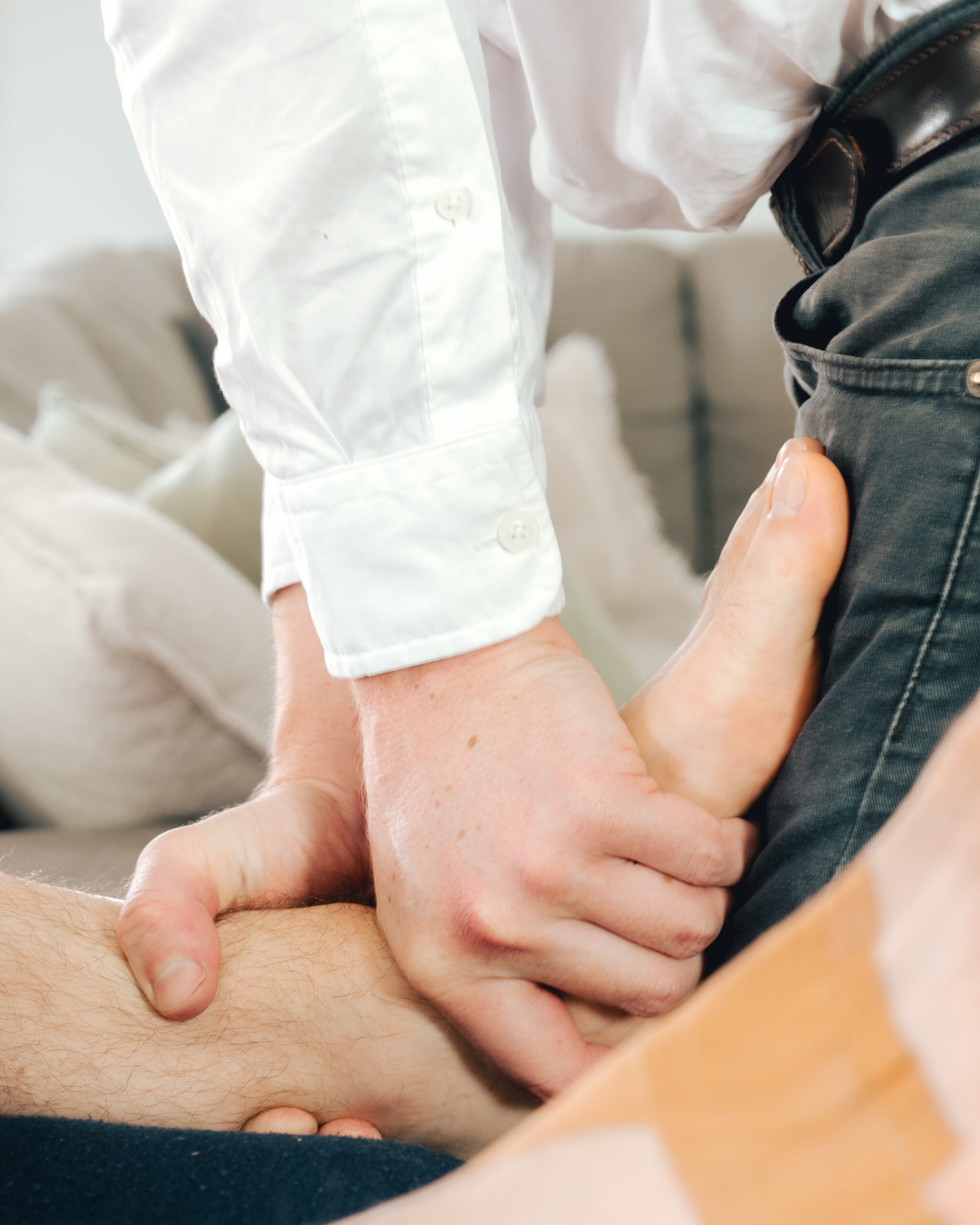
Tennis elbow can make gripping a coffee cup painful, let alone a barbell. The good news is that the right kind of exercise is the most effective long-term treatment, and most people can keep training with some smart changes.
Tennis elbow is one of the most common reasons people end up in my calendar with an elbow problem, and most of them have never picked up a tennis racquet. It's usually the result of gripping, lifting, typing, using tools or a big weekend of gardening or renovating. And for anyone who trains at the gym, it can turn simple things like holding dumbbells or doing pull-ups into a real challenge.
This guide covers what tennis elbow is, why exercise is the main treatment, the exercises I use most, and how to adjust your gym training so you can keep lifting while your elbow recovers.
What is tennis elbow?
Tennis elbow, or lateral elbow tendinopathy, affects the tendons that attach to the bony point on the outside of your elbow, called the lateral epicondyle. These tendons belong to the muscles that extend your wrist and fingers and help stabilise your wrist when you grip. The main tendon involved is the extensor carpi radialis brevis.
Despite the old name "lateral epicondylitis", tennis elbow isn't mainly an inflammation problem. It's a tendinopathy, where the tendon has been overloaded beyond what it's used to and its structure changes as it tries to adapt. That's an important distinction, because it explains why rest and anti-inflammatory approaches often give only temporary relief, while progressively loading the tendon helps it rebuild its capacity. I've written more about this in
A Physio's Lowdown on Tendinopathies.
Tennis elbow is most common between ages 35 and 55. Typical symptoms include:
- Pain on the outside of the elbow, sometimes spreading down the forearm
- Pain with gripping, especially with the palm facing down
- Pain when lifting a kettle, jug or bag with a straight arm
- Weaker grip, or dropping things
- Tenderness over the bony point on the outside of the elbow
- Stiffness or pain first thing in the morning
It's different from golfer's elbow, which affects the tendons on the inside of the elbow. Golfer's elbow tends to hurt with gripping and wrist flexion, and the exercise principles are similar but target the other side of the forearm.
Why exercise is the main treatment
Tendons respond to load. When a tendon is overloaded, it becomes painful and less able to handle force. When it's underloaded, for example through complete rest, it loses capacity too. The goal of rehab is to find the right amount of load to calm the tendon, then gradually increase it so the tendon becomes stronger and more resilient.
Research supports exercise-based rehab and load management as the most effective long-term approach for tennis elbow. By contrast, corticosteroid injections can reduce pain in the short term, but studies have shown that people who have an injection tend to do worse at one year than those who have physio or simply wait it out, with a higher chance of the pain returning. That's why I don't generally recommend injections as a first option, although it's always a conversation worth having with your GP if you're considering one.
Tennis elbow can be slow to settle. Many people improve over 8 to 12 weeks of consistent rehab, while longer-standing cases can take several months. Without a good plan, it can drag on for a year or more, so getting the loading right early really pays off.
The pain rules for elbow rehab
Before we get into exercises, here's the guide I use for all tendon rehab:
- Pain during exercise of up to around 3 to 4 out of 10 is acceptable
- Pain should settle within an hour or so after exercise
- Your elbow shouldn't be more painful or stiffer the next morning
If the elbow is worse the next day, the load was too high. Drop back to the previous level for a few days, then try again. This approach lets you keep loading the tendon without flaring it up.
Stage 1: Settling the tendon
In the early stage, when your elbow is irritable and gripping is painful, the aim is to reduce pain and start loading the tendon gently.
Isometric wrist extension
Rest your forearm on a table with your palm facing down and your wrist just off the edge. Use your other hand, or a fixed object, to resist as you try to lift the back of your hand upwards, without the wrist actually moving. Hold for 30 to 45 seconds, rest for a minute, and repeat 4 to 5 times. Start at a moderate effort that's comfortable and build up over time. Isometric holds often ease tendon pain for a while afterwards, which makes them useful before daily tasks or training.
Load reduction
At the same time, we reduce the aggravating loads. That might mean lifting objects with your palm facing up instead of down, using two hands, using a thicker grip on tools, taking regular breaks from the mouse and keyboard, and avoiding heavy gripping with a straight elbow for a while. A counterforce brace, a strap worn just below the elbow, can help some people with pain during activity.
Stage 2: Building strength
Once your elbow is less irritable, we start building strength through movement. This is where the real long-term change happens.
Slow wrist extension with a dumbbell
Rest your forearm on a table or your thigh with your palm facing down, holding a light dumbbell. Slowly lift your wrist up over about three seconds, then lower it over about three seconds. Start with 3 sets of 10 to 15 repetitions, and gradually increase the weight over weeks. Use your other hand to help on the way up if the lifting part is painful, and focus on the slow lowering.
Wrist supination and pronation
Hold a hammer or a dumbbell held at one end, with your forearm supported. Slowly rotate your palm up and then down. This strengthens the forearm muscles that work with the wrist extensors when you grip and twist.
Grip strengthening
Squeeze a soft ball, putty or grip trainer, building up to firmer resistance as your elbow tolerates it. Grip strength is often noticeably lower on the painful side, and it's a useful marker of progress.
Shoulder and upper back strength
The elbow doesn't work in isolation. Strengthening the shoulder and shoulder blade muscles with rows, external rotation with a band and push-up variations helps share load away from the elbow during lifting and gripping.
Two to three strength sessions a week is usually ideal for tendon rehab, as tendons need recovery time between loading sessions. I've written more about how tendon loading works in my post on
exercise for tendinopathy.
Stage 3: Returning to full load
As your strength improves, we build towards the demands of your work, sport and training. That might include heavier and faster wrist exercises, carrying and farmer's walks, tool use, racquet or golf swings, and gradually reintroducing your full gym program.
Training at the gym with tennis elbow
You don't usually need to stop going to the gym. With a few changes, most people can keep training most of their body and keep their elbow moving in the right direction. Here's how I usually approach it.
Exercises that are usually fine
- Most lower body work, such as leg press, lunges, split squats with dumbbells held in a comfortable grip, hip thrusts and machines that don't need a strong grip
- Core work that doesn't involve hanging or heavy gripping
- Cardio like cycling, running, rowing with a relaxed grip, or the cross trainer
Exercises that often need modifying
- Pulling exercises: rows, pull-ups and lat pulldowns load the grip heavily. Try lifting straps to reduce grip demand, a neutral (palms facing each other) or underhand grip instead of overhand, or lighter weights with more reps for a while.
- Deadlifts and heavy carries: use straps, or swap to a trap bar or lighter loads until your grip is less painful.
- Pressing: bench press and overhead press are often tolerated, but a neutral grip with dumbbells or a thicker bar grip can be more comfortable than a straight barbell.
- Curls and tricep extensions: hammer curls and cable variations are often easier than straight bar curls. Reverse curls, with the palm facing down, are usually the most aggravating early on.
- Push-ups and planks: try push-ups on your fists or on handles to keep the wrist straight.
Use the same pain rules at the gym as in rehab. Mild discomfort that settles quickly is fine, but if your elbow is worse the next day, the session was too much. A good tip is to do your elbow rehab exercises at the start or end of your gym session, so they become part of your routine.
Look at your training load
Tennis elbow often appears after a change in training, like a new pulling program, a jump in volume, more grip-heavy work such as CrossFit or rock climbing, or adding heavy deadlifts. It's worth looking at what changed in the weeks before your pain started, and easing that back while you rebuild.
How to tell if your rehab is working
Tendon rehab can feel slow, so it helps to track a few simple markers every week or two:
- Morning stiffness: is your elbow less stiff and sore first thing?
- Grip strength: can you squeeze harder or hold a grip for longer on the painful side?
- Exercise load: are you lifting a heavier dumbbell or doing more repetitions than a few weeks ago?
- Daily tasks: are things like lifting the kettle, carrying shopping or using the mouse easier?
If these are moving in the right direction, you're on track, even if you still have some pain. If nothing has changed after four to six weeks of consistent work, the plan needs adjusting.
What else can help?
Alongside exercise, a few other treatments can help ease symptoms and make it easier to stick with your rehab:
- Dry needling and soft tissue work for the forearm muscles, which can ease tightness and pain in the short term
- Elbow and wrist taping or a counterforce brace during aggravating activities
- Treatment for the neck and upper back, as stiffness or nerve irritation in the neck can sometimes contribute to elbow pain
- Advice on your workstation, tools and work tasks
These are useful supports, but they work best alongside the strengthening program, not instead of it.
When should I see a physio?
It's worth getting your elbow assessed if:
- Elbow pain has been around for more than a couple of weeks
- It's affecting your work, training or daily tasks
- Your grip is noticeably weaker
- You've tried resting it and it keeps coming back
See your GP promptly if your elbow pain started with a fall or significant injury, if the elbow is swollen, hot and red, if you can't fully straighten or bend it, or if you have numbness, tingling or weakness in your hand.
How I help with tennis elbow
When I see someone with elbow pain, I start by confirming the diagnosis and checking the neck, shoulder and wrist, because pain on the outside of the elbow isn't always tennis elbow. I'll test your grip strength and how your tendon responds to load, and ask about your work, sport and gym training so we know what your elbow needs to handle.
From there, I'll build a staged
exercise program, help you modify your gym sessions and daily tasks, and use hands-on treatment where it helps settle pain. I'll track your grip strength and symptoms over time, so we can progress at the right pace. Because I'm a mobile physio, I can see you at home, at work or even at your gym. You can read more on my
elbow pain physiotherapy page, and more about tendon problems in general on my
tendinopathy page.
The bottom line
Tennis elbow is a tendon overload problem, and the most effective long-term treatment is a progressive strengthening program combined with smart load management. Most people can keep training at the gym with a few changes, using the pain rules to guide them. Be patient, because tendons adapt slowly, and be consistent, because that's what makes the difference. If your elbow is getting in the way of work or training, I'd be happy to help you get on top of it.
This article is general information only and isn't a substitute for an individual assessment. If you have pain or an injury, speak with your physiotherapist or GP about your situation.