PRP Physio logo

Headache Physiotherapy Brisbane

Physiotherapy for Cervicogenic Headaches

Headaches are frustrating at the best of times, but there's a particular kind of frustration that comes with a headache that keeps returning despite trying every over-the-counter remedy going. What a lot of people don't realise is that a portion of chronic headaches don't actually originate in the head at all, they stem from the neck. These are known as cervicogenic headaches, and in my experience, they're one of the more frustrating conditions to deal with

Cervicogenic headaches occur because the upper cervical spine and the head share a common pathway for pain signals in the brainstem, meaning irritation or dysfunction in the top of the neck can genuinely feel like it's happening inside the skull. It's a classic case of the body's wiring not quite matching our intuition about where a problem "should" be, and it's why so many people spend months treating headaches as a head problem when the actual driver has been sitting in their neck the whole time.

I find a lot of satisfaction in this area of practice specifically because it's so often missed. Getting the diagnosis right is most of the battle, and once we've confirmed the neck is the driver, the treatment pathway tends to be refreshingly logical and effective.
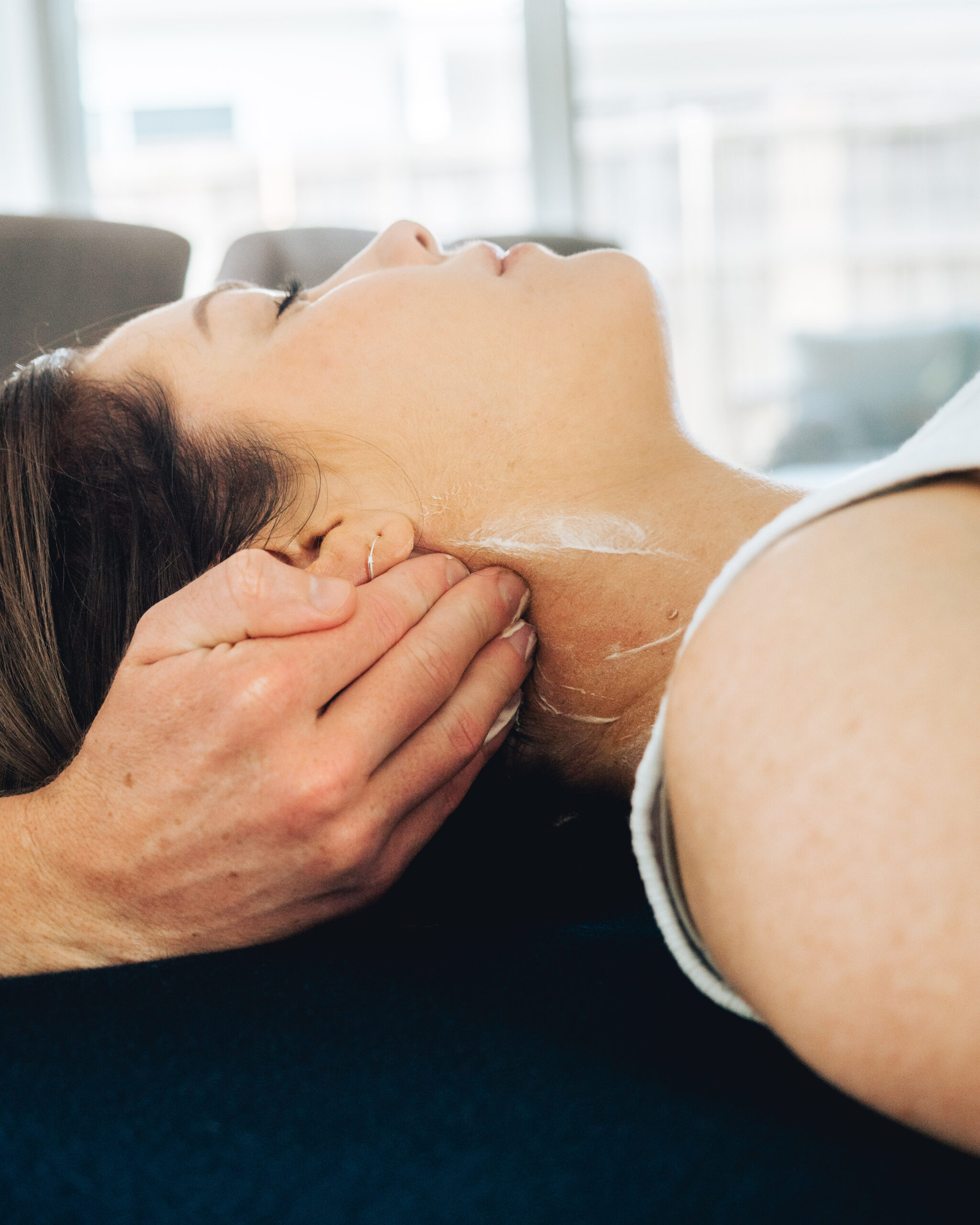
A woman receiving a physiotherapy massage on her neck from a sports physiotherapist.

The anatomy behind cervicogenic headaches

The key anatomical structure explaining cervicogenic headaches is the trigeminocervical nucleus, a region in the brainstem where sensory information from the upper cervical spine converges with sensory information from the trigeminal nerve, which supplies sensation to the face and head. Because these pathways overlap, pain originating in the upper neck can be perceived by the brain as though it's coming from the head, particularly the forehead, temple, or area behind the eye.
Diagram of the trigeminocervical nucleus linking the upper neck nerves to headaches

The upper three cervical segments, C1 to C3, are the primary source of cervicogenic headache symptoms. This region includes the atlanto-occipital and atlanto-axial joints at the top of the neck, along with the small, deep muscles that control fine movement of the head on the neck. These structures are heavily loaded by sustained postures, particularly forward head positions common with screen use, and by direct trauma such as whiplash.
Diagram of the top two vertebrae of the neck, the atlas and the axis

The greater and lesser occipital nerves arise from the upper cervical nerve roots and travel up through the muscles at the base of the skull to supply sensation to the back and top of the scalp. Irritation or entrapment of these nerves, often related to tightness in the suboccipital muscles, can produce a sharp or shooting quality of headache that radiates from the base of the skull forward over the top of the head.

Cervicogenic Headache Subjective Assessment

Headaches often require a lot of specific and targeted questions to get to the deep nitty gritty information we are really after. Ideally, I want to try and get as much specific information as possible to understand how your headaches develop, what triggers them, how they develop and what other sensations you feel prior to or during the build up of symptoms. The more specific you can be, the easier determining a diagnosis and treatment plan becomes.

What Happened?

I want to understand when your headaches started and whether there was a specific triggering event, such as a whiplash injury, a fall, or a period of increased stress or screen time, or whether they've developed more gradually. 

Where Do You Feel It, and How Does It Behave?

Cervicogenic headaches typically start at the base of the skull and travel forward to one side of the head, often settling around the temple or behind the eye. I'll ask whether your headache is one-sided or affects both sides, how long episodes typically last, and what specifically brings them on, whether that's a particular neck position, prolonged sitting, or general periods of stress.

Any Associated Symptoms?

Neck stiffness or pain alongside your headache is a strong indicator of a cervicogenic origin, so I'll ask specifically about this. I'll also ask about associated symptoms such as light or sound sensitivity, nausea, or visual disturbances, as these help differentiate a cervicogenic headache from other headache types such as migraine or tension-type headache.

Injury and Treatment History

If you've had previous headache episodes, I'll want to know what's been tried already, whether that's medication, other therapies, or previous physiotherapy, and what level of success, if any, was achieved.

Cervicogenic Headache Objective Assessment

Assessing headaches and the surrounding areas is quite a particular process. Some provocation of your headaches is likely and can indicate that there is a link of sorts between the joint that I am palpating or mobilising and your symptoms. A thorough view of the upper thoracic spine and shoulder complex and how that region moves and sits throughout a normal day, or during triggering events such as sitting for a prolonged time at the desk will glean further specific and highly useful information.

Cervical and Thoracic Range of Motion

I'll assess movement of the upper cervical spine specifically, as restriction here, particularly in rotation, is one of the more reliable objective findings associated with cervicogenic headache. As always, we need to look a little further down the chain, the thoracic spine is another common area that clients display restrictions to movement. Common patterns that I see show a restriction in rotation as well as extension. Because of the way the thoracic spine moves because of the rib attachments, a restriction to both rotation and extension is quite common.

Palpation and Provocation

Careful palpation of the upper cervical joints and suboccipital muscles often reproduces your typical headache pattern, which is one of the more useful pieces of evidence in confirming a cervicogenic diagnosis. I'll also assess the tenderness and tone of the muscles at the base of the skull, which are frequently a significant contributor to symptoms.

Postural Assessment

Given the strong relationship between sustained postures and cervicogenic headache, I'll assess your typical working posture and head position, looking specifically for a forward head posture pattern that places ongoing strain through the upper cervical spine. The important thing to remember here is that determining posture as the sole cause of symptoms is incredibly difficult, posture can play one part in your story.

Is It a Migraine or a Cervicogenic Headache?

This is one of the most common questions I get asked, and it's a genuinely important one, because the two conditions are managed quite differently. Migraines typically present with a throbbing quality, are often one sided but can switch sides between episodes, and are commonly accompanied by nausea, visual disturbances, or significant light and sound sensitivity. Cervicogenic headaches, by contrast, are more consistently one-sided, are strongly associated with neck stiffness and specific neck movements or postures, and generally lack the more dramatic associated symptoms seen with migraine. That said, the two conditions can and do coexist, and a thorough assessment is the only reliable way to tell them apart.

Steps to Success for Managing Cervicogenic Headaches

Hands On Treatment

Manual therapy targeting the upper cervical spine, including joint mobilisations and soft tissue release of the suboccipital muscles, tends to produce meaningful and often immediate reductions in headache frequency and intensity. Often these treatment sessions will involve extensive hands on treatment of highly specific joints and musculature. As there is extensive hands on work I often recommend clients utilise a heat pack after these sessions to minimise any potential onset of post treatment soreness. Dry needling can be a useful adjunct therapy to add in if you have responded well to dry needling in the past. Often I will utilise this treatment for the cervical musculature as well as through the upper trapezius to assist in reducing muscle tone.
A woman receiving sports physiotherapy on her back.

Exercise for Cervicogenic Headaches

Long term management relies on addressing the postural and strength deficits that are driving ongoing strain through the upper cervical spine. This typically includes deep neck flexor strengthening, postural retraining, and specific mobility work for the upper cervical joints, alongside practical strategies for managing screen time and workstation setup. Without addressing the underlying strength or mobility concerns that are present it is unlikely that there will be lasting results from the hands on treatment. I often recommend that clients develop a longer term routine with the exercise programs where it is something they can perform on an ongoing basis, normally twice per week to maintain the ongoing benefits as well as minimising risk of recurrence.

Your Questions About Headaches

What does a cervicogenic headache feel like?

A cervicogenic headache usually starts at the back of the head or upper neck and spreads towards the forehead, temple or behind the eye. It is typically on one side, and on the same side each time. It often comes on or gets worse with neck movements, sustained positions like sitting at a computer, or pressure on the upper neck, and many people notice neck stiffness alongside it. The pain is usually a steady, dull ache rather than throbbing, and it does not usually come with the nausea and light sensitivity of migraine.

Is it a migraine or a headache from my neck?

They can overlap, which is why a careful assessment matters. Migraines are typically throbbing, last hours to days, and often come with nausea, sensitivity to light and sound, or visual changes called aura. They may have triggers like hormones, sleep or certain foods. Headaches from the neck are usually one-sided, start in the neck, and are triggered by neck movement or posture. Neck pain is also common during migraine, and some people have both. Migraines are best managed with your GP, while physio is particularly helpful for neck-related headaches.

Can posture cause headaches?

Posture is rarely the single cause, but long periods in one position can contribute. Sitting at a desk or looking down at a phone for hours loads the upper neck joints and muscles, and for some people that builds into a headache by the end of the day. No posture is perfect for hours, so the solution is less about sitting up straight and more about changing position regularly, setting up your workstation well, and building strength and endurance in your neck and upper back.

What can I do at home to ease a neck headache?

Gentle neck movement, heat over the upper neck and shoulders, and regular breaks from sustained postures often help. Chin tucks and slow neck rotations can ease stiffness, and some people find a self-massage with a ball against the wall useful. Looking after the basics matters too: good sleep, staying hydrated, regular meals and managing stress. If your headaches are frequent, keeping a diary of when they happen can reveal patterns. A sudden severe headache, or one with new neurological symptoms, needs urgent medical attention.

Headache FAQs

Headaches from the neck, called cervicogenic headaches, usually start in the neck and spread to the back of the head, and sometimes to the forehead or behind the eye. They are usually on one side, are brought on by neck movements or holding one posture, and come with neck stiffness. Migraines more often come with nausea, sensitivity to light or sound, or changes in vision.

Seek urgent medical care for a sudden, severe headache, a headache after a head injury, or a headache with fever and a stiff neck, confusion, weakness, numbness, slurred speech or changes in your vision. See your GP if you are over 50 and your headaches are new, or if your headaches are changing or getting steadily worse.

Many people with cervicogenic headaches notice a change within the first two or three sessions. As a guide, a course of around four to six sessions over several weeks, alongside a home exercise program, is common. I will give you a clearer estimate after your assessment.

Each consultation is 45 minutes and costs $110, for both your first appointment and follow-ups. Dry needling, taping and exercise bands are included at no extra cost. If you need a longer course of rehab, my 3, 6 and 12 week rehabilitation programs work out cheaper than paying per session.

Yes. You can claim a rebate from your health fund for every session. PRP Physio is not a preferred provider for any fund, so your rebate may be slightly smaller than at a preferred provider. Your fund can confirm the exact amount using item code 500 for your first consultation and 505 for follow-ups.

Yes, if your headaches are linked to a work injury, or to neck strain from your work. Your GP starts the claim and gives you a WorkCover certificate, which acts as your referral. Once your claim is accepted, I bill WorkCover directly, so there are no out-of-pocket costs for you. WorkCover covers your first five sessions, and I speak with your case manager if you need more.

Yes. Headaches are common after a car accident, often as part of a whiplash injury. If you have been injured in a motor vehicle accident, the cost of your physio is usually covered by the third party insurer of the vehicle at fault. See your GP as soon as you can after the accident so your injuries are documented and your GP can refer you for physio. Most insurers cover your first consultation, and I then send the insurer a treatment plan outlining my findings, your goals and how many sessions I recommend. I bill the insurer directly, so there are no out-of-pocket costs for approved claims.

Mobile Physio: Get in Touch

I'm ready to book online now

For those who are ready to book an appointment right now, let's get started on your journey back to sport!

Just hit the button below and it will take you straight to an online booking platform. You will just have to enter a few details and it will all be booked in for you!

I'd rather have a conversation first

Some injuries are complex, should you see a GP first, should you go get a scan, is a physio even the right person to see? Sometimes a 10 minute conversation can be enough to answer some of these questions.

Just submit a contact form on the link below and I'll give you a call ASAP and we can chat through a few things to get you moving in the right direction!
© 2026 PRP Physio. All rights reserved.