PRP Physio logo
PRP Physio

Joint Mobilisations in Physiotherapy

Joint Mobilisations as Part of Physiotherapy

There's something quite satisfying about a good joint mobilisation, both as a physio performing it and, from what clients tell me, as the person receiving it. There's a specific type of stiffness that sits within a joint itself, distinct from muscle tightness, that responds particularly well to skilled, hands-on movement of the joint through its available range. It's one of the more technically satisfying skills in physiotherapy, and one I use regularly across almost every joint in the body.

Often I find clients are able to independently discern between something that is a tight muscle and something that is a stiff joint, there is a different sensation that people feel, it almost feels deeper rather than a superficial tightness. In order to have optimal range of motion to achieve our day
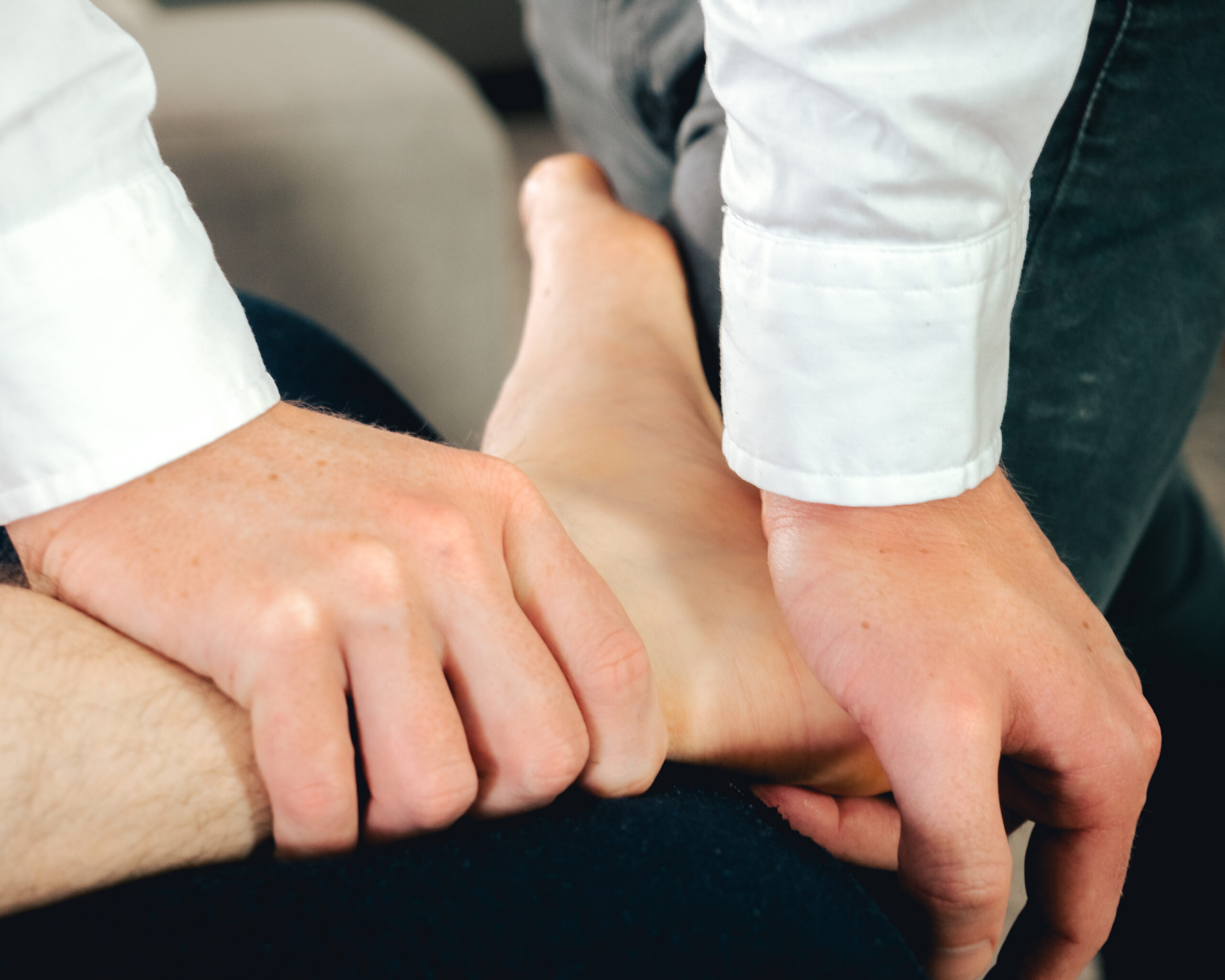
A man is providing physiotherapy to another man by putting his hand on his foot.

The Basics of Joint Mobilisations

What are joint mobilisations?

Joint mobilisations involve the application of a graded, passive movement to a joint. The aim is to restore or improve the joint's range and quality of movement. These range from gentler, oscillatory movements used primarily to reduce pain and encourage relaxation around a joint, through to firmer, more sustained techniques aimed specifically at stretching stiff or restricted joint structures. The specific technique and grade of mobilisation used depends heavily on the joint involved, the stage of your presentation, and how irritable your symptoms currently are.

The benefits of joint mobilisations

Joint mobilisations can produce a meaningful reduction in pain, often through effects on the nervous system's processing of pain signals rather than purely mechanical change. They can restore range of movement in a joint that's become stiff following injury, surgery, or a period of reduced activity. They can improve the overall quality of movement at a joint, addressing subtle restrictions that might otherwise place additional strain on surrounding structures. And for many clients, there's a genuine and immediate improvement in comfort and confidence to move, which creates a valuable opportunity to progress more actively engaged treatment.

When I use joint mobilisations

I commonly use joint mobilisations where an assessment has identified genuine joint stiffness contributing to a client's symptoms, which is distinct from muscle tightness and requires a different treatment approach entirely. This is particularly common in the spine, the shoulder following a period of immobilisation, and the ankle following a sprain or a period of time in a moon boot or a cast. I'll typically use gentler techniques where symptoms are more irritable or acute, progressing to firmer, more sustained mobilisations as tolerance improves and the priority shifts towards restoring full range of movement.

Why exercise still matters

Joint mobilisations can produce genuinely impressive short-term improvements in pain and range of movement, and I won't downplay how valuable that can be, particularly in the early stages of an injury. But a joint that's been mobilised into a better range of movement still needs strength and control through that new range, or it has a tendency to drift back towards where it started. This is where exercise becomes essential. Mobilisations open the door; strengthening and movement work through that newly available range is what keeps it open for good. I very rarely use joint mobilisations as a standalone treatment for this exact reason.

Your Questions About Joint Mobilisations

Is joint mobilisation the same as cracking my back?

Not quite. Joint mobilisations are gentle, controlled movements of a joint, often rhythmic and within a comfortable range, and they do not usually involve a crack or pop. Manipulation, which is what most people mean by cracking, is a quick, small thrust that often produces a popping sound. Both aim to ease pain and improve movement. I mostly use mobilisations, as they are gentle and well tolerated, and I will always explain what I am doing and check you are comfortable.

Does joint mobilisation hurt?

It should not be painful. You may feel some pressure, stretch or mild discomfort, particularly over a stiff or sensitive joint, but it should feel tolerable and usually eases as the treatment goes on. Many people find it relieves their pain and stiffness during the session. I adjust the pressure and range based on your feedback, so let me know at any time if something feels too much. Some mild soreness for a day afterwards can be normal.

How long do the effects last?

The effects of joint mobilisation are usually short-term, lasting from a few hours to a few days. That is why I use them as a way to open a window where pain is lower and movement is easier, then follow straight away with exercises to build on that change. Over time, as your strength and movement improve, the changes become longer lasting. Mobilisation on its own, without exercise, is unlikely to provide lasting results for most problems.

Who shouldn't have joint mobilisation?

Joint mobilisation is safe for most people, but it is not suitable in some situations. These include recent fractures, significant osteoporosis, some inflammatory conditions during a flare, joint infections, cancer in the area, and certain blood vessel or nerve conditions. I screen for these during your assessment and adjust my treatment accordingly. If mobilisation is not suitable, there are plenty of other ways to help, including different hands-on techniques and exercise.

Mobile Physio: Get in Touch

I'm ready to book online now

For those who are ready to book an appointment right now, let's get started on your journey back to sport!

Just hit the button below and it will take you straight to an online booking platform. You will just have to enter a few details and it will all be booked in for you!

I'd rather have a conversation first

Some injuries are complex, should you see a GP first, should you go get a scan, is a physio even the right person to see? Sometimes a 10 minute conversation can be enough to answer some of these questions.

Just submit a contact form on the link below and I'll give you a call ASAP and we can chat through a few things to get you moving in the right direction!
© 2026 PRP Physio. All rights reserved.