How is plantar fasciitis best managed?
To best appropriately manage your plantar fasciitis podiatrists and physiotherapists would be your best port of call. Podiatrists may be able to potentially craft a pair of custom made orthotics if necessary (otherwise off the shelf can be just as effective) and may also be able to assist in prescribing a
home exercise program to help manage your symptoms. Physiotherapists can perform everything as above (except custom orthotics in majority of cases) but are able to also perform a wider variety of hands on techniques and may have a slightly better awareness around exercise prescription guidelines.
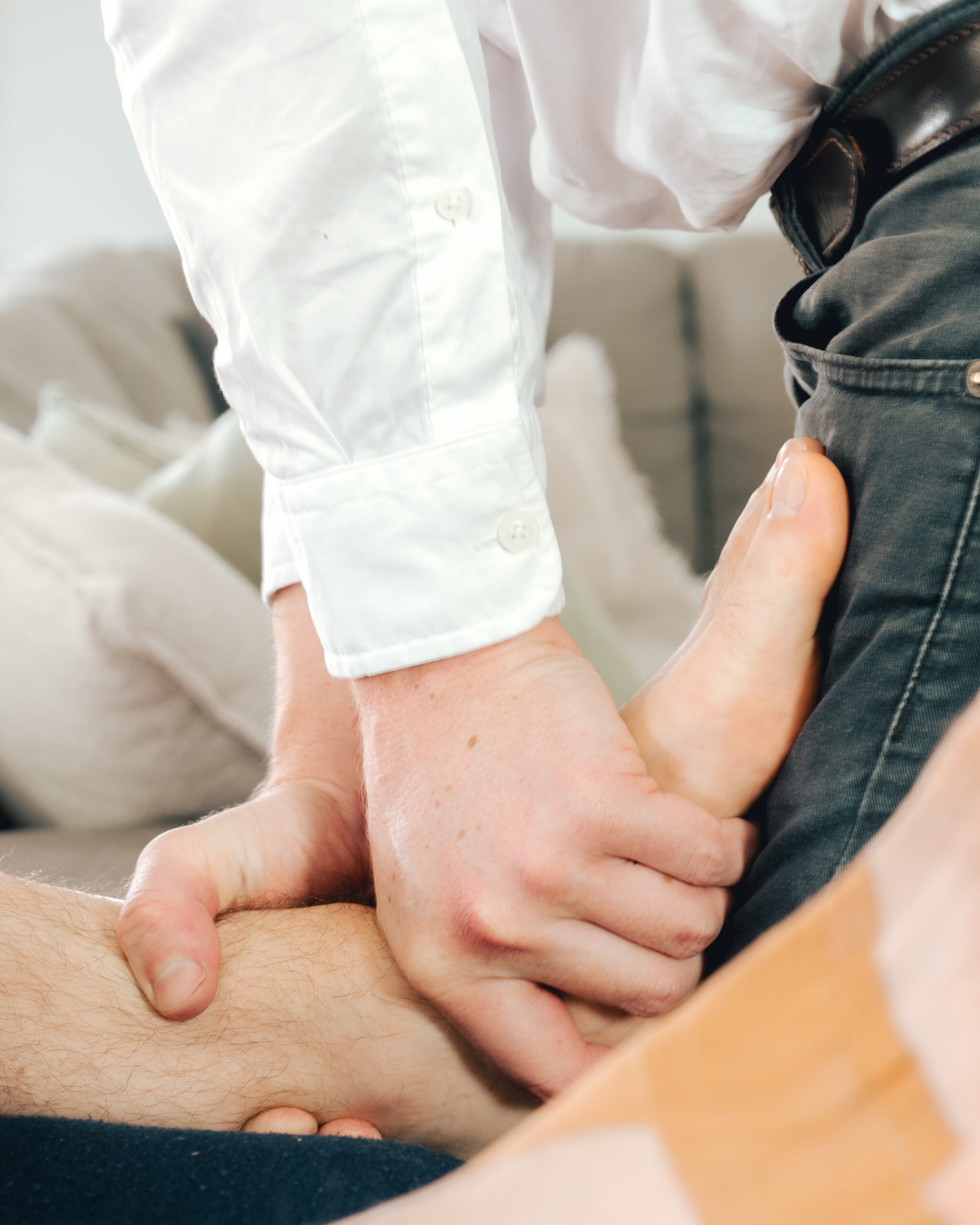
Ultimately optimal management combines hands on techniques to maximise calf, foot, and ankle mobility, a comprehensive and individualised exercise program to improve tissue load tolerance. Adjuncts such as taping,
dry needling, and other such techniques can be utilised if needed but the core of your treatment should be an exercise program.
At home pain relief options
If I had a dollar for every time people tell me they don't like using pain relief so they just tough it out I don't think I'd need to be a physio anymore. Using pain relief is in my opinion one of the best strategies to help in managing plantar fasciitis. It can assist in helping you mobilise normally, can reduce flareups in both intensity and frequency. Your GP and local pharmacist are your best options to discuss the best pain relief options with as it can often depend upon a lot of different factors such as what medications you are currently taking, how severe flare up symptoms are, as well as the general pain levels throughout the day.
At home management techniques
Rolling with an ice water bottle would have to be one of the most common at home techniques for managing the pain and stiffness associated with plantar fasciitis. To do it, simply freeze a plastic water bottle overnight - a thin walled bottle would be the best option as it allows for a greater transference of the cold to the foot, then simply sit down and place the water bottle under your foot and roll the bottle back and forth. Most benefit is typically gleaned from rolling near the plantar fascia insertion near the heel as well as through the middle of fascial band through the middle of the foot.
Stretches, as I will detail below, are probably your second best choice for at home management techniques, the most common area needing stretching is the calf, and then secondly would be the foot. Some people may benefit greatly from rolling through the foot with their ice water bottle and then doing their stretches afterwards.
Foam rolling through your posterior chain (calves and hamstrings) is probably option number three. This is a great way to reduce muscle tone through areas that may be restricted. To get the best bang for your buck - couple your foam rolling with stretches, do your foam rolling beforehand, and then your stretches after.
Physiotherapy Management of Plantar Fasciitis
Stretching and Strengthening
These are ultimately the key to beating plantar fasciitis, any good physio worth their weight will tell you so. A targeted program is needed, and needs to be prescribed at the right amount of intensity and workload to have maximal effect, without creating a significant increase in symptoms.
Strengthening
The aim of strengthening programs is to improve the load tolerance and output of tissues - whether that be tendon or muscle. Some cases of plantar fasciitis may be incredibly irritable, so starting with a heavy gym program probably isn't going to be the best option out there. There are three stages of progression types for muscles - isometric contractions, concentric/eccentric, and plyometric work. When adding in exercises or developing an exercise program for plantar fasciitis cases it's important to monitor the 24hr pattern of symptoms to ensure there isn't a significant increase in morning pain.
Isometrics
An isometric contraction is simply a contraction of the muscle where there is no movement. The best choice for this is to stand on the edge of a step or on a ledge and have the base of your toes on the edge and work on building the time of the hold to 4x30-45sec per repetition. These are usually best performed after warming up in the morning, lunch time, and then a night time just before you are about to go to bed. If you don't have access to that you could simply perform double or single leg calf raise holds building to the same time and length holds. A simple progression on from this is to add a rolled up towel underneath your toes. This simply increases the tension placed upon the plantar fascia and requires it to tolerate more load.
Concentric and Eccentric Strengthening
This forms the basis of pretty much any strengthening program you will ever receive, whether it be from a personal trainer, exercise physiologist, or physiotherapist. Concentric and eccentric muscle contractions require the shortening and lengthening of the muscle under load. You can bias one contraction style over another completely dependent upon your goals for the exercise.
The best progression on from the isometric calf raise is to start with double leg calf raises and progress your way to being able to perform them single leg. Typically I like clients to be able to develop endurance and strength in their calves so will vary repetitions and potentially add weight if needed.
The next progression on would be to do exactly as we did with the isometric calf raise and add something underneath the toes to place them in an extended position. For clients wanting to perform higher level activities such as running, team or individual sports, sports involving jumping, I would highly recommend you work on a pathway involving weighted calf raises in both a seated and standing position to target both the gastrocnemius and soleus.
Plyometrics
Last but not least is plyometrics, probably the most forgotten but potentially the most important for athletes. Plyometrics are about explosive, bouncy movements. Think hopping or jumping on the spot. We want to develop efficient tendons and muscles to be able to perform these movements quickly. A great first intro is walking either on the ground or up and down stairs on your toes and not letting your heels drop when you put weight onto your foot. Simple progressions could include skipping, jumping and hopping on the spot and then progressing to jumping forwards, then to forwards and backwards, as well as to both sides. With plyometrics the biggest progression is in the speed and velocity of the movement, you don't necessarily have to look to add weight just look to make the movement faster, add a direction to it, or increase the range of the movement (e.g. drop jumps).
Stretching
Everyone loves stretching right? Every client that I give stretches always does them perfectly, the right amount of time, the right position etc, or maybe that's just what my lecturers told me would happen at uni? Unfortunately people don't love stretching, it takes time, it takes commitment, and it takes diligence, you don't get fast results. But, stretching is probably one of the best things you can do to assist in managing plantar fasciitis. Maintaining mobility through the calf is essential as well as maintaining soft tissue length through the foot. Starting with individual stretches for the calf and the foot and then working your way to combined stretches using a stretch band or even a strong resistance band can be the best way to go. For a combined stretch, place the band over your toes and hold onto either end of it, pull the band up so that you stretch the calf as well as getting extension of the toes at the same time.