PRP Physio logo

Tendinopathy Physiotherapy Brisbane

Tendinopathy Rehabilitation

Tendon problems are way too common for my liking. From runners with Achilles or hamstring tendinopathies, to basketball players with patellar tendinopathies, all the way through to the cases of tennis elbow and rotator cuff tendinopathy. There are a lot of different sites, and they all do a lot of different things, so how do we manage them all? Thankfully, even though lower limb tendons operate slightly differently from upper limb tendons, some principles are similar.

I guess the first question people usually have is “What is a tendon?” Tendons are the link between muscles and bones and allow your bones to move as your muscles contract and relax. They absorb high levels of force and help prevent muscular injury during higher-force activities like hopping, jumping, or sprinting. They are extraordinarily important for athletic performance. But if you do too much, or load them too quickly (such as a big New Year’ resolution) you can get problems.

What will occur at the start is a reactive response within the healthy tendon tissue, with some clients presenting with what looks to be a swollen tendon. This swelling response is part of the body’s natural reaction to an overloaded tendon, you’ll be happy to know that this is reversible and it will reduce with time and proper management.

Some people might refer to it as tendinitis, but this is a common misconception, tendinopathy is the truly correct term. Tendinitis infers that there is an inflammatory response occurring, but from all the research that has currently been conducted there haven’t been any findings of an inflammatory cascade occurring. The end “opathy” means a disorder of the tendon. I look at it as a disorder of the tendon’s capacity to continue to accept and transmit load. Most times, there is no structural damage, unless you have a tendon tear. Most cases of tendinopathy have an extremely positive outlook if you commit the time and effort to work with me and commit to an exercise program. You can read more in my articles on the best exercises for tendinopathy, gluteal tendinopathy and plantar fasciitis.
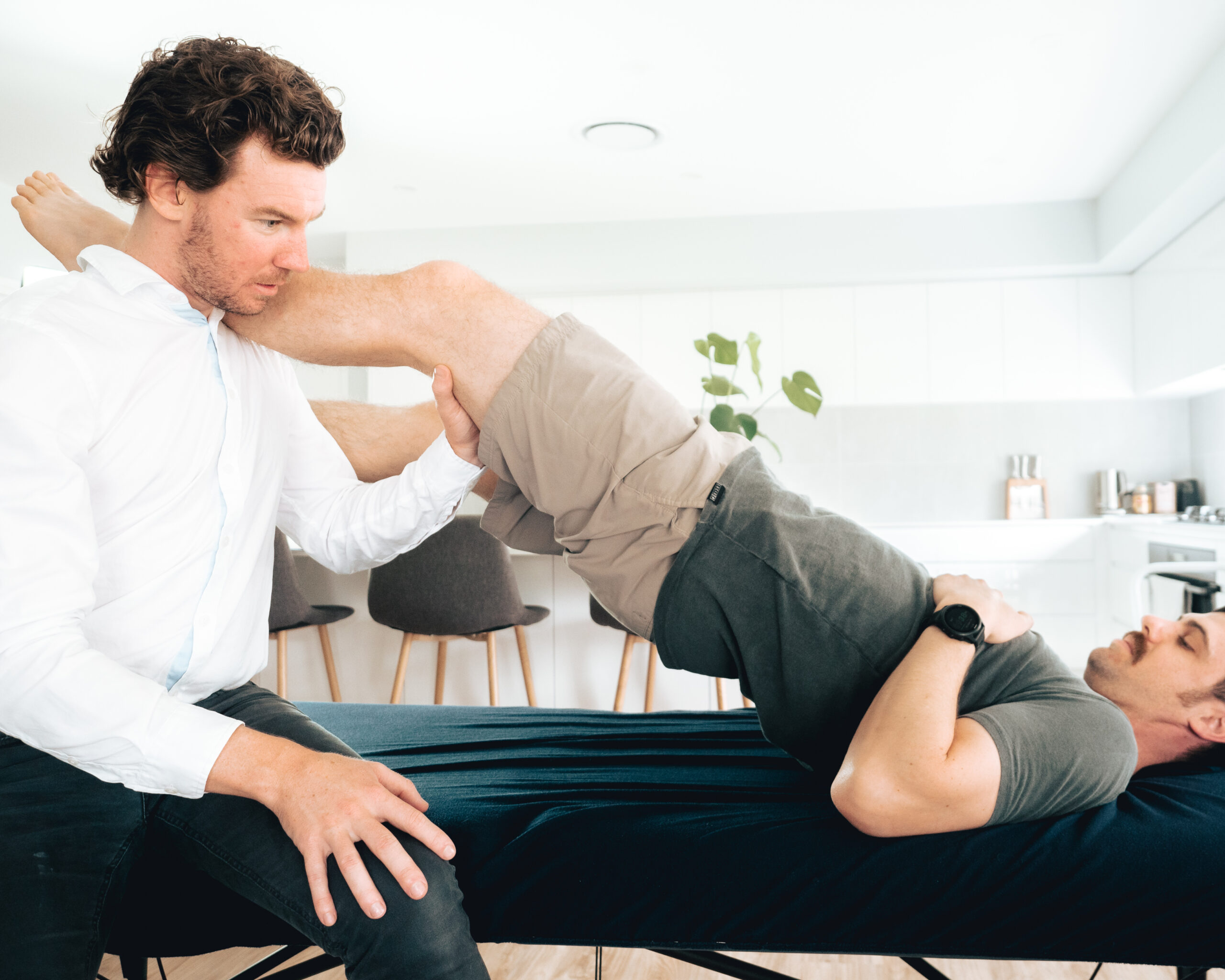
Physiotherapist assessing a client's hip and knee on a treatment table
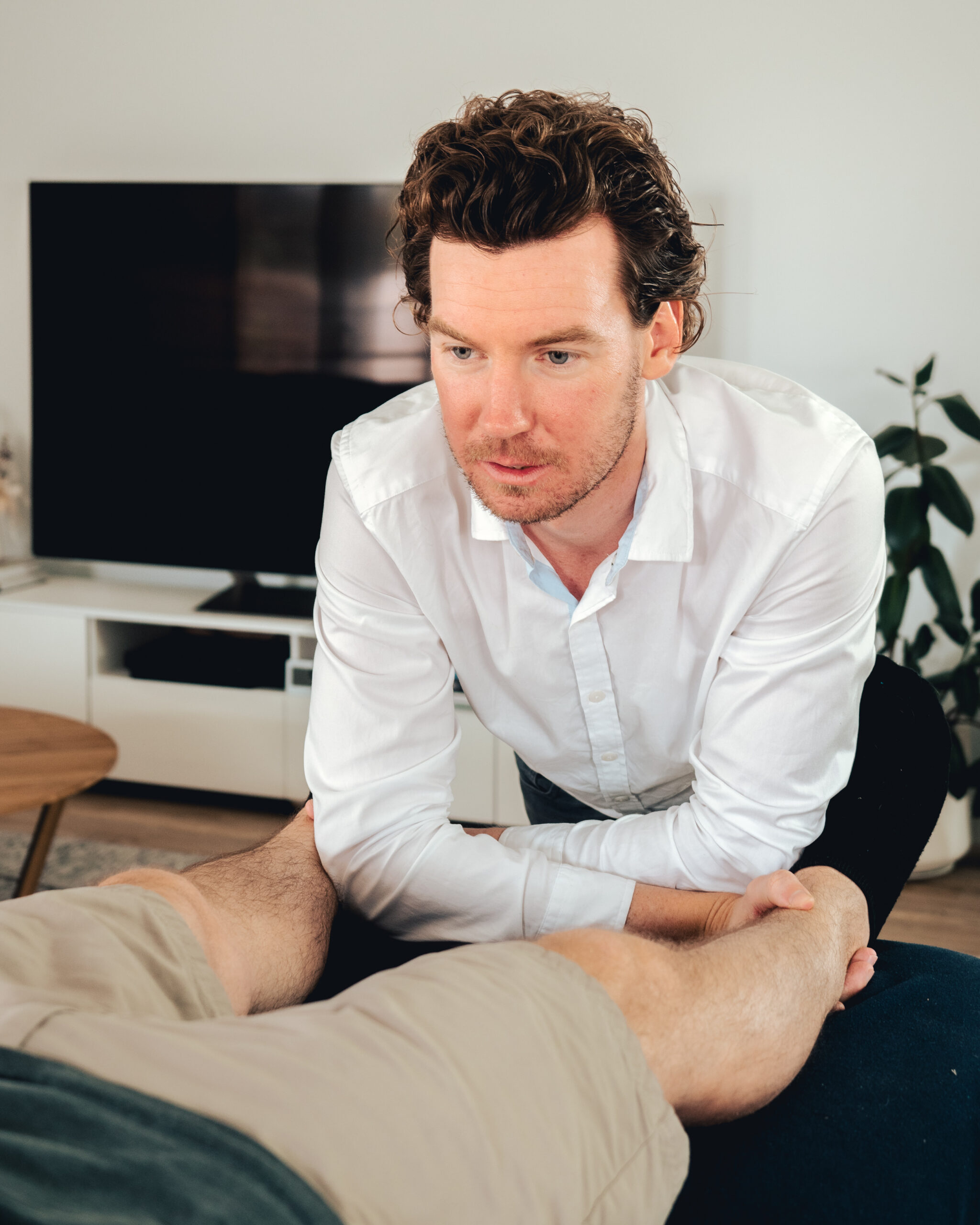
Physiotherapist assessing a client's ankle on a treatment table

What causes tendinopathy?

Jill Cook and Craig Purdam, two Aussie physios, developed what they termed the tendinopathy continuum. It is the gold standard for our current, but somewhat limited knowledge of tendons. Previously there used to be an understanding that tendinopathy was an inflammatory condition – hence the name tendonitis, but according to most recent research, the appears to be such a small amount of inflammatory markers that it’s almost not even worth mentioning. Jill and Craig proposed a three-stage continuum that tendinopathy develops along, so let’s dig into it.
Diagram of the tendinopathy continuum, from reactive tendinopathy to degenerative tendinopathy

Stages of Tendinopathy

Reactive

Reactive tendinopathy occurs when you have an acute tensile or compressive overload and is proposed to be a non-inflammatory process within the cell and matrix. Ultimately, the tendon will adapt and thicken to increase the cross-sectional area to better tolerate the load or adapt to the compressive forces. Collagen integrity of the tendon is well maintained, but there may be some separation of tendon fibres. The reactive response is largely a short-term adaptation to overload that thickens the tendon to reduce stress and increasing stiffness. The tendon can revert out from this stage provided the overload is sufficiently reduced or there is enough rest between sessions.

Dysrepair

Tendon dysrepair could also be termed “attempted healing”. There are similar changes seen in the reactive tendinopathy change however, there is a greater breakdown within the cell matrix of the tendon. The major change is an increase in the number of cells (mostly protein production – proteoglycans and collagen). An increase in proteoglycans increases the separation of the collagen and increases the disorganisation within the tendon. Some changes seen at this stage ultimately cannot be reversed, but this does not mean that your tendon is “damaged” “fragile” or “weak” by any means.

Degenerative

The changes that we see in the tendon dysrepair stage are simply increased in this stage. The main progression that we see is areas of cell death. Someone could simply describe degenerative tendon as tendon that isn’t useful or functional, though this is only in isolated areas and it isn’t your entire tendon. The tendon within this area is disordered, filled with neurovascular structures and matrix breakdown products, and little collagen is present. There is largely no chance of reversal once it has reached this stage of the tendon continuum. In good news though these areas of degenerative tendon are simply just areas that won’t load, the amount of healthy tendon significantly outweighs the amount of degenerative tendon in almost all cases. Research has also found, that recovery is not dependent upon this changing, you can have a fantastic outcome, and the amount of degenerative tendon won’t change.
A Degenerative tendon – That sounds terrible
Don’t worry, I totally get it. Degenerative tendon probably wasn’t the best word for them to choose, seeing as I then have to explain it to my clients. But everybody has degenerative tendon. It is a sign that you have used your tendon in your lifetime – particularly during your teenage years. But degenerative tendon is tendon that isn’t useful to us, it can’t be used, just think of it as a little dead spot in your tendon. You still have a vast amount of completely normal functioning tendon surrounding it. The analogy that is often used is to think of a doughnut, in the middle is the degenerative tendon and the doughnut itself is the healthy tendon. We can’t treat or fix the degenerative area, so we have to focus on the healthy tendon surrounding it and make it as strong and load-tolerant as possible.

Tendinopathy Subjective Assessment

Tendons are all about loading, we need to have an in depth understanding of what you have been doing and what has potentially changed in the lead up to symptom onset. For runners it could be an increase in distances or change in pace. In a tennis elbow case someone may have suddenly decided they wanted to build an entire outdoor deck in one weekend. We may be looking for something big or something small, but often there is a discernible and notable change prior to symptom onset.

Has your load changed?

Tendons are all about load, so after finding out about how your symptoms started and why you are calling me to come to assist you, what you have been doing is the biggest thing I am interested in. As soon as someone mentions pain on a tendon or at a tendon attachment site, my interest is already piqued. What I’m interested to know isn’t what you did the few days leading up. I want to know what you have been doing for the last three or four months and whether something has changed. It often isn’t a big change, maybe you run consistently, but you suddenly increased your pace and distance at the same time, or perhaps you added in more hill work, for tennis elbow it could be something as simple as needing to write a big report at work and spending a lot more time at the computer. It can be these small and simple things that can often result in a tendon overload process kick-starting.

How does it behave?

The next biggest thing I’m interested in is how the pain behaves, specifically what makes it worse and when do you feel it? Some clients may report that they can do a 5km run and feel good but then be hobbling the next morning. Others may find they can type on a computer for 45 minutes, but then they will need a break because of the pain building up. Understanding how the pain is affecting your quality of life and ability to function is integral to understanding tendinopathy. This also gives me a baseline for your functional and tendon loading assessment and for how I will develop your exercise program. If you have more latent symptoms the day after, we may be a little more cautious with our programming to avoid any significant spikes early on and set ourselves back, but take small but consistent steps forwards.

Exercise Routines

Understanding your fitness and exercise program, along with your goals and what you want to achieve, allows me to understand your goals and how we will develop a plan to get you to where you want to be. If you are a runner or playing in a sports team, knowing whether you have an upcoming event or game that you are aiming for will allow us to plan backwards and have markers for what you need to be achieving when to make sure you are on track for achieving your goal.

Injury History

Last but not least is injury history. I need to know if you’ve suffered any previous injuries to the specific muscle for example, a history of calf strains for a client presenting with Achilles tendinopathy. This may show a potential underlying weakness within the muscle in question and could be a potential contributing factor to your pain onset. It also allows me to understand your overall level of fitness and general conditioning. A history of recurrent injuries could mean a period of extended absences from training.

Tendinopathy Objective Assessment

Tendons are all about load and how they respond to load. An objective assessment to rule in tendinopathy should be all about assessing the loading capacity of the tendon. For each tendon this is going to be very different. For tennis elbow it will involve gripping and isolated activation of the wrist extensor muscle group. For the Achilles tendon it will be about assessing calf raises, jumping and hopping. For the hamstring tendon we'll also have to assess how the tendon responds in a compressive position. Each tendon is different, and every tendinopathy is different.

Upper Limb

Upper limb tendons are simpler than lower limbs, particularly at the elbow. When looking at cases of either tennis elbow or golfers elbow isometric assessment of the affected muscles and palpation of the affected tendons and bony origin point are the two key identifiers. The absence of any acute trauma to the elbow will rule out a lot of other potential factors. The main differential diagnosis to make can be determining if there is any neural system involvement. This finding can be quite common in tennis elbow as either a distinct diagnosis or occurring at the same time as tendinopathy.

Looking at rotator cuff tendinopathy it can be quite a common finding on ultrasound or MRI, but how common is it to be symptomatic of it? It can be quite difficult to truly say, special tests that isolate structures such as specific rotator cuff muscles are notoriously poor at being specific. The hallmark signs of a rotator cuff tendinopathy are weakness and pain with shoulder external rotation and shoulder elevation, two things that are present in about 80% of the clients with shoulder pain I see. So, what do we do? I utilise some specific special tests around the shoulder but not to prove that it is rotator cuff tendinopathy, but to test if it isn’t the cause. Some of the special tests are better to rule out causes of symptoms than they are at ruling in.

Often a useful procedure to utilise during an assessment for rotator cuff tendinopathy is the Shoulder Symptom Modification Procedure. It was designed by a UK physiotherapist, Jeremy Lewis, and utilises a range of techniques and adjustments to the shoulder, shoulder blade, or thoracic spine to change symptoms during a task. With this testing battery, I can perform fast tests to look for potential areas of fast improvement where I can both improve your function and reduce your pain in the short term, as well as glean information as to contributing factors to your symptoms.

Lower Limb

Tendinopathies affecting the lower limb are a bit easier to assess and diagnose, but there are still a few key things that we need to make sure of so that we don’t misdiagnose tendinopathy if it’s something else. Because tendons act like big springs in the lower limb, I need to assess their capacity to do just that. We need to work through a loading spectrum to assess how the tendon responds, what should occur in a classic case of tendinopathy is that the pain stays isolated in the same spot and increases in intensity.

For an Achilles tendinopathy, a loading progression might look like this:

Double-leg calf raises
Single-leg calf raises
Jump on spot
High knee running on the spot
Hop on spot
Hopping forwards
Hopping forwards as fast as you can

This is typically the progression I work through and try to get up to 6-7/10 pain to at least have enough information to match with a clinical picture. For hamstring tendinopathy, we may want to assess some other factors. In those cases, compression of the tendon is a big factor.

I will want to see what happens to the pain response as we load into more and more hip flexion.

In those cases, a loading spectrum could look something like this:

Double leg bridge
Single leg bridge
Long level single leg bridge
Single leg bridge with the foot on my shoulder
Deadlift
Single leg deadlift

Differential diagnosis can take on many fronts, for hamstring tendinopathy, it is often a case of ruling out sciatic nerve and lower back referral as two potential sources. For patellar tendinopathy, it is most often a case of ruling out patellofemoral pain as the cause. For Achilles tendinopathy, I find it is often differentiating between different disorders of the tendon – for example, tenosynovitis which is a friction-based disorder of the sheath that surrounds the tendon can be quite a common presentation too.

Steps to Success for Rehabbing Tendinopathy

Tendinopathies are a little different to most acute injuries. We don’t really have a tissue injury that we have to respond to or manage. It is simply a matter of respecting the tendon and its load tolerance and working within those limits. For that reason I don’t really recommend a treatment package for tendinopathies, It can be a little difficult to predict how they will respond and there isn’t typically the need for large amounts of hands-on treatment. I would often recommend that you simply undertake a recommended treatment plan that we will determine together in our initial consultation that will detail our goals and treatment timeline, what your treatment will involve, and any other adjuncts you may need such as orthotics.

Hands On Treatment and Adjunct Therapies

Manual therapy, whilst not the be-all and end-all in the management of tendinopathy, is still an integral part. Exercise is truly what you need to be doing, but let’s talk about how hands-on treatment and some other adjuncts can help. Manual therapy is one of the core treatments physiotherapists can provide. We are arguably one of, if not the best professionals at it. Utilising massage and trigger point release work helps to reduce muscle tone and improve the capacity for the muscle to work (but doesn’t increase load tolerance of the tendon), allowing you to do more for the same level of symptoms. It’s important to remember that massage often has short-term effects, so don’t expect one massage to fix you, no matter how good you feel after.

Joint mobilisations is another technique physiotherapists use pretty often. Often there may be an underlying joint stiffness either at the ankle or knee that may be affecting the way your body can load and adapt to movements and positions during either sport or daily life. Mobilisations are moving the joint in a gliding motion through its plane of movement to increase the range of motion.

Dry needling is one of the most popular adjunct treatments out there that physiotherapists can use. Some people make some audacious claims about its effectiveness but I like to keep it simple. I utilise dry needling where hands-on release doesn’t seem to do the job of releasing muscle tone. Dry needling can have really nice short-term effects really quickly, like 30 seconds to a minute quickly. If we use it well, it can provide you with some significant benefits that we can then build on with a strengthening program.

Taping is probably the last of the adjuncts that I commonly use in tendinopathy cases. Often I will look to support something to take the stress away, for example, a low dye taping of the foot to improve force absorption to reduce stress on the Achilles or a deload taping for the shoulder to allow the rotator cuff tendons to settle. In other cases, though, such as tennis elbow, we can look to do a direct offload of the tendon to reduce symptoms and improve function. Just always keep in mind that tape isn’t a long-term fix, we can’t just keep strapping something up and expect you to be better in 4 weeks’ time, it needs to be part of a complete rehabilitation plan.
Physiotherapist applying dry needling to a client's calf

Tendinopathy and Exercise

I regret to inform you that tendinopathy rehabilitation cannot be completed without an exercise program. I get that home exercise programs aren’t the most enjoyable thing in the world, but research says they are simply the most effective way to manage tendinopathy in the long term and the only way to improve a tendon’s load tolerance. This is exactly why we don’t recommend complete rest as a treatment option, at least only in extenuating circumstances. If you rest and do nothing, the pain will settle, but the amount of load your tendon can tolerate decreases. Completion of the functional and load tolerance assessment forms the baseline knowledge of where we can begin an exercise program. If you can tolerate hopping on the spot, that’s great because we can probably start with some plyometric tendon loading. But if you can only perform double leg calf raises before it becomes too painful, that’s ok too, we just develop your program starting at a lower loading point.

With tendons, we are realistically looking at a three-day exercise cycle, but in the earlier days, it could be shorter. Once we reach the end of rehabilitation, we will probably have a low load day, which is where we perform isometric holds to keep the load going through but causing no irritation of symptoms. The second day is often when we perform our strengthening work. This could be as simple as some single leg calf raises if you have Achilles tendinopathy, or if you have access to a gym, it could be a complete gym strengthening program. Day three is our high load day. This is where we perform plyometric work for the tendon. Looking at an Achilles tendinopathy, this could involve stair walking on your tiptoes, skipping, hopping drills, or many other options. After this day, we will revert to day one, where we again load lightly and aim to let any lingering symptoms settle.

We can’t neglect the rest of the body though, we will have a targeted tendon loading program, outside of that though we will also have a specific and individualised exercise program to address other potential weaknesses, areas of tightness or stiffness that may have predisposed you to tendinopathy, or are a secondary adaptation after symptoms started.
PRP Physio rehabilitation plan on a table during a home visit

Tendon Exercise Explained

Your Questions About Tendinopathy

What does tendinopathy feel like?

Tendinopathy usually causes pain that is well localised to the tendon, such as just above the heel, below the kneecap or on the outside of the hip or elbow. It is typically stiff and sore first thing in the morning or after rest, eases as you warm up, and then is often worse later that day or the next morning after activity. Pain is closely linked to load, so movements like jumping, running, climbing stairs or gripping usually hurt more. The tendon may also feel tender to touch and slightly thickened.

Is it tendinitis or tendinopathy?

Tendinitis suggests the main problem is inflammation, and for many years that is how tendon pain was described. Research now shows that most painful tendons are not primarily inflamed. Instead, the tendon has been overloaded and its structure has changed as it tries to adapt. That is why tendinopathy is the preferred term. The difference matters, because it explains why anti-inflammatory approaches and rest alone often do not fix the problem, while progressive loading of the tendon does.

Why is my tendon worse in the morning?

Morning stiffness and pain are classic signs of tendinopathy. After a period of rest, the tendon and surrounding tissues stiffen, so the first steps out of bed or the first movements of the day feel tight and sore. It usually eases within a few minutes to half an hour as the tendon warms up. How bad your morning stiffness is can be a useful guide to how the tendon responded to the previous day, so I often ask you to track it to help guide how hard we push your rehab.

Do I need a scan for tendon pain?

Usually not. Tendinopathy is diagnosed from your history and a clinical assessment, and scans often do not change the treatment plan. Ultrasound or MRI can show changes in the tendon, but similar changes are often seen in people with no pain at all, and they do not reliably predict how you will recover. A scan is more useful if a tendon tear or rupture is suspected, if the diagnosis is unclear, or if you are not improving as expected. If imaging is needed, I will write to your GP to organise it.

Will my tendinopathy come back?

It can, particularly if load increases suddenly or you stop doing your strength work once the pain settles. Tendons respond to the load they are used to, so a big jump in training, a new sport, a change in footwear or a return after time off are common triggers. The best protection is continuing some tendon strengthening as part of your routine and increasing training gradually. If you notice early warning signs, like more morning stiffness, adjusting your load early usually stops it becoming a bigger problem.

Tendinopathy FAQs

Complete rest is rarely the answer. Resting eases the pain, but the tendon loses its ability to handle load, so the pain often returns as soon as you get back to activity. It is better to reduce the load that aggravates it and keep the tendon working with the right exercises.

Tendons adapt slowly. Most people notice a real improvement within 6 to 12 weeks of a consistent loading program, and longer-standing tendinopathies can take 3 to 6 months or more to fully settle.

Cortisone can reduce pain in the short term, but it does not improve the tendon's capacity, and for some tendons it can slow recovery. In some cases, such as gluteal tendinopathy with bursitis, it can settle pain enough to get rehab started. It is a decision best made with your GP, and exercise remains the main treatment.

Usually yes. My guide is pain no higher than about 4 out of 10 during and after running, which settles by the next morning. If it is worse the next day, we reduce the load and build up again gradually.

Each consultation is 45 minutes and costs $110, for both your first appointment and follow-ups. Dry needling, taping and exercise bands are included at no extra cost. If you need a longer course of rehab, my 3, 6 and 12 week rehabilitation programs work out cheaper than paying per session.

Yes. You can claim a rebate from your health fund for every session. PRP Physio is not a preferred provider for any fund, so your rebate may be slightly smaller than at a preferred provider. Your fund can confirm the exact amount using item code 500 for your first consultation and 505 for follow-ups.

Yes, if your tendon pain was caused by your work, such as repetitive tasks or heavy lifting. Your GP starts the claim and gives you a WorkCover certificate, which acts as your referral. Once your claim is accepted, I bill WorkCover directly, so there are no out-of-pocket costs for you. WorkCover covers your first five sessions, and I speak with your case manager if you need more.

Mobile Physio: Get in Touch

I'm ready to book online now

For those who are ready to book an appointment right now, let's get started on your journey back to sport!

Just hit the button below and it will take you straight to an online booking platform. You will just have to enter a few details and it will all be booked in for you!

I'd rather have a conversation first

Some injuries are complex, should you see a GP first, should you go get a scan, is a physio even the right person to see? Sometimes a 10 minute conversation can be enough to answer some of these questions.

Just submit a contact form on the link below and I'll give you a call ASAP and we can chat through a few things to get you moving in the right direction!
© 2026 PRP Physio. All rights reserved.