A sore, bony lump just below the kneecap is one of the most common things I see in active teenagers. Osgood-Schlatter disease can be painful and frustrating, but it's very manageable, and most kids keep playing sport while it settles.
If your teenager is complaining of knee pain after sport, rubbing a bump just below their kneecap, or finding it hard to kneel, Osgood-Schlatter disease is one of the most likely explanations. It's one of the most common causes of knee pain in active young people, and I see it regularly across junior football, netball, basketball, Little Athletics and dance.
Like
Sever's disease in the heel, Osgood-Schlatter is linked to growth, it settles as your child finishes growing, and it doesn't cause lasting damage in the vast majority of cases. In this guide I'll explain what's happening in the knee, what to look out for, how long it lasts, and how to keep your child active and enjoying sport while it settles.
What is Osgood-Schlatter disease?
Osgood-Schlatter disease is irritation of the growth plate at the top of the shin bone, just below the kneecap. The quadriceps muscles on the front of the thigh join into the patellar tendon, which runs from the kneecap down to a bony bump on the shin called the tibial tuberosity. During childhood and adolescence, this bump is a growth plate made partly of cartilage.
Every time your child runs, jumps, kicks or squats, the quadriceps pull on that growth plate through the patellar tendon. In adults, the attachment is solid bone and copes easily. In growing kids, it's softer and more sensitive. When there's a lot of repetitive pulling, especially during a growth spurt when the thigh bone is lengthening and the quads are tighter, the growth plate becomes irritated and painful. Over time, the body may lay down extra bone at the site, which is why many kids develop a visible, bony lump.
Despite the word "disease", Osgood-Schlatter isn't an illness or an infection. It's an overuse irritation of a normal growing area of bone.
Who gets Osgood-Schlatter disease?
Osgood-Schlatter typically affects children between about 10 and 15 years of age. Girls tend to develop it a little earlier, often from around 10 to 13, and boys a bit later, often from around 12 to 15, reflecting the timing of their growth spurts. It can affect one or both knees.
It's more common in kids who:
- Play sports with lots of running, jumping, kicking and changing direction, such as football codes, soccer, basketball, netball, volleyball, gymnastics and dance
- Are going through a rapid growth spurt
- Have tight quadriceps muscles
- Have recently increased their training, started a new season, or joined a representative team
- Play several sports at the same time
Signs and symptoms
Common signs of Osgood-Schlatter disease include:
- Pain just below the kneecap, at the bony bump on the top of the shin
- A tender, sometimes swollen lump in that area
- Pain during or after running, jumping, kicking, squatting or climbing stairs
- Pain when kneeling, which is often one of the most painful positions
- Pain that eases with rest and returns with activity
- Tight quadriceps muscles
The pain usually builds gradually over weeks rather than starting with one injury. Some kids also notice the bump is sore when bumped or knocked, for example in contact sports.
When knee pain might be something else
Osgood-Schlatter is common, but it's important to make sure the knee pain isn't coming from something else. Please see your GP if your child:
- Has knee pain after a fall, a tackle or a clear injury, particularly with swelling
- Has a knee that locks, gives way or can't fully straighten
- Has pain at rest or at night
- Has redness, heat or swelling around the knee, or a fever
- Has developed a limp, especially if they also have pain in the thigh or groin
That last point is important. Some
hip conditions in teenagers can refer pain to the knee, so a limp with knee pain always needs to be checked properly.
Pain around or behind the kneecap rather than below it is more likely to be patellofemoral pain, which I've written about in
Patellofemoral Pain: isn't that just knee pain?
How is it diagnosed?
Osgood-Schlatter is usually diagnosed from your child's history and a physical assessment. I'll ask about their age, sports, training load and any recent growth, then check where the pain is, how their knee and hips move, how tight their quads are, and which movements reproduce the pain. An x-ray isn't usually needed, but it may be used if the presentation is unusual, if there was an injury, or if symptoms aren't improving as expected.
How long does Osgood-Schlatter last?
Osgood-Schlatter settles once the growth plate matures and fuses, usually by around 14 to 18 years of age. Before then, it tends to come and go, flaring up during growth spurts or busy sporting periods and settling during quieter times. Many kids have symptoms on and off for 12 to 24 months, although this varies a lot.
The bony lump below the kneecap often remains into adulthood. It usually doesn't cause problems, though some adults find kneeling on it uncomfortable.
Does my child need to stop sport?
For most kids, no. Rest alone doesn't make Osgood-Schlatter go away, because the underlying cause is growth, and stopping sport completely can take away a big part of your child's life. Instead, the goal is to find the amount of activity their knee can handle and adjust things during flare-ups.
I use a simple pain scale with kids and parents:
- 0 to 3 out of 10: generally fine to keep going, as long as the pain settles by the next morning.
- 4 to 5 out of 10: it's time to modify, by reducing running and jumping, playing fewer minutes or skipping some drills.
- Above 5, limping, or worse the next day: the load needs to come down more significantly for a while.
Modifying load might mean cutting back on extra sessions, dropping one sport for a few weeks, sitting out sprint or jumping drills, or swapping some training for swimming or cycling. In a bad flare-up, a short break from running and jumping can help settle things before a gradual return.
It's also worth talking to your child's coach. Most coaches are very supportive once they understand what's going on, and small changes at training can make a big difference.
Managing Osgood-Schlatter at home
Ice after activity
An ice pack wrapped in a damp towel on the sore area for 10 to 15 minutes after sport can help ease pain. Never apply ice directly to the skin.
Protect the knee from knocks and kneeling
Kneeling directly on the bump is often very painful. A cushion, a folded towel, or knee pads for sports like volleyball or for activities that involve kneeling can help. Some kids find a patellar strap, a band worn just below the kneecap, reduces pain during sport.
Stretching
Gentle stretches for the quadriceps, hamstrings, hip flexors and calves can help, especially during growth spurts. Stretches should feel like a stretch, not pain, and should be held for around 30 seconds.
Strengthening
Strength exercises are a key part of managing Osgood-Schlatter. Strengthening the quads, hips and calves helps the knee handle the demands of sport. Early on, this might include isometric exercises, like a wall sit held for 30 to 45 seconds, which often ease pain. As symptoms settle, we progress to exercises like step-ups, split squats, bridges, calf raises and controlled landing drills.
Pain relief
Simple pain relief may help during flare-ups. Talk with your GP or pharmacist about what's appropriate for your child.
How physio can help
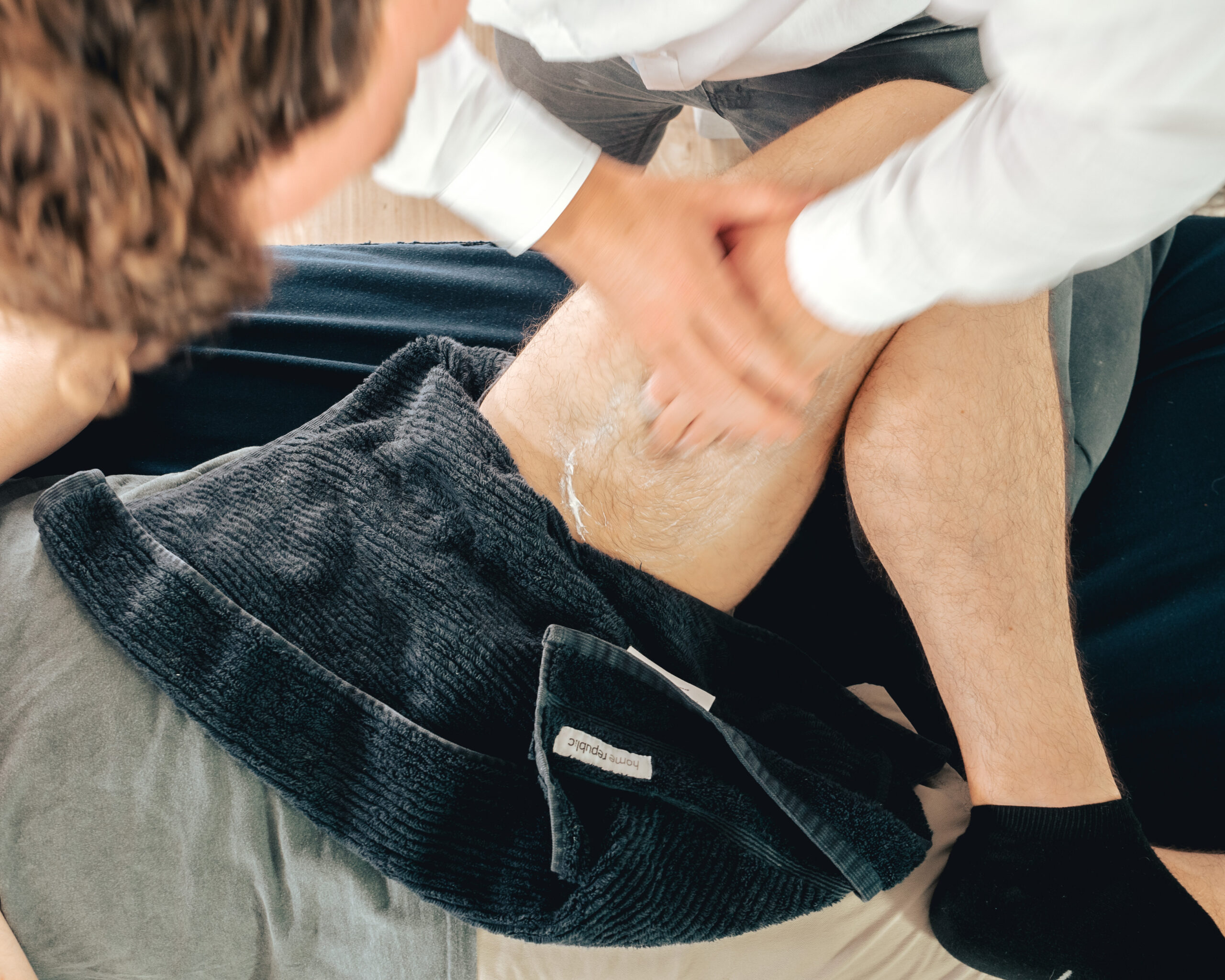
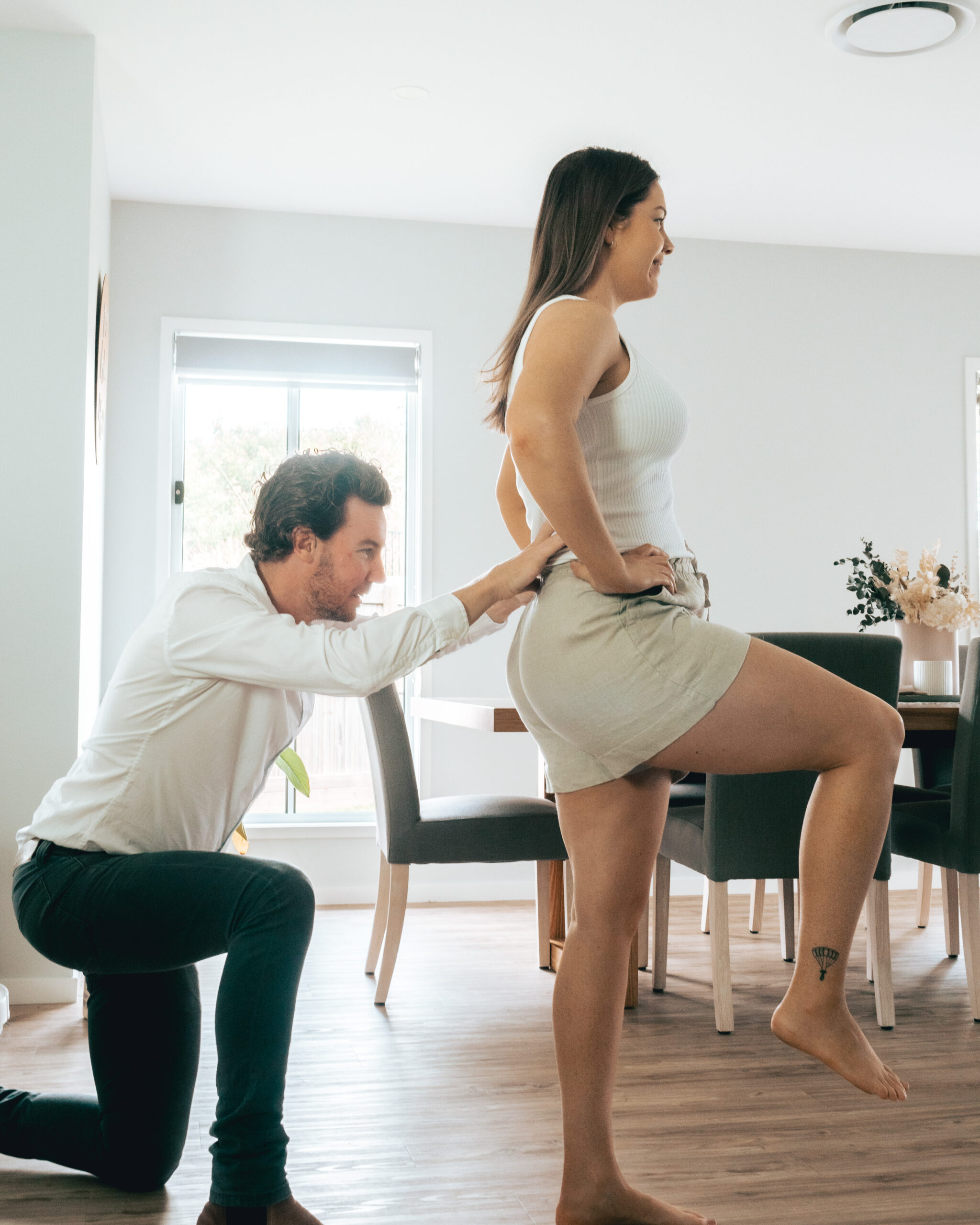
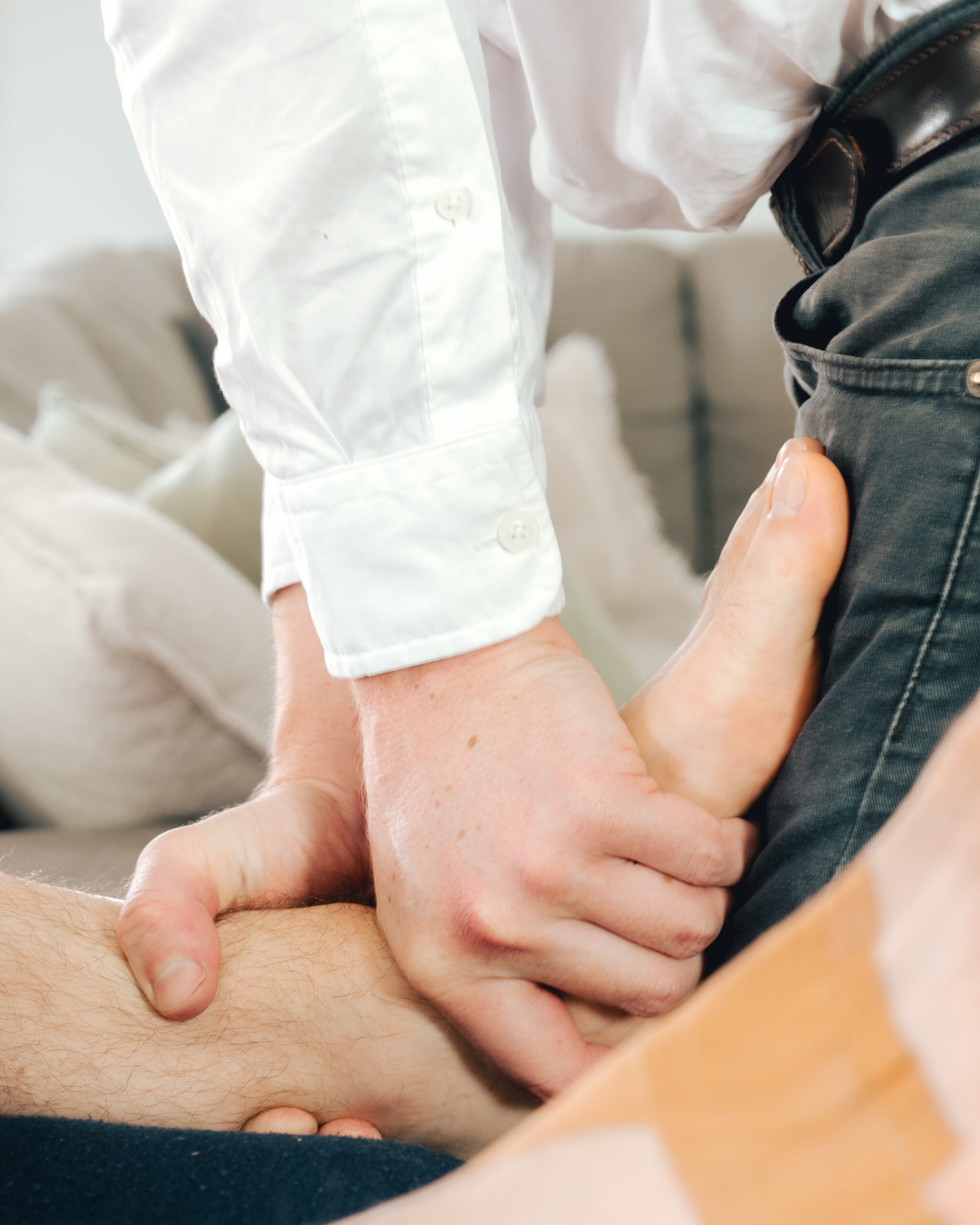
Physio for Osgood-Schlatter focuses on easing pain, managing training load and building strength so your child can keep enjoying sport. When I see a young athlete with knee pain, I'll:
- Confirm the diagnosis and rule out anything that needs a medical review
- Explain what's going on to both you and your child, so they understand it's not dangerous and what they can do about it
- Map out their weekly load across all sports and help plan sensible adjustments
- Set up a short, achievable stretching and strengthening program
- Use taping, a patellar strap or hands-on treatment where it helps
- Guide a gradual return to full training after a flare-up
I keep
exercise programs for kids short and simple, usually three or four exercises that fit into a normal week. A big program that doesn't get done doesn't help anyone. You can read more about how I work with young athletes on my
adolescent and junior sports physio page, and more about knee problems in general on my
knee pain physiotherapy page.
Because I'm a mobile physio, I can see your child at home, which makes appointments much easier for busy families. A parent or guardian needs to be present for appointments with anyone under 18.
Common myths about Osgood-Schlatter
"They just need to rest until it goes away"
Rest can help settle a bad flare-up, but long periods of complete rest don't speed up the growth plate maturing. When kids return after a long break, their muscles are often weaker and the knee flares up again. Managing load and building strength works better than stopping and starting.
"Playing through it will cause permanent damage"
Continuing to play with mild pain that settles by the next day is generally fine and doesn't cause lasting harm. The pain scale above is a practical guide. What we want to avoid is pushing through significant pain week after week, which keeps the knee irritated for longer.
"It's just growing pains"
Growing pains and Osgood-Schlatter are different things. Growing pains usually cause a vague ache in both legs in the evening or at night, without a specific sore spot, and don't stop kids from playing sport. Osgood-Schlatter causes pain in a specific spot below the kneecap that's linked to activity.
Getting back to full sport after a flare-up
If your child has needed to cut right back, a gradual return helps stop the knee flaring up again. I usually look for pain-free walking and stairs, the ability to do a wall sit and step-ups with little or no pain, and pain staying at 3 out of 10 or less during light running before building back into full training, then games. Each step usually takes a few days to a week, and your child should only progress if the knee isn't worse the next morning.
Can Osgood-Schlatter be prevented?
You can't prevent growth, but you can reduce the chance of a painful flare-up:
- Build training up gradually at the start of each season, after holidays and when joining a new team.
- Keep an eye on total load across all sports and training, not just one team.
- Encourage variety. Playing a mix of sports is generally better for growing bodies than specialising early in one.
- Allow regular rest, ideally one or two days a week without organised sport and some time off across the year.
- Include strength training. Supervised strength training is safe for teenagers and helps their bodies cope with sport.
- Act early. A sore knee that's managed early usually settles faster.
Will it affect my child long term?
For the vast majority of kids, Osgood-Schlatter settles completely once they finish growing and doesn't cause any long-term problems with their knee or their sport. A bony lump below the kneecap may remain, and a small number of people have some ongoing discomfort with kneeling. Rarely, a small loose piece of bone can remain in the tendon and cause persistent pain into adulthood, which can be assessed by a specialist if needed.
The bottom line
Osgood-Schlatter disease is a very common cause of knee pain in active teenagers. It's linked to growth, it settles with time, and with sensible load management and a good strength program, most kids keep playing sport throughout. If your child's knee pain is affecting their sport, school or sleep, I'd be happy to help you work out a plan that keeps them active and enjoying the game.
This article is general information only and isn't a substitute for an individual assessment. If you have pain or an injury, speak with your physiotherapist or GP about your situation.