It's one of the most common questions I get asked, usually by someone who has just been told they have "wear and tear" in their knee. The short answer is that the research is far more reassuring than most people expect.
"Running will wreck your knees." Most runners have heard it from a well-meaning friend, a family member or even a health professional at some point. And if you have been told you have knee osteoarthritis, it can feel like the end of your running days.
I see a lot of runners and a lot of people with knee arthritis, and this question comes up almost every week. So in this post I want to walk through what knee osteoarthritis actually is, what the research says about running and your knees, and how I help people keep running, or get back to running, when their knees are giving them grief.
What is knee osteoarthritis?
Osteoarthritis is the most common joint condition in Australia, and the knee is one of the joints it affects most. It involves changes to the whole joint, not just the cartilage. The smooth cartilage covering the ends of the bones becomes thinner and less even, the bone underneath responds by remodelling, small bony spurs can form around the edges, and the joint lining can become irritated and produce extra fluid.
The old description of osteoarthritis as "wear and tear" isn't very helpful. It suggests your knee is like a car tyre that wears down every time you use it, and that the only way to protect it is to use it less. That isn't how joints work. Cartilage is a living tissue that relies on movement and load to stay healthy. It doesn't have its own blood supply, so it gets its nutrients from the joint fluid, which is pushed in and out of the cartilage as you load and unload the joint. In other words, your knee needs movement.
Common symptoms of knee osteoarthritis include:
- Pain around the knee with walking, stairs, squatting or kneeling
- Stiffness first thing in the morning or after sitting for a while, which usually eases within half an hour
- Swelling after a busy day or a bigger run
- Clicking or grinding sensations
- Reduced bend or straightening of the knee
- Pain that tends to flare up and settle down in cycles
Osteoarthritis becomes more common as we get older, but age isn't the only factor. A previous knee injury, particularly an
ACL injury or a
meniscus tear, is one of the biggest risk factors, which is why we sometimes see knee osteoarthritis in people in their thirties and forties. Body weight, genetics, muscle strength and general activity levels all play a part too.
What does the research say about running and knee arthritis?
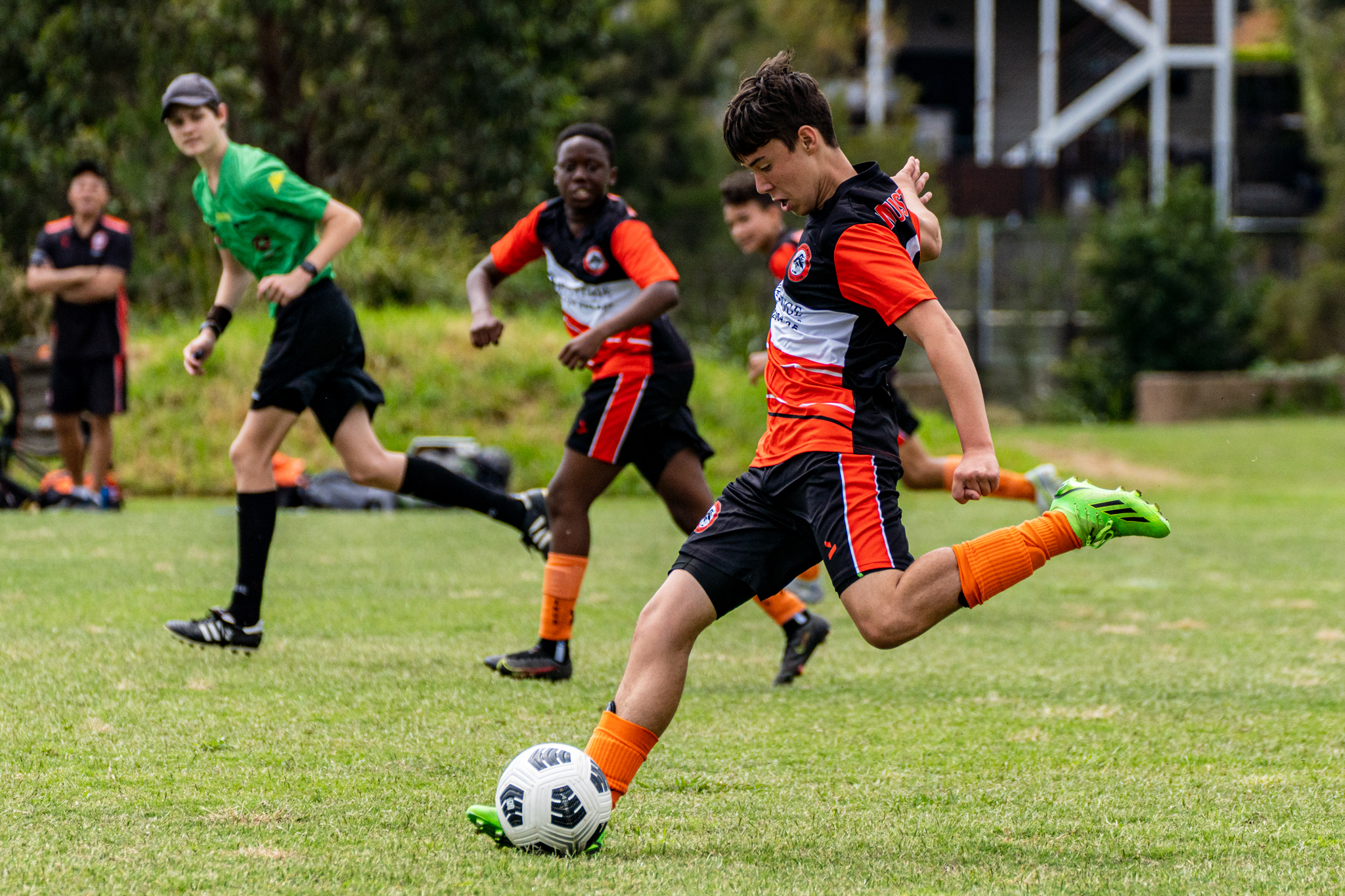
This is where things get interesting. If running really did wear out your knees, we would expect runners to have much higher rates of knee osteoarthritis than non-runners. When researchers have looked at this, that isn't what they found.
A large review that pooled data from studies involving well over 100,000 people found that recreational runners actually had lower rates of
hip and knee osteoarthritis than people who didn't run. In that review, around 3.5% of recreational runners had hip or knee osteoarthritis, compared with around 10% of sedentary people. The group with the highest rate was elite and competitive runners, who sat around 13%, likely reflecting very high training volumes over many years.
Other studies following large groups of people over time have found similar things. Running at a recreational level doesn't appear to increase the risk of developing knee osteoarthritis, and in some studies runners report less knee pain over time than non-runners.
So how can that be? A few reasons are likely:
- Cartilage adapts to load. Studies using MRI have shown that knee cartilage responds to running much like muscles and bones do. It changes shape under load and recovers within hours, and regular loading seems to help it stay healthy.
- Runners tend to be stronger and lighter. Body weight and quadriceps strength both influence knee osteoarthritis, and regular runners often do better on both.
- Running is shorter contact time than you'd think. Each step involves a higher force than walking, but you take fewer steps to cover the same distance, so the total load on the knee over a kilometre isn't dramatically different.
It's worth being clear about what this research does and doesn't tell us. It tells us that recreational running isn't a major cause of knee osteoarthritis for most people. It doesn't mean running is risk free, and it doesn't mean everyone with knee arthritis will feel great running. Very high volumes, a previous significant knee injury, or a big jump in training can all change the picture for an individual.
I already have knee osteoarthritis. Can I keep running?
For many people, yes. There is good evidence that people with knee osteoarthritis who already run don't seem to make their arthritis worse by continuing to run, and some report less knee pain than those who stop. What matters more than whether you run is how you manage your running load and how your knee responds.
The way I think about it with clients is that knee osteoarthritis lowers your knee's tolerance to load for a while. Our job is to find the level of running your knee is happy with right now, keep you active at that level, and then gradually build your knee's capacity so it can handle more.
Signs your knee is coping with your running include:
- Any pain during the run stays mild, around 3 out of 10 or less
- Pain and stiffness settle within an hour or so of finishing
- Your knee isn't more swollen, stiff or sore the next morning
- Your symptoms are stable or improving from week to week
Signs you may need to adjust things include pain that climbs during a run, a knee that is noticeably swollen or stiffer the next day, limping, or a gradual trend of your knee getting worse over several weeks. That doesn't mean you have to stop running altogether. It usually means reducing your distance, slowing your pace, adding rest days or changing the surface for a while, then building back up.
There are some situations where running isn't the best choice for now, such as a knee that is hot, red and very swollen, a knee that locks or gives way, or severe arthritis where every run leaves you significantly worse. In those cases, I'll help you find other ways to stay fit, like cycling, swimming or walking, while we work on your knee.
What actually helps knee osteoarthritis?
Australian and international guidelines are very consistent here. The first-line treatments for knee osteoarthritis are education, exercise and, where relevant, weight management. Exercise is recommended for everyone with knee osteoarthritis, regardless of age, the severity of their symptoms or what their x-ray shows.
1. Strength training
Strengthening the muscles around the knee, particularly the quadriceps, is one of the most effective things you can do. Strong quads help absorb load and control the knee as it bends, which takes pressure off the joint. Strength work for the hips and calves helps as well. For runners, this usually looks like:
- Squats or sit-to-stands, progressing to goblet squats or leg press
- Split squats and step-ups
- Step-downs from a low box, which mimic the control needed on stairs and downhills
- Leg extensions or banded knee extensions
- Hip strengthening such as bridges, side planks and banded side steps
- Calf raises, progressing to single-leg calf raises
Aim for two to three strength sessions a week. It takes around 8 to 12 weeks to see meaningful changes in strength, so consistency is the key. My
exercise programs are set up so they can be done at home, at the gym or at training, and they're built around what your knee tolerates right now.
2. Managing your running load
Big spikes in running load are a common trigger for knee flare-ups. Increasing your weekly distance gradually, keeping most of your runs at an easy pace, and avoiding stacking hills, speed work and long runs into the same week all help. If your knee is grumpy, these are the first things I adjust:
- Distance: shorter runs, more often, are usually easier on the knee than one long run.
- Surface: flat, softer surfaces like grass or a running track are often more comfortable than hills or cambered roads.
- Downhills: running downhill loads the front of the knee more, so I often reduce downhill running early on.
- Walk breaks: a run-walk approach is a great way to keep running while your knee settles.
3. Small changes to running technique
For some runners, small technique changes can reduce the load through the knee. The one I use most is increasing your step rate (cadence) by around 5 to 10 percent, which shortens your stride slightly and reduces how much your knee bends and absorbs force on each step. This isn't about overhauling how you run, and not everyone needs it. I've written more about this in my post on
optimising your running technique.
4. Weight management, where relevant
Every kilogram of body weight adds several kilograms of load through the knee with each step. For people carrying extra weight, losing even 5 to 10 percent of body weight can make a noticeable difference to knee pain and function. This is something to work on with your GP and, if helpful, a dietitian, alongside your exercise program.
5. Hands-on treatment and other supports
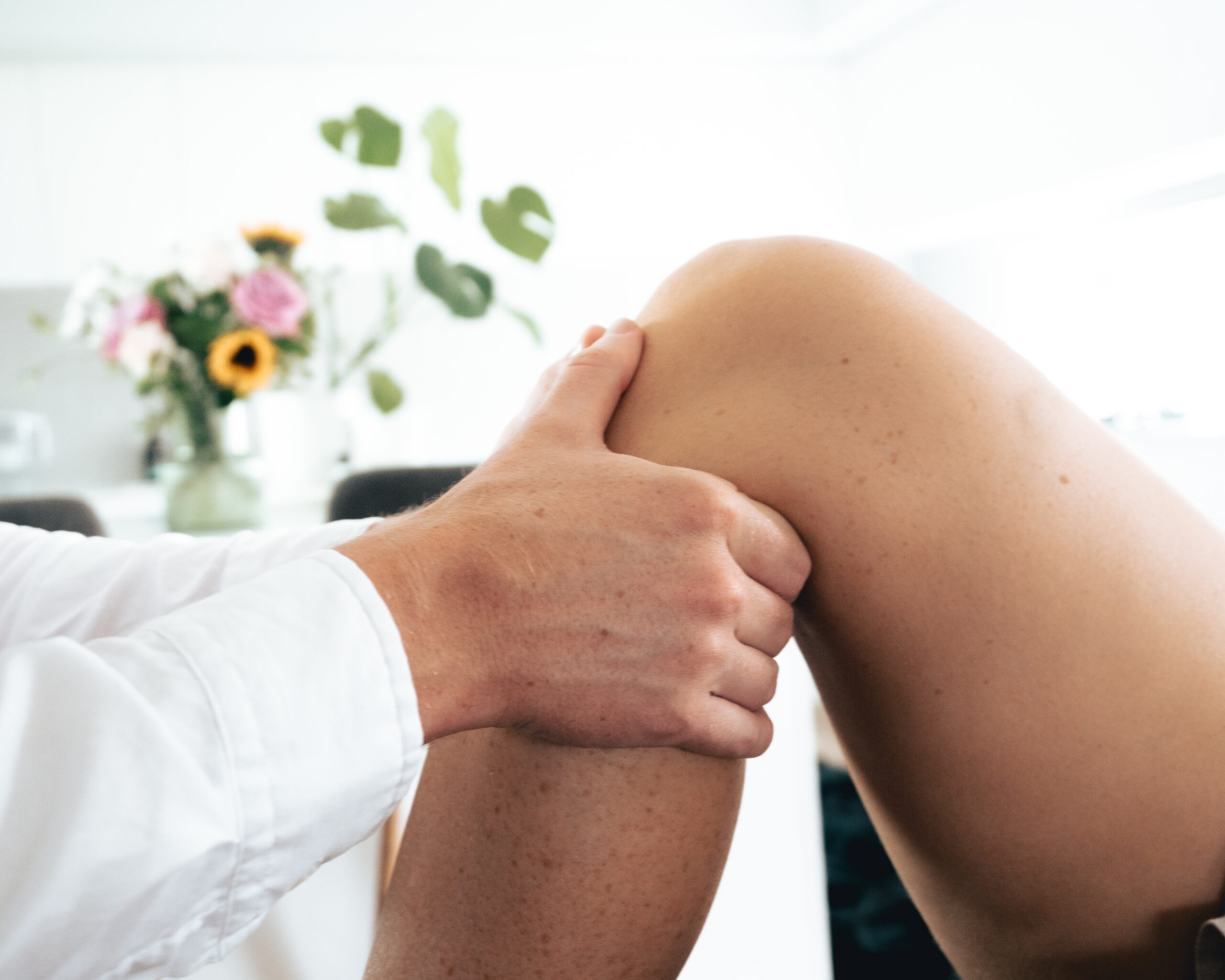
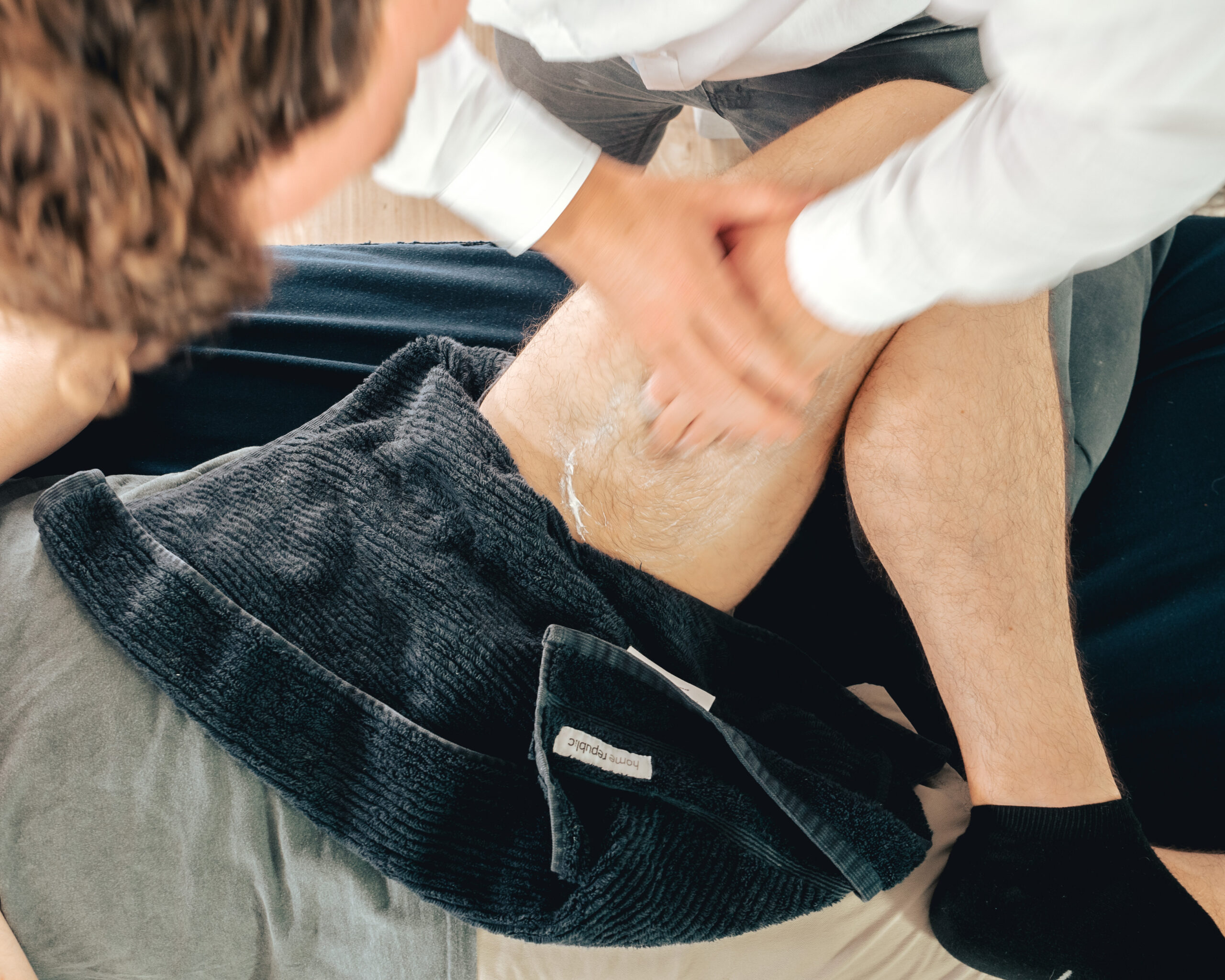
Hands-on treatment such as
soft tissue work and
joint mobilisations can ease pain and stiffness in the short term and make it easier to get going with your exercises. Some people also find a knee sleeve or brace, or the right footwear, helps them feel more comfortable during activity. These things support your rehab, but the long-term changes come from exercise.
Do I need a scan?
Knee osteoarthritis is usually diagnosed from your symptoms and a clinical assessment. An x-ray can help confirm it and show how advanced the changes are, but x-ray findings don't always line up with how much pain you're in. Some people with significant changes on x-ray have very little pain, and others with mild changes have a lot. That's one reason I focus much more on how your knee is functioning than on what the scan shows.
An MRI isn't usually needed for knee osteoarthritis. It's more useful if there are symptoms suggesting something else is going on, such as a knee that locks or gives way, or if surgery is being considered.
What about surgery?
Arthroscopic "clean-out" surgery for knee osteoarthritis is no longer recommended for most people, as research has shown it provides no lasting benefit over exercise-based care. A total or partial knee replacement can be a very good option when pain is severe, sleep and daily life are significantly affected, and good non-surgical care hasn't helped enough. Many people with knee osteoarthritis never need one.
If you do head towards a knee replacement, the stronger you are going into surgery, the better placed you are for recovery afterwards. I also see clients at home after joint replacement surgery, which you can read more about on my
physio after surgery page.
When to see a physio
It's worth getting your knee assessed if:
- Knee pain is stopping you from running or exercising the way you want to
- Your knee is regularly swelling after runs
- Pain has been building over several weeks rather than settling
- You've been told you have arthritis and aren't sure what you should or shouldn't be doing
- You want a structured plan to return to running
See your GP promptly if your knee is hot, red and swollen and you feel unwell, if you can't put weight on it, or if it's locked and won't straighten.
Knee pain isn't always arthritis, either. Pain at the front of the knee in runners is very often patellofemoral pain, which I've covered in
Patellofemoral Pain: isn't that just knee pain? Getting the right diagnosis shapes the whole plan.
How I help runners with knee osteoarthritis
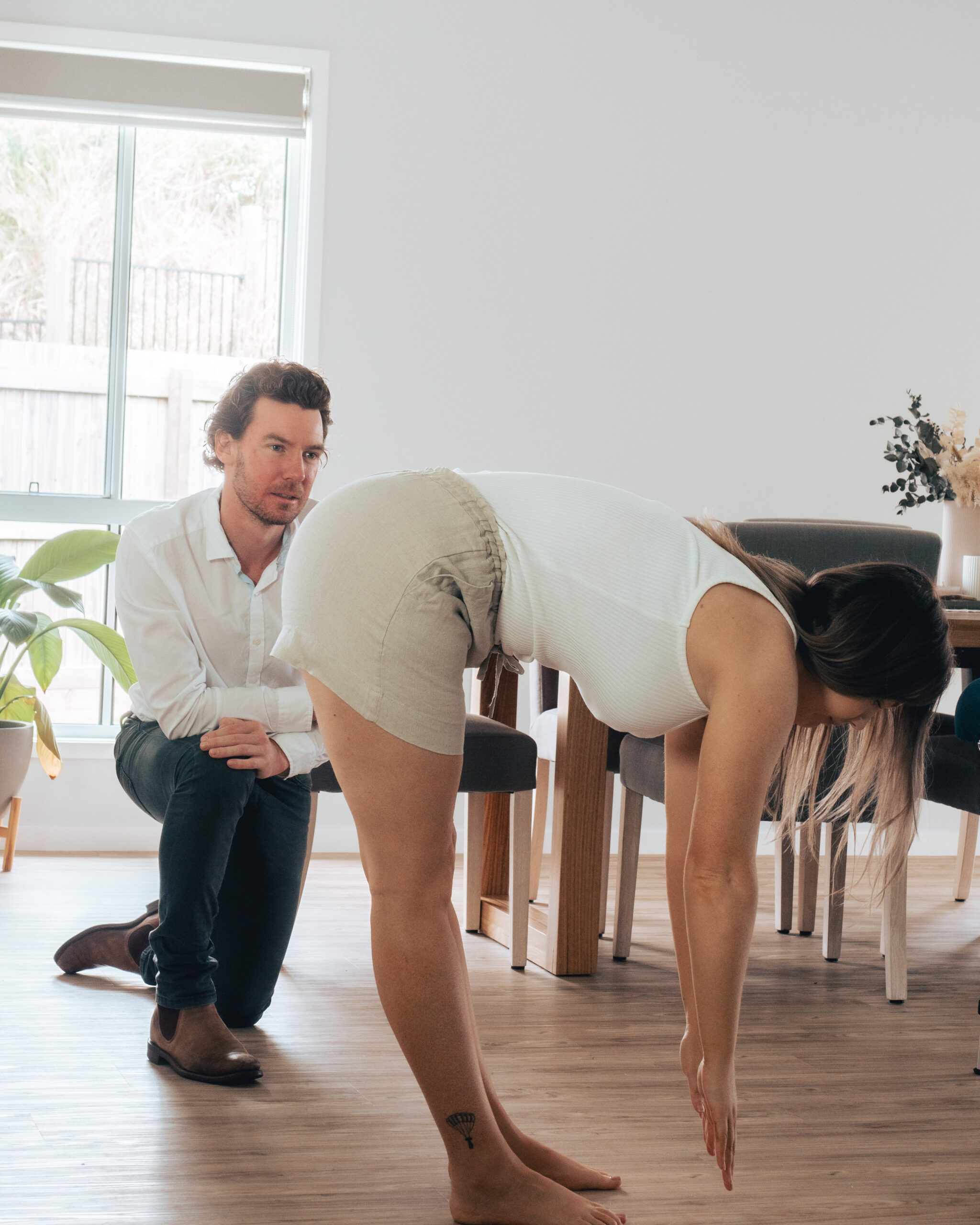
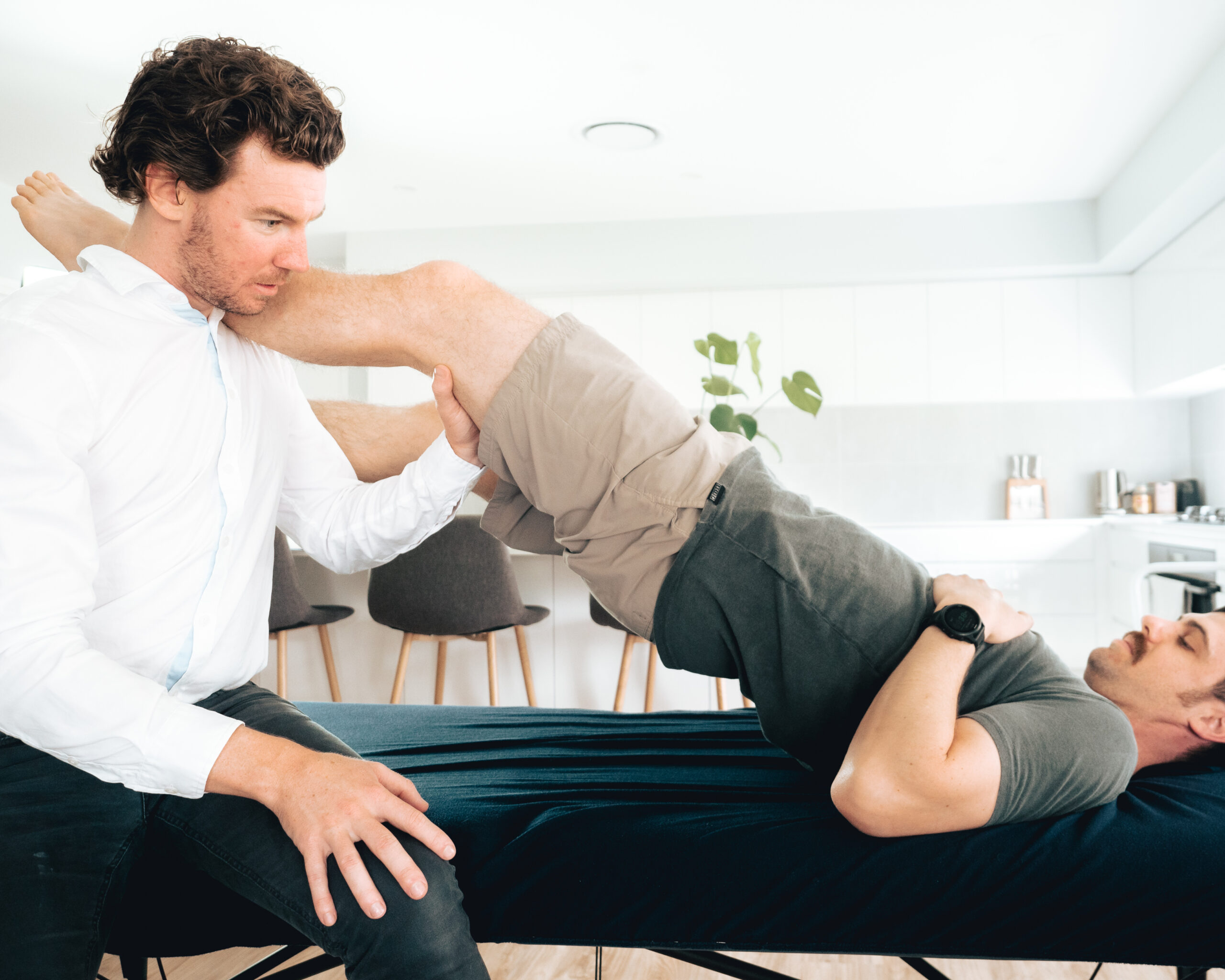
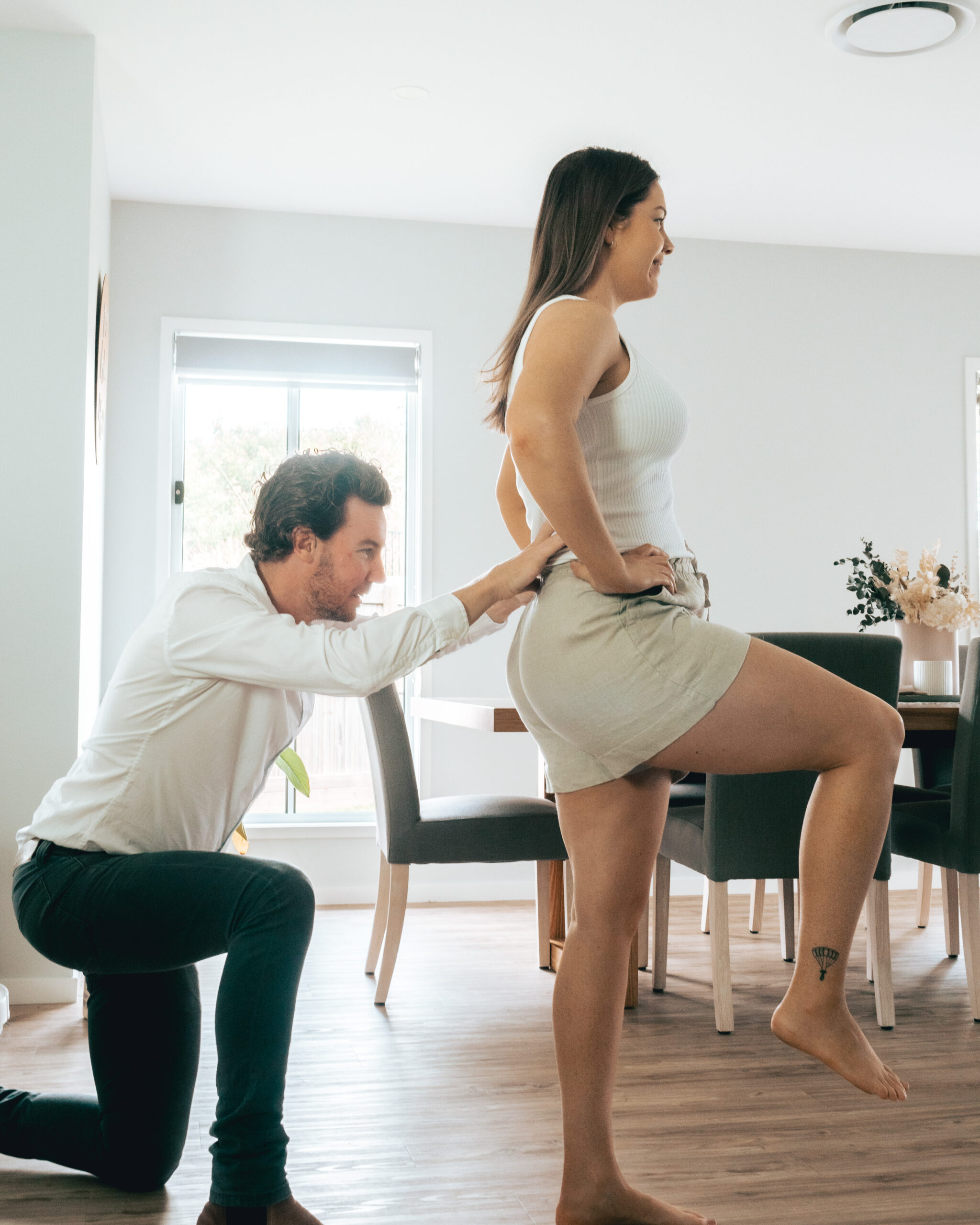
When I see a runner with knee osteoarthritis, I start by understanding your running history, your current training, what aggravates your knee and what your goals are. Then I assess how your knee moves, how strong your legs are, and how your knee handles movements like squatting, stepping down and hopping where appropriate.
From there, we build a plan that usually includes:
- A clear explanation of what's going on in your knee and what the research says, so you can run with confidence rather than fear
- A strength program built around your goals and what your knee tolerates
- A running plan that keeps you running at a level your knee is happy with, with clear rules for when to progress and when to pull back
- Hands-on treatment where it helps to settle pain and stiffness
- Regular reassessment, so the plan moves at the pace your knee can handle
Because I'm a mobile physio, I come to you, whether that's at home, at work or at the track. If you'd like more structure, my
rehabilitation programs map out your rehab over 3, 6 or 12 weeks. You can read more about how I assess and treat knee problems on my
knee pain physiotherapy page.
The bottom line
For most people, recreational running isn't bad for your knees, and many people with knee osteoarthritis can keep running with the right approach. Your knee is built to be loaded. The goal is to find the right amount of load for your knee right now, build its capacity with strength work, and progress gradually. If knee pain is getting in the way of your running, I'd love to help you work out a plan to keep you on your feet.
This article is general information only and isn't a substitute for an individual assessment. If you have pain or an injury, speak with your physiotherapist or GP about your situation.