A dislocated shoulder is one of the most painful injuries in sport, and the big question afterwards is always the same: when can I play again, and will it happen again? Here's how I approach getting athletes back on the field safely.
Few injuries in sport are as dramatic as a dislocated shoulder. One moment you're tackling, diving for a ball or bracing for a fall, and the next your arm is hanging awkwardly and you're in a lot of pain. Once the shoulder is back in place, the pain often settles surprisingly quickly, and many athletes want to know how soon they can get back out there.
Returning to sport after a shoulder dislocation is a balancing act. Go back too early or without the right preparation, and the risk of it happening again is high. Get the rehab and the decision-making right, and many athletes return to the same level of sport. In this post, I'll walk through what happens when a shoulder dislocates, the risk of recurrence, when surgery is considered, and the stages I use to get athletes back to sport.
What happens when the shoulder dislocates?
The shoulder is a ball-and-socket joint, but the socket (the glenoid) is quite shallow, a bit like a golf ball sitting on a tee. That shallow design gives the shoulder its amazing range of motion, but it also makes it the most commonly dislocated major joint in the body. Stability comes from the labrum, a rim of cartilage that deepens the socket, the ligaments and capsule around the joint, and the rotator cuff and shoulder blade muscles.
Around 95 percent of shoulder dislocations are anterior, meaning the ball pops out the front of the socket. This usually happens when the arm is out to the side and rotated backwards, such as in a tackle, a fall onto an outstretched arm, or when an arm is forced back while reaching for a ball. Posterior dislocations, where the ball goes out the back, are much less common and are more often seen with falls onto an outstretched arm in front of the body or with seizures.
When the shoulder dislocates, it often damages the structures that hold it in place. Common injuries include:
- A Bankart lesion: a tear of the labrum and ligaments at the front of the socket
- A Hill-Sachs lesion: a dent in the back of the ball, caused by it pressing against the edge of the socket
- Bone loss: a piece of bone broken off the edge of the socket
- Rotator cuff tears: more common in people over 40
- Nerve injuries: particularly the axillary nerve, which can cause numbness over the outside of the shoulder and weakness
A shoulder that has dislocated should always be assessed by a doctor, and an x-ray is usually taken to check for
fractures. Further imaging, usually an MRI, is often organised for younger athletes to look at the labrum and plan the next steps.
Dislocation versus subluxation
A full dislocation is when the ball comes completely out of the socket and usually needs to be put back in, called a reduction. A subluxation is when the ball partially slips out and then pops back in by itself. Subluxations can still damage the labrum and are an important sign of instability, so they shouldn't be ignored just because the shoulder went back in on its own.
Will it happen again?
This is the most important question, and the answer depends a lot on your age and your sport. Recurrence after a first anterior shoulder dislocation is strongly linked to age. Young athletes, particularly those in their teens and early twenties playing contact or collision sports, have a high risk of the shoulder dislocating again if it's managed without surgery. In some studies of young, active people, more than half went on to have another dislocation. The risk falls considerably as people get older, and people over 40 have a much lower risk of recurrence, though they're more likely to have a rotator cuff injury with the dislocation.
Other factors that increase the risk of recurrence include:
- Playing contact, collision or overhead sports, such as rugby league, rugby union, AFL, wrestling, volleyball and water polo
- Significant bone loss from the socket or a large Hill-Sachs lesion
- Generalised joint laxity, or naturally loose joints
- Returning to sport before strength and control are restored
- Previous dislocations or subluxations
Each time the shoulder dislocates, there's a risk of further damage to the labrum and bone, which can make the shoulder less stable and surgery more complex. That's why the decision about how to manage a first dislocation matters.
Surgery or rehab?
There isn't a one-size-fits-all answer, and this is a decision to make with your orthopaedic surgeon, ideally informed by a good understanding of your sport, season and goals. In general:
- Rehab first is often a reasonable option for older athletes, people in non-contact sports, those with minimal structural damage, or athletes trying to finish a season.
- Early surgical stabilisation is often discussed for young athletes in contact and collision sports, athletes with significant bone loss, and those who have had more than one dislocation.
The most common operations are an arthroscopic Bankart repair, where the labrum is reattached to the socket, and the Latarjet procedure, where a piece of bone is transferred to the front of the socket to rebuild it, often used when there's bone loss or for high-risk athletes. Recovery after stabilisation surgery usually involves a period in a sling, followed by a staged rehab program, with return to contact sport commonly at around 5 to 6 months, guided by your surgeon's protocol. I see clients at home after shoulder surgery, which you can read more about on my
physio after surgery page.
Some athletes who dislocate mid-season choose to rehab, finish the season, often with a brace, and then have surgery in the off-season. That can be a reasonable plan, but it needs to be an informed decision, made with an understanding of the risks.
The stages of returning to sport
Whether you have surgery or not, the rehab follows a similar staged approach. The timelines below are a general guide for non-surgical rehab. Progress should be based on meeting the goals of each stage, not just on time.
Stage 1: Protection and settling (weeks 0 to 2)
After the shoulder is reduced, it's usually sore and protected in a sling for comfort for a short period, guided by your doctor. The goals are to settle pain, protect the healing tissues and start gentle movement. That includes:
- Moving the hand, wrist and elbow to keep them from stiffening
- Gentle, pain-free shoulder movements, avoiding the position of the arm out to the side and rotated backwards
- Isometric exercises for the rotator cuff, where you push gently against resistance without the arm moving
- Shoulder blade setting and posture exercises
Stage 2: Restoring movement and early strength (weeks 2 to 6)
Next, we gradually restore range of motion and build strength. The focus is on the rotator cuff and shoulder blade muscles, which are the shoulder's dynamic stabilisers. Exercises include band work for internal and external rotation, rows, wall slides, and closed-chain exercises like weight-bearing through the hands on a wall or bench. We gradually work towards the more vulnerable positions in a controlled way.
Stage 3: Strength, control and power (weeks 6 to 12)
In this stage, we build strength in all directions, including in the positions where the shoulder dislocated. Exercises progress to push-ups, overhead pressing, weighted rotation in outstretched positions, and plyometric work like ball throws, catches and medicine ball drills. Reaction and control drills train the shoulder to stabilise quickly under unexpected load, which is exactly what it has to do in sport.
Stage 4: Sport-specific training and return to play
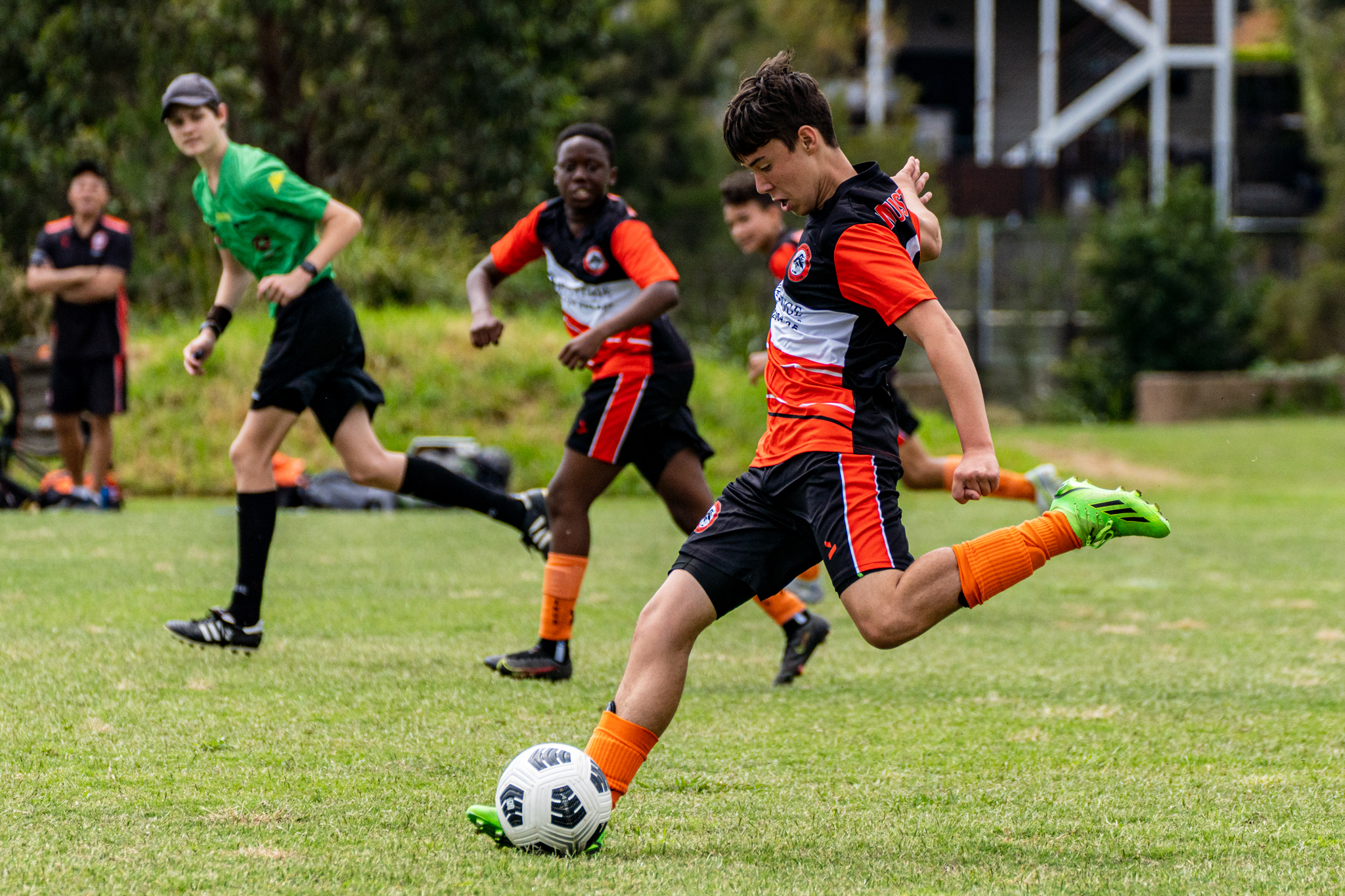
The final stage brings in the specific demands of your sport, such as tackling technique, falling and landing drills, contact work, throwing programs or diving. This is often best done on the field or court, which I cover on my
field and court rehab page. You'll gradually progress from non-contact training to controlled contact and then full contact, before returning to games.
For many athletes managed without surgery, return to sport happens somewhere around 3 to 12 weeks after the injury, depending on the severity, the sport and how quickly the stages are achieved. Overhead and throwing athletes, and those in collision sports, often take longer.
How do I know I'm ready?
Rather than relying on time alone, I use a set of criteria before clearing an athlete to return to full contact or competition:
- Full, pain-free range of motion, or range that matches what your sport needs
- Strength in internal and external rotation close to the other side, ideally within about 10 percent
- No apprehension, or feeling of the shoulder being about to slip out, in the vulnerable positions
- Good performance in functional tests, such as push-up and upper limb stability tests and plyometric throwing and catching
- Completion of full training, including contact or sport-specific drills, without pain or instability
- Feeling confident and ready, which matters as much as the physical tests
As with all my return-to-sport decisions, the minimum is completing at least one full training session, and ideally a full week of training, before playing a game.
Confidence matters too
Many athletes find the hardest part of returning isn't the strength work, it's trusting the shoulder again. It's common to feel nervous going into the first tackle, dive or contested mark, and that hesitation can change how you play and even increase the risk of injury. That's why I build confidence into the later stages of rehab, gradually exposing the shoulder to the positions and contact it will face in a game, in a controlled way. If you still feel apprehensive after you've passed the physical tests, it's worth taking a little more time and talking it through, rather than rushing back.
Braces and taping
Some athletes return to sport wearing a shoulder brace that limits the arm moving into the at-risk position. Braces can help with confidence and may reduce risk in some sports, although they can restrict movement and aren't practical for every position or sport.
Taping can also help some athletes feel more secure. These are useful additions, but they don't replace the strength and control built through rehab.
Reducing the risk of another dislocation
Once you're back playing, keeping your shoulder strong is your best protection. I recommend continuing a short shoulder program two to three times a week throughout the season, focusing on rotator cuff strength, shoulder blade control and reaction drills. Good tackling and falling technique also matter a lot, especially in collision sports. If your shoulder starts to feel unstable or you notice clicking, catching or apprehension, get it checked early.
When to get help
Seek urgent medical care straight away if you think your shoulder has dislocated. Don't try to put it back in yourself or let a teammate do it. See your GP promptly if you've had a shoulder that slipped and popped back in, numbness on the outside of the upper arm, ongoing weakness, or a shoulder that keeps feeling unstable.
How I can help
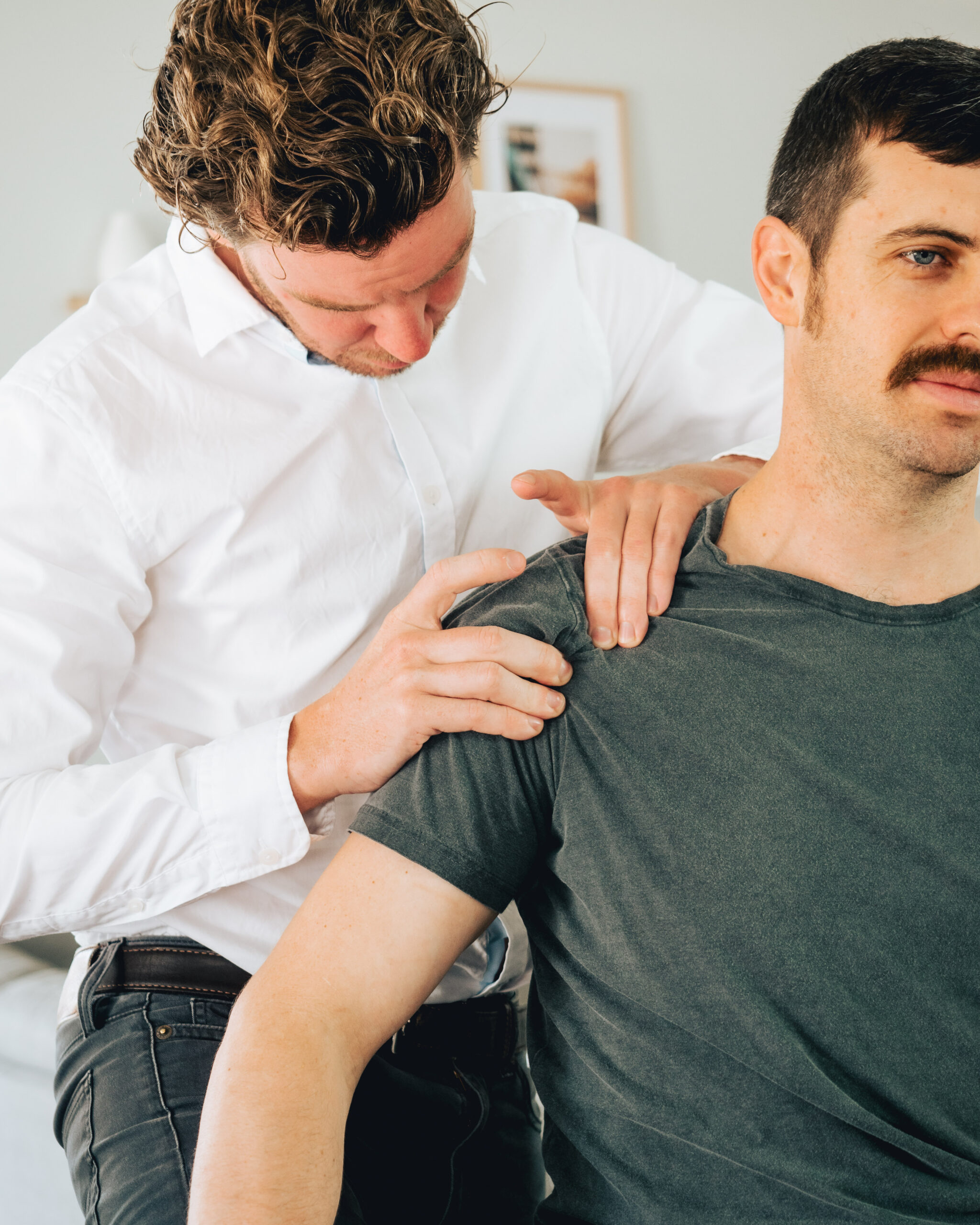
When I see an athlete after a shoulder dislocation, I'll review the injury, any imaging and your doctor's or surgeon's advice, then assess your movement, strength and stability. We'll talk about your sport, your season and your goals, and I'll help you understand the options, including when a surgical opinion is worthwhile. From there, we'll work through a staged program with clear criteria for each step, all the way back to playing.
Because I'm a mobile physio, I come to you, at home, at work or at your training ground, which makes the later on-field stages much easier. You can read more on my
shoulder pain physiotherapy and
sports physiotherapy pages.
The bottom line
Returning to sport after a shoulder dislocation is very achievable, but the risk of the shoulder dislocating again is real, especially for young athletes in contact sports. A good assessment, an informed decision about surgery, a staged rehab program and clear return-to-sport criteria give you the best chance of getting back on the field and staying there. If you've dislocated your shoulder and want a plan to get back to sport, I'd be happy to help.
This article is general information only and isn't a substitute for an individual assessment. If you have pain or an injury, speak with your physiotherapist or GP about your situation.