PRP Physio logo

Hamstring Strain Physiotherapy

Hamstring Tear Rehabilitation

Hamstring strains are up there with some of the most frustrating injuries. They are painful. They take time and consistency to rehab. And the biggest thing they are known for is being recurrent. Even despite the millions invested in research, we have yet to make much of a dent in knowing why injuries in the hamstring muscle group are so notorious. Currently, we know a few things, long and strong hamstrings are good, injury prevention programs work, sprinting and Nordics are the best exercises for your hamstrings, and you need to watch your training load. These things can help reduce your risk profile of sustaining a hamstring injury like an acute hamstring strain. But let’s say you’ve already had one – what is the best pathway for getting back to pain-free hamstring strength and preventing further injury? You can read more in my article on the five most common hamstring rehab mistakes.
Active approaches to managing hamstring strain injuries are the best option rather than solely relying on passive treatment styles such as hands-on treatment or adjunct therapies such as ultrasound, TENS, or dry needling. They may have their place, but rarely do I utilise electrotherapies such as TENS or ultrasound, though dry needling can have some very nice effects. We need to work together as a team to achieve the optimal result, you can achieve more in an exercise program with my hands-on treatment by using hamstring stretching exercises and following hamstring strengthening exercises, helping you to do more out on the park if you complete your exercise program.

Common Hamstring Strain Mechanisms

  • Sprint Mechanisms:

    The most common mechanism of hamstring injury during sprinting is during an eccentric contraction of the hamstring muscles. This means that the muscles are contracting while they are lengthening. This can happen when the hamstring muscles are forcefully stretched, such as when the foot hits the ground during sprinting and the knee is forced to extend.

    What occurs during sprinting is this:

    The athlete sprints and the hamstring muscles work eccentrically to slow down the leg and control the forward momentum as the leg is extending to make contact with the ground.

    The hamstring muscles are forcefully stretched as the foot hits the ground and the knee is forced to extend.

    The hamstring muscles cannot handle the force of the eccentric load and they tear.
  • Stretch Mechanisms

    Hamstring injuries can occur during stretching, especially when the stretch is done too forcefully or too quickly. The hamstring muscles are on the back of the thigh and they help to bend the knee and extend the hip. When these muscles are stretched too forcefully, often into hip flexion and knee extension, they can tear.

    Here is a more detailed explanation of how a hamstring injury can occur during stretching:

    The athlete stretches the hamstring muscles.

    The hamstring muscles are forcefully stretched beyond their limits. The muscles cannot handle the force of the stretch and they tear.

    Hamstring injuries can also occur due to overuse, such as when stretching is done too frequently or too intensely. Weak or tight hamstring muscles are also more prone to injury.
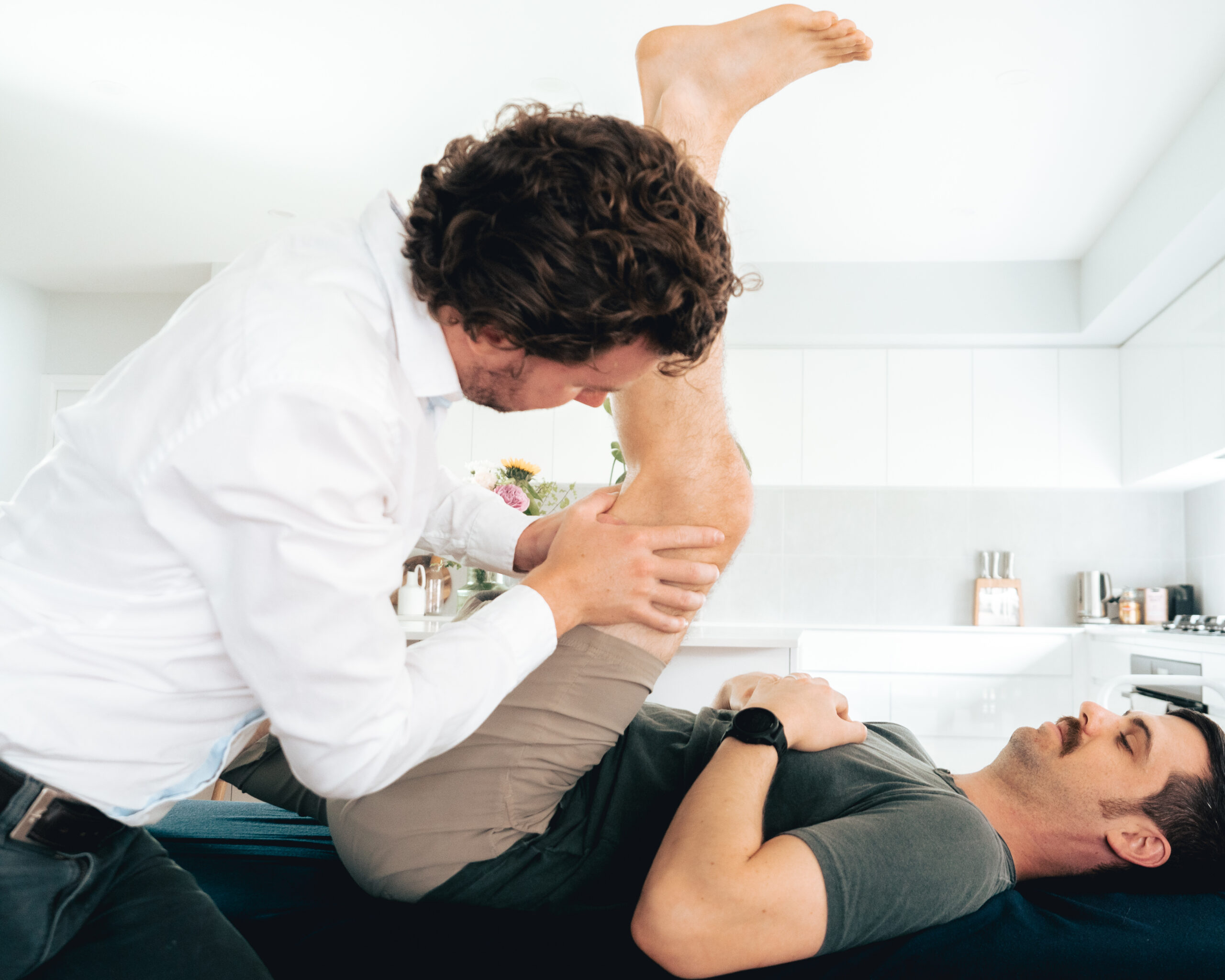
Physiotherapist assessing a client's hip and knee on a treatment table
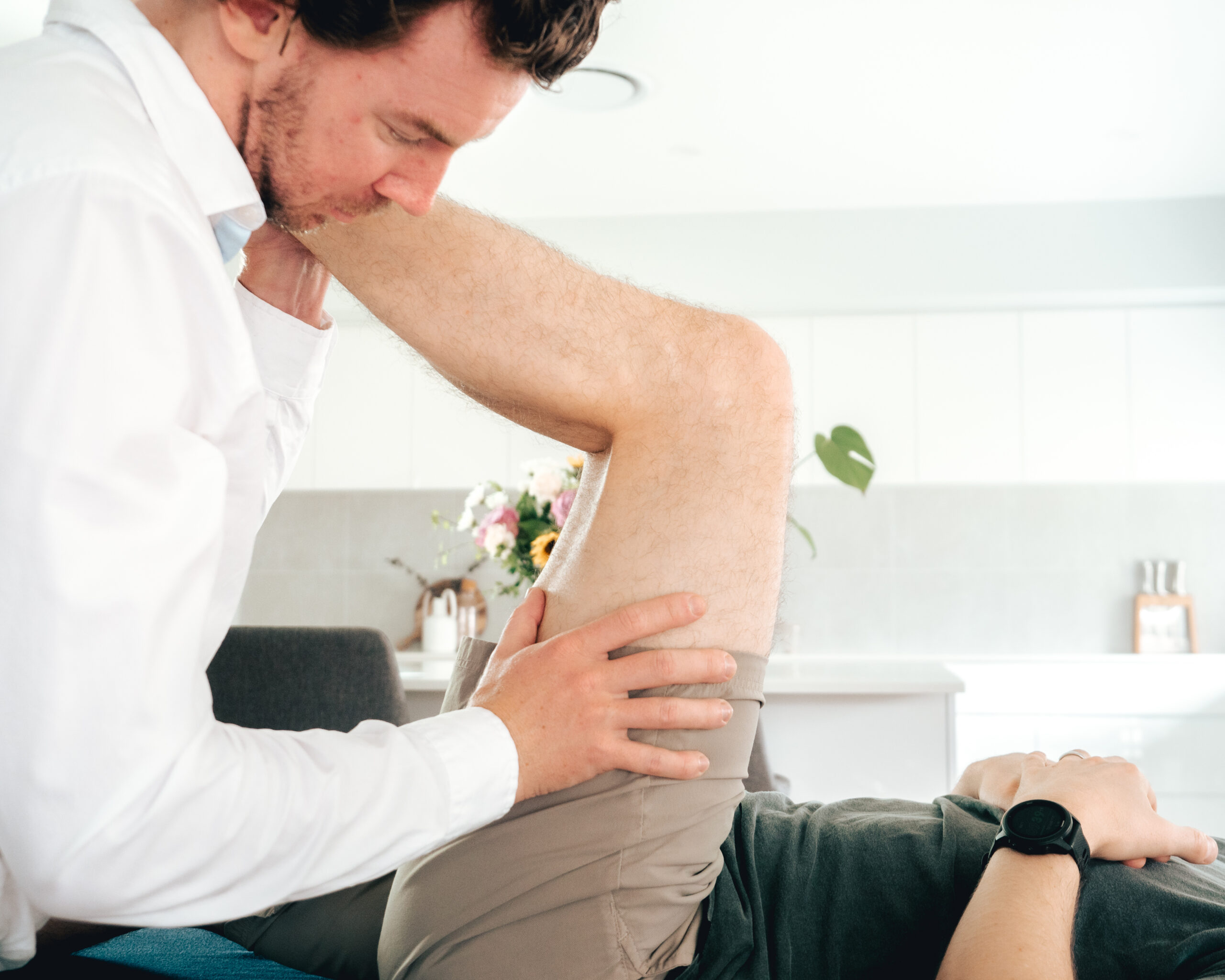
Physiotherapist stretching a client's hamstring on a treatment table
Physiotherapist stretching a client's hamstring

Where is your hamstring and how is it strained?

The hamstrings are a group of three posterior thigh muscles that run from the hip to the knee. Of the hamstring muscles, the biceps femoris muscle is the largest and most lateral of the hamstring muscles. It helps to extend the hip and flex the knee.

Acute hamstring injuries are common in sports that involve sprinting, jumping, or kicking. They occur when the muscle is overstretched or torn, usually during a sudden contraction, change of speed, sustained sprint or change of direction.

One way to test for a hamstring injury is to perform a prone knee flexion test. This involves lying on your stomach with your knees straight in the starting position and then bending one knee at a time towards your buttocks. If you feel pain or tightness in the back of your thigh, you may have a hamstring injury.
Women's football match at dusk

Hamstring Strain Subjective Assessment

A thorough subjective examination is vital for assessing a hamstring injury. Determining the cause or the mechanism of the injury as well as ruling in our out certain structures such as the sciatic nerve is important for both your treatment processes as well as determining a prognosis and a return to sport timeline.

What Happened?

The first thing I will always want to know when someone comes in reporting that they’ve suffered a hamstring strain injury is “how did it happen?”. I often split hamstring muscle strains into two distinct groups – one who suffers an injury whilst sprinting (soccer, AFL etc), and another who suffers an injury in a stretched position (think dancers, gymnasts etc). Determining this gives us a good starting point of information on what muscles have likely been affected and hints at a potential time to return to sport.

What did you feel?

Second, I usually like to know what you were feeling in the lead-up to the injury – did your hamstring feel tight, fatigued, or heavy, potentially you suffered a cramp just prior to feeling that distinct pulling or pop sensation in the back of your thigh. What this can allow us to do is piece together the puzzle of why you suffered a hamstring strain. Without being able to put these puzzle pieces together, we can’t truly develop a complete injury prevention program.

Other Potential Diagnoses

In the interest of differential diagnosis, discussing any other potential symptoms, such as lower back pain or any pins and needles, numbness, or altered sensation, is a necessary discussion. The proximity of the sciatic nerve means we really must rule it out clinically. It is common how often I see clients for a second opinion on a hamstring strain that has sciatic nerve symptoms.

Injury History

Finally, is injury history. I need to know if you’ve suffered a hamstring muscle injury before, and if so, how many times and how recently did the last one occur? After that, we’ll discuss what you did in terms of rehabilitation and strengthening work. This gives me an idea of the previous baseline level of your hamstrings. I find a lot of clients often find that once they are back to training; they feel they are back to sport and stop progressing from there, unfortunately; you are probably only 75% of the way through the journey. Getting back to competitive gameplay requires greater levels of strength, endurance, and mobility of the hamstrings than training. There’s also the matter of developing an ongoing injury prevention program that not only all athletes should complete, but is vital for those who have a history of hamstring injuries.

Hamstring Strain Objective Assessment

Hamstring strains require an in-depth and comprehensive physical assessment to rule out other potential diagnoses and formulate an accurate return to sport timeline. Muscle injuries require three key diagnostic points, pain on contraction of the muscle, pain on stretch, and pain on palpation.

Isometric Muscle Tests

I can perform specific muscular tests to assess both pain production and to assess for a client’s confidence to produce muscular force and output. Some clients with low-grade hamstring injuries may confidently perform a maximum contraction in the “mid-range” position where the assessment is typically performed and cleared, but I try to work athletes through range. What this means is I take them into further ranges of hip flexion and knee extension to put further stress upon the hamstrings and pick up some outliers who may not have otherwise been picked up by typical testing procedures.

Muscle Length Tests

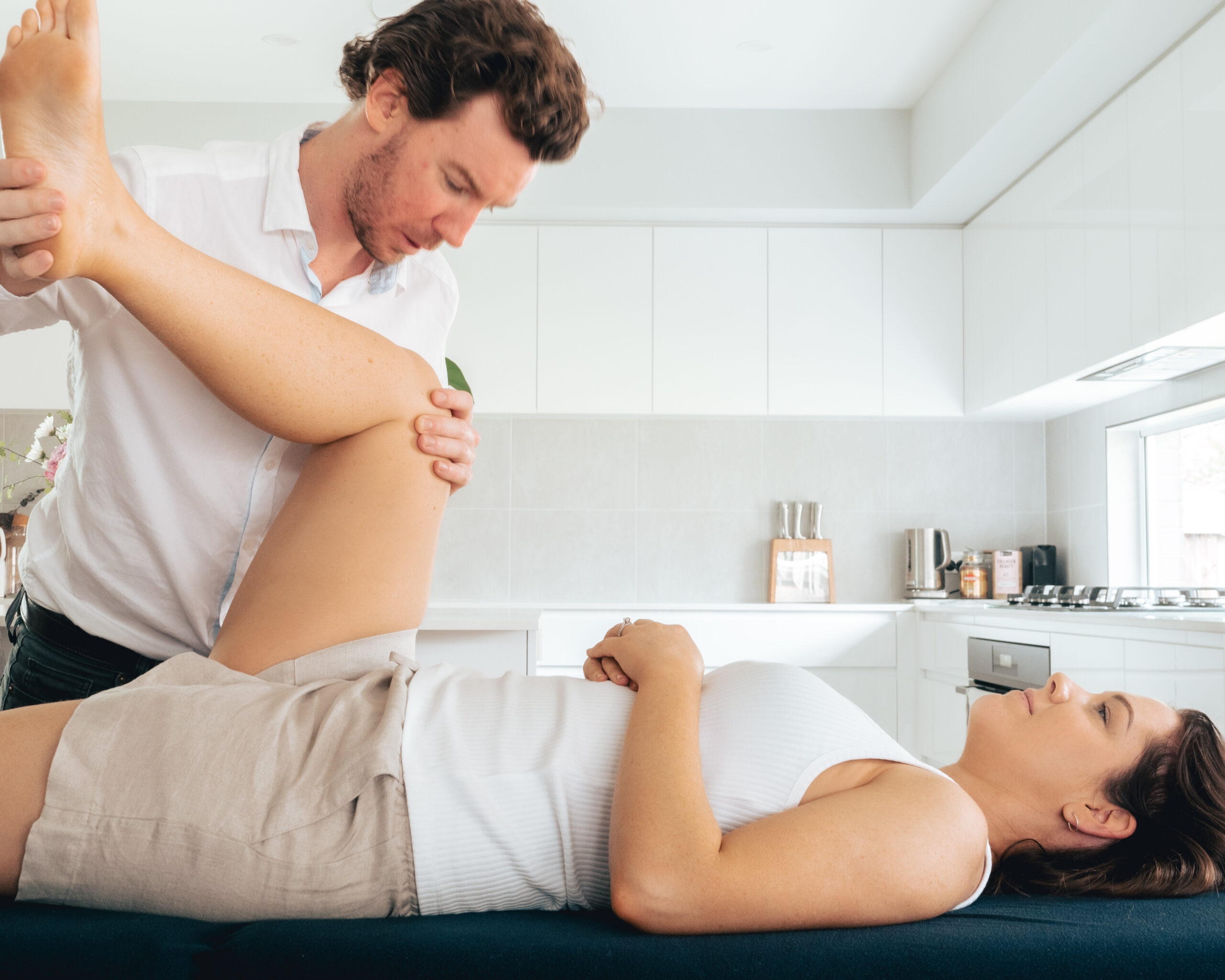
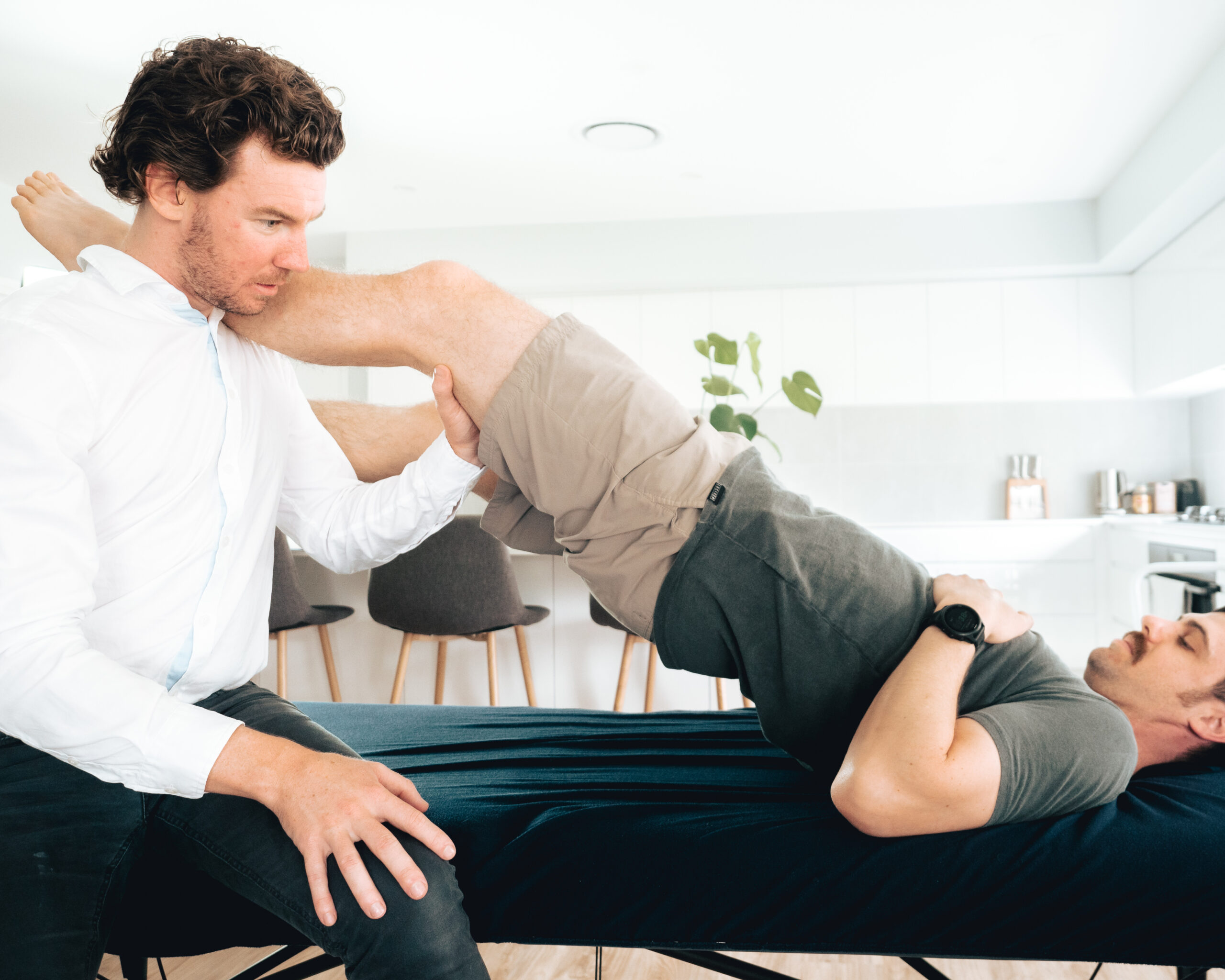
Muscle length tests typically comprise two assessments, one test performed in mid-range where I extend the knee and assess hamstring flexibility. For this test, the client is laying on their back and I bend their hip to 90 degrees and then slowly extend the knee out straight. Some clients again may not report symptoms. So for these clients, I will reassess with the same movement but I will take them to a position of maximal hip flexion to add further stress to the hamstring muscle complex.

Palpation

Palpation is the third key marker, direct palpation of the muscle belly should produce a painful response. As a physio, what I can do is map this area and determine how large the area of sensitivity is and I can track and monitor this to ensure the area is reducing over time with hands-on treatment and an exercise and rehabilitation program.

Ruling Out Other Diagnoses

Other diagnostic tests that will often be utilised revolve around ruling out sciatic nerve involvement. A passive straight leg raise and a slump test are two of the best assessments for assessing any potential involvement. It’s important to remember that biasing different parts of the neural system could cause the production of symptoms – for example, dorsiflexion of the ankle bias may cause the production of symptoms in some, whereas others may require a hip rotation and adduction bias to reproduce symptoms. A thorough assessment of the lower back, including assessment of range of motion and palpation of the lumbar spinal levels to assess for stiffness or tenderness on palpation.

There are other potential causes of symptoms, however, a hamstring muscle strain or sciatic nerve/lower back referral are two of the most common diagnoses for pain in the back of the thigh.

Hamstring Strain Grades and Recovery Time

One of the first questions I get asked is how long a hamstring strain will take to recover. The honest answer is that it depends on the grade of the strain, where in the muscle it has happened, and how it happened. The assessment above allows me to grade your injury and give you a realistic timeframe from your first session. The timeframes below are a general guide to returning to full training and sport, not a promise, and some people will progress faster or slower than this.

Grade 1: Mild Strain (1 to 3 weeks)

A grade 1 strain involves a small number of muscle fibres. You will usually feel tightness or a cramp-like pain in the back of the thigh, but you can often keep walking and may have even finished the game. Strength is only slightly reduced and there is little or no bruising. Most grade 1 strains return to full training and sport within 1 to 3 weeks, as long as sprinting is built back up gradually rather than rushed.

Grade 2: Moderate Strain (3 to 8 weeks)

A grade 2 strain is a partial tear of the muscle. There is usually a sharper pain at the time of injury, often with a pulling or popping sensation, and it is painful to walk quickly, bend the knee against resistance or stretch the hamstring. Bruising can appear a few days later. Recovery typically takes 3 to 8 weeks, with the later weeks spent rebuilding eccentric strength and sprint capacity before a full return to games.

Grade 3: Severe Strain (3 months or more)

A grade 3 strain is a complete or near complete tear of the muscle, or a tear where the tendon pulls away from the bone near your sitting bone. Pain is severe, walking is often difficult and there may be significant bruising or a visible gap in the muscle. These injuries need a scan and, in some cases, a surgical opinion, particularly when the tendon has come away from the bone. A return to sport commonly takes 3 months or more, and longer if surgery is needed.

What Changes Your Recovery Time?

Two strains of the same grade will not always recover at the same speed. Injuries that involve the tendon running through the middle of the muscle usually take longer than those in the muscle belly alone. Stretch-type injuries, which are common in dancers and gymnasts, tend to take longer than sprinting injuries. A previous hamstring strain, returning to sport too early and skipping eccentric strengthening all increase the risk of the injury coming back. This is why I base your return to sport on the clinical tests further down this page rather than on the calendar alone.

Steps to Success for Rehabbing a Hamstring Strain

Hands On Treatment

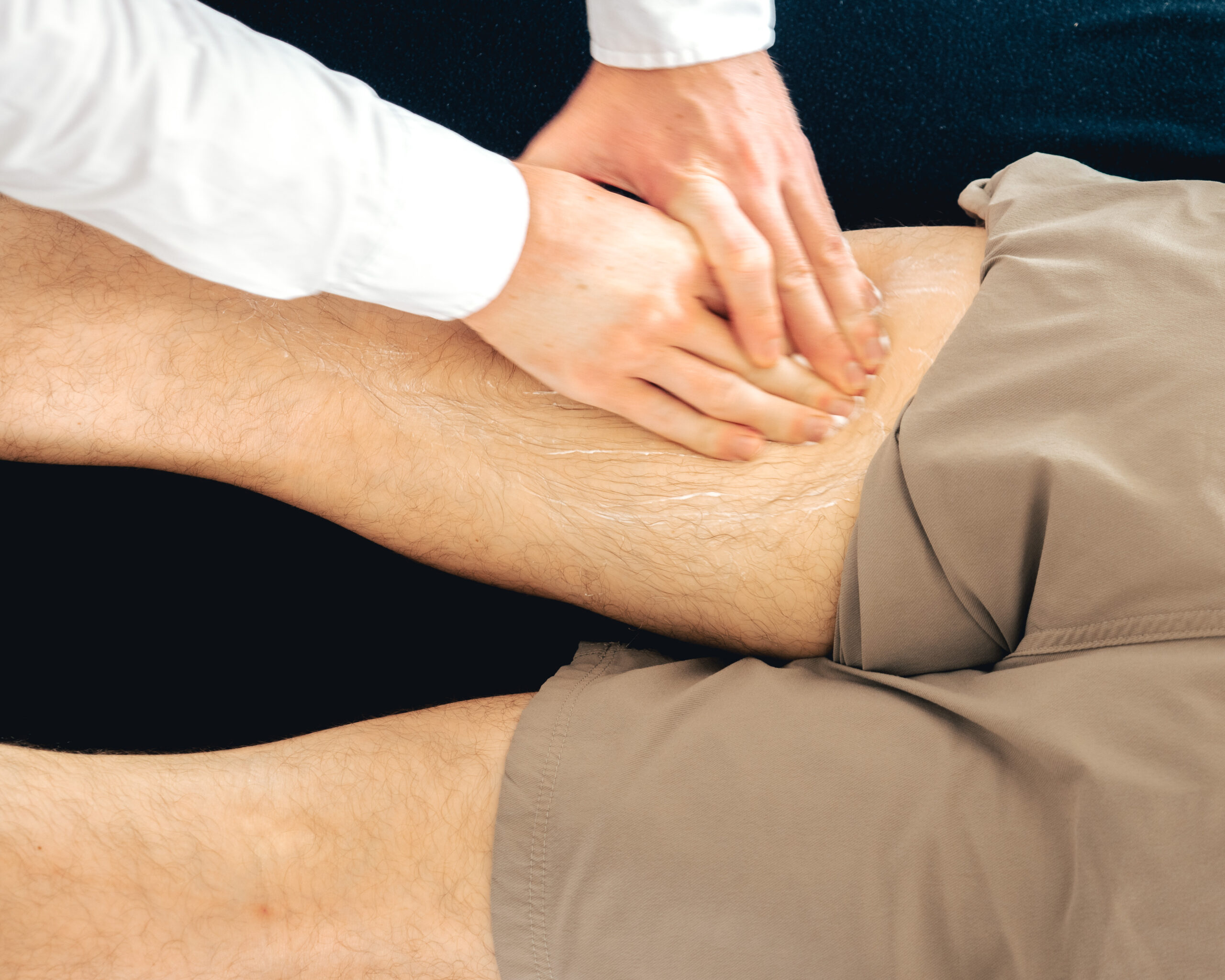
Treating hamstring strains takes a targeted approach of individualised hands-on treatment and a targeted exercise program to develop the strength and capacity to tolerate the return to sport. Hands-on work is a little contentious in the physio world these days, but I certainly think it still has its place to help improve functional capacity and improving your freedom of movement. Often in the early stages, I don’t do a significant amount of work around the hamstring and the injury site, instead; I work a lot on the secondary sites that may either overload because of taking up the slack or tightening up to protect the hamstring. The common areas for these two things are the gluteals, hip flexors, quadriceps, and calves. We can realistically perform near on any soft tissue technique aimed at reducing muscle tone, so this could include massage, trigger point therapy, or dry needling most commonly. Some light soft tissue work around the hamstring can be done in the early stages but if I were to do any work located around that area I opt for dry needling instead in the early stages before transitioning to more hands-on work as we reduce some of the sensitivity.

When we are getting towards the later stages of rehabilitation, working the hamstring through range with hands-on techniques can be highly beneficial for improving range of motion and flexibility. Often this involves working on a combination of hip flexion and knee extension together as we work through any soft tissue restrictions utilising hands-on techniques such as massage or dry needling.

Sometimes, where there may be some sciatic nerve involvement, treatment of the lower back may be necessary, direct work through the sciatic nerve pathway through the hamstrings, or directly through the gluteals as it travels down towards the hamstrings. Lower back treatment will often revolve around resolving any joint stiffness that may cause any potential nerve restriction. Work around the sciatic nerve pathway is about reducing any restrictions or muscle tightness that limit the nerve’s ability to glide along. The gluteals are quite a common site for this to occur and cause sciatic nerve issues in a lot of presentations I see.
PRP Physio Hamstring Rehabilitation Program booklet

Hamstring Physio Exercises

You can get all the hands-on treatment in the world, but it won’t mean you’ll be racing back to the starting team soon if you don’t do your exercise program. Developing load tolerance of your hamstrings through the entire range of motion is necessary for a successful return to sport process. In the early stages of rehabilitation, we will probably perform isometric loading of the hamstrings or light isotonic work and making sure we are keeping the rest of the body in check by working on the calves, quads, glutes, and core. If we neglect everything else, we simply make our return to sport process harder.

As we work through the rehab program, I will want to work the hamstring muscles through a further range of motion, as well as add in eccentric work. Eccentrics are essential for hamstring rehabilitation these days. You want your hamstrings to be long and strong, and building eccentric hamstring strength is the best way to achieve it. Nordics have been one of the most effective exercises at reducing your risk profile of sustaining a hamstring injury because of their double effect of improving muscle fascicle length and improving strength. Research has found that introducing early eccentric loading, even into tolerable levels of pain, results in a slightly faster return to sports times, and improved measurements at the time of returning to play. Eccentrics don’t appear to be the cure-all we are looking for with hamstrings, but they certainly appear to be a big part of the picture.

As with every other injury, keeping everything else surrounding the area strong and stable is necessary. I always like to keep the quadriceps, gluteals, calves, and core working well and improving. Just because you have a hamstring strain doesn’t mean you neglect everything else.

Last but not least, everyone’s favourite, sprinting. It’s actually one of the best hamstring strengthening exercises out there, showing it has the highest levels of hamstring activity out of typically programmed hamstring exercises. The even better point is it’s also one of the most functional hamstring exercises. Nearly every person who plays sport has to sprint, and often repeatedly, many times throughout a game. So, it both improves hamstring strength, improves tolerance of one of the most common mechanisms for hamstring strains, and makes you a better performing athlete. If only I could make repeated sprint training enticing and enjoyable for clients.

Your Questions About Hamstring Strains

What does a hamstring strain feel like?

Most people feel a sudden sharp pain or a grabbing sensation in the back of the thigh, usually while sprinting, accelerating, kicking or reaching into a stretch. Some feel or hear a pop. Afterwards, the back of the thigh is often sore to touch, walking quickly or bending forward hurts, and stretching the hamstring is painful. Bruising may appear a few days later and can track down towards the knee. A milder strain may only feel like tightness that gradually gets worse during a game or training.

What is the difference between a hamstring strain and a tear?

They describe the same injury. A strain is a tear of the muscle fibres, and the difference is how many fibres are affected and where. Minor strains involve a small number of fibres, while more severe ones involve a larger part of the muscle or extend into the tendon. Injuries that involve the tendon, particularly where it attaches near the sit bone, tend to take longer to recover. My assessment helps grade your injury, which guides how long your rehab is likely to take.

When can I start running again?

Most people start light running once they can walk briskly without pain, have good hamstring range compared to the other side, and can complete strength exercises like bridges without pain. For a mild strain, that can be within the first week or two. Running starts at a slow pace and builds over sessions towards faster running and then sprinting, which is the last thing to return. Some tightness is normal, but sharp pain or pain that lingers afterwards means we should slow down the progression.

When should I see a doctor about a hamstring injury?

See a doctor promptly if you felt a pop high up near your sit bone, have significant bruising, notice a gap or bulge in the muscle, or are struggling to walk. These can be signs of a tendon avulsion, where the tendon pulls away from the bone, and some of these injuries need a surgical opinion within a few weeks. If your symptoms are unusual, such as pain that started without any obvious injury, or pain with pins and needles down the leg, it may be coming from the lower back instead.

Returning to Training and Sport

Ultimately, returning to sports is what every athlete wants when they are rehabbing an injury. But returning to sport needs to be a process that is tailored to the individual athlete. Gone are the days when we just say “Yeah, you can go back to training”. Our athletes deserve more time and attention given to a very deliberate process.
Women's footballer kicking the ball during a night match

Graded Return to Training

Returning to training should be a graded process whereby athletes are gradually exposed to more complex environments and increasing physical demands. Often, I find players can start solo drills relatively early in their rehabilitation and be able to return to light jogging. For example, at the soccer club I work with, athletes will often perform passing drills and light jogging and potentially light agility work within the first week after injury, depending upon the grade of injury.
Physiotherapist massaging the back of a client's thigh

One Step at a Time

From here, I will look to progress upon two different streams – the first being individual ball work and skills progressing towards team-based drills, and the second being a fitness, running, and sprinting stream they will perform individually. Both streams need to be working ideally to optimise the return to sport. If one isn’t completed, the athlete will either fall back on their skills, or they will lag in their strength and running tolerance rehabilitation work. Often, this process will occur simultaneously as you progress through your strength training outside of work at training. Athletes can typically begin light training when pain on isolated contraction is low, I typically use a 3/10 as a marker, as well as have good mobility and flexibility on a muscle length test. Each athlete needs to progress gradually whilst monitoring symptoms for increases either during or following the session that day or the following morning to assess for signs that you have progressed too quickly.
Physiotherapist assessing a client's hip and groin on a treatment table

My Clinical Tests

So what does an athlete need to be able to do to return to sport? In my mind, there are a few boxes to tick here. The first and most important is that you have completed at least one full training session, but ideally you should have completed a full week of normal training load of full training with your team. Second is running and sprint loads, have you been able to firstly tick the box of being able to perform repeated sprints, but can you perform as many as other players on the pitch, if you can’t perform at training, you almost certainly won’t be performing at your best on game day. Last but not least is clinical measures, as we’ve mentioned above, long and strong hamstrings are best. Range of motion assessed via a hamstring length test such as a 90/90, an MHFAKE, an ASLR test, or even a combo of the 3 is often the best battery to look at.

So, what does an athlete need to do to return to sport? In my mind, there are a few boxes to tick here. The first and most important is that you have completed at least one full training session, but ideally you should have completed a full week of normal training load of full training with your team. Second is running and sprint loads, have you been able to firstly tick the box of being able to perform repeated sprints, but can you perform as many as other players on the pitch, if you can’t perform at training, you almost certainly won’t be performing at your best on game day. Last but not least are clinical measures. As I’ve mentioned above, long and strong hamstrings are the best. Range of motion assessed via a hamstring length test such as a 90/90, an MHFAKE, an ASLR test, or even a combo of the three is often the best battery to look at.

The strength I assess in a few different ways, the first is an elevated foot single-leg bridge. The athlete places their foot on my shoulder and places the other leg in the air and must perform as many reps as possible before fatigue and then we compare to the other side. Next, I will utilise a handheld dynamometer to perform a maximum strength test in two different positions, one with the hamstring in a mid-range position (90deg bend at the hip and the knee bent at 90deg while laying on their back) and one in a lengthened position (neutral hip flat on the bed and 15deg bend at the knee laying on their stomach). We are looking for a maximum contraction where I will look for the athlete to match the force I am putting down before I break it and overcome their force. Until we beat the athlete, we cannot truly determine what their maximum force production is. What we are looking for with these tests is mostly maximum force production and comparing side to side, but we can also look at hesitancy, whether they cramp more on one side, or does one side take longer to work up to a maximum contraction.

Hamstring Injury Prevention Program

Hamstring strains need some TLC after they have sustained an injury. Hamstring injury risk is notoriously high, so what can I do to help you minimise the risk factors surrounding reinjury? I’ve tailored a hamstring-specific injury prevention program for those of you who have suffered a hamstring strain. I’ve compiled an evidence-based prevention program that I stand by. I designed it as a program that you can utilise as part of your warm-up, with designated areas for running and agility work, as well as strengthening and flexibility components.

Alas, predicting hamstring strain injury is just not realistic. Injury prevention programs are all about minimising your risk of injury, whilst simultaneously improving your performance as an athlete.
Physiotherapist assessing a client's hip movement on a treatment table

Hamstring Strain FAQs

Not hard in the early days, as forceful stretching can aggravate a fresh strain. Gentle movement within comfort is fine. We restore length gradually through strengthening, particularly eccentric exercises such as Nordic curls, which improve both strength and muscle length.

Not with a fresh strain, as playing on it significantly increases the risk of a bigger tear. Depending on the grade, many players can start light jogging and ball work within the first week, and we build back to full training in stages.

A previous hamstring strain is the biggest risk factor for another one. Keep up eccentric strengthening such as Nordic curls, include regular sprinting in your training, and avoid sudden jumps in training load. My hamstring injury prevention program brings these together into a routine you can use as part of your warm-up.

Most hamstring strains can be diagnosed and graded without a scan. An MRI can be useful if a severe tear or a tendon injury near your sitting bone is suspected, as some of these need a surgical opinion.

Each consultation is 45 minutes and costs $110, for both your first appointment and follow-ups. Dry needling, taping and exercise bands are included at no extra cost. If you need a longer course of rehab, my 3, 6 and 12 week rehabilitation programs work out cheaper than paying per session.

Yes. You can claim a rebate from your health fund for every session. PRP Physio is not a preferred provider for any fund, so your rebate may be slightly smaller than at a preferred provider. Your fund can confirm the exact amount using item code 500 for your first consultation and 505 for follow-ups.

Yes, if you strained your hamstring at work. Your GP starts the claim and gives you a WorkCover certificate, which acts as your referral. Once your claim is accepted, I bill WorkCover directly, so there are no out-of-pocket costs for you. WorkCover covers your first five sessions, and I speak with your case manager if you need more.

Mobile Physio: Get in Touch

I'm ready to book online now

For those who are ready to book an appointment right now, let's get started on your journey back to sport!

Just hit the button below and it will take you straight to an online booking platform. You will just have to enter a few details and it will all be booked in for you!

I'd rather have a conversation first

Some injuries are complex, should you see a GP first, should you go get a scan, is a physio even the right person to see? Sometimes a 10 minute conversation can be enough to answer some of these questions.

Just submit a contact form on the link below and I'll give you a call ASAP and we can chat through a few things to get you moving in the right direction!
© 2026 PRP Physio. All rights reserved.