PRP Physio logo

Groin Pain Physiotherapy Brisbane

Groin Pain Rehabilitation

Groin pain is one of the most common complaints among the football codes, particularly soccer and AFL. Within the soccer world, it doesn’t hold the crown for the injury causing the most time loss, which belongs to the hamstring strain, but it holds the crown for the most detrimental from a performance standpoint. Often, players can still continue playing and training with groin pain, but they report performance deficits such as a reduced ability to kick, cross the ball, and go into 50/50 challenges.

Groin pain often pops up as either an acute groin strain or as the gradual onset of groin pain. The slow gradual onset is the more common of the two in my experience. Often players play with this for a period of weeks or months before they report it to anyone. That is how common groin pain can be in soccer players. It’s just seen as “normal” sometimes. This is so far from what should be the case, as a sport, and as a profession as physiotherapists, we should educate people better.

Groin pain doesn’t just affect athletes, though it can be a common presentation in everyday life as well. But sometimes what feels like groin pain isn’t always groin pain. The hip can be a common referral source for groin pain, and sometimes it could be a hernia that is causing groin pain, or maybe the abdominals. The hip and groin area is confusing sometimes, with a lot of things referring to a lot of different areas, a thorough subjective and objective testing battery to determine a clear diagnosis is a necessity. You can read more about how I treat hip pain.

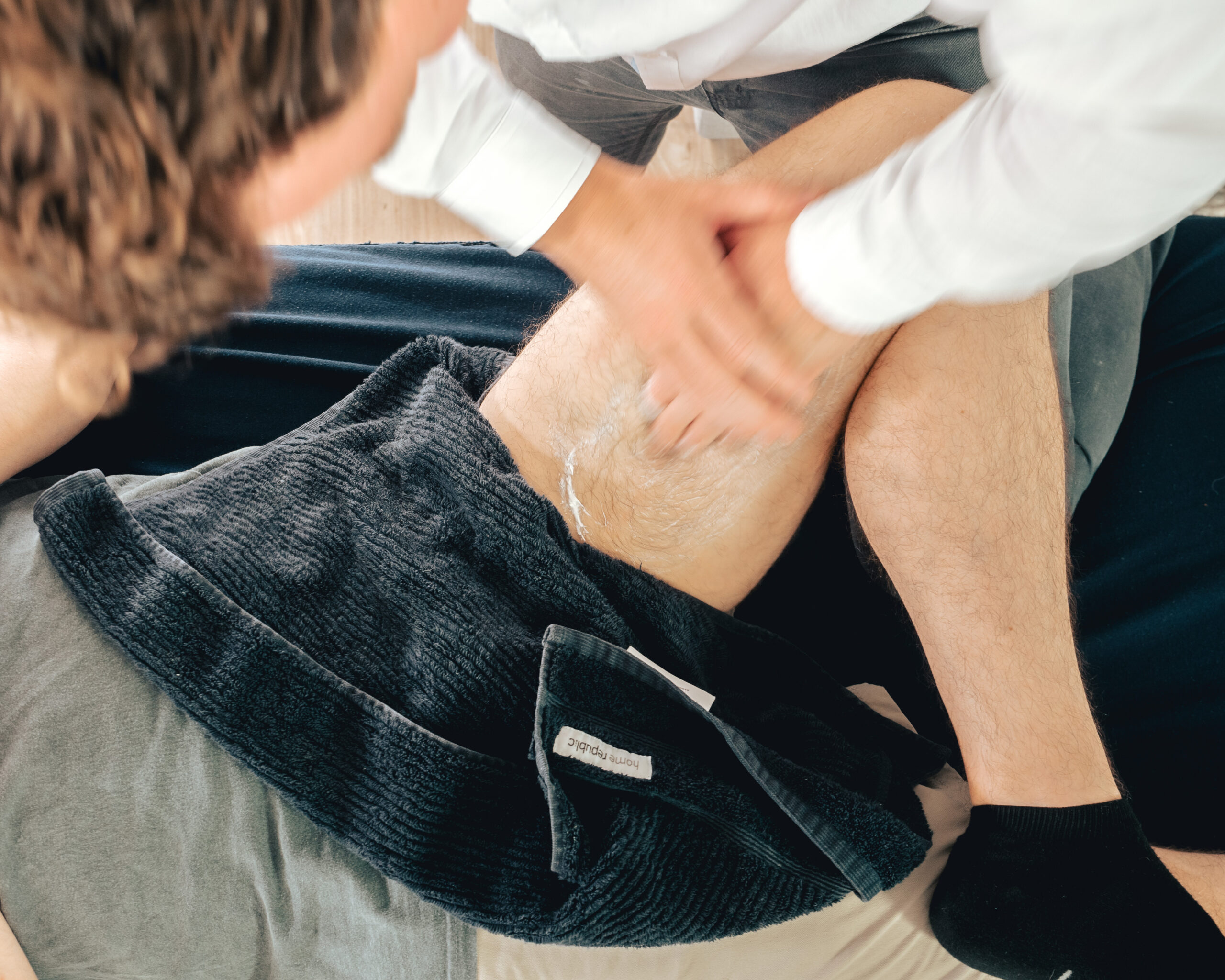
Physiotherapist massaging a client's thigh

The anatomy of the groin

The pubic symphysis is the joint that connects the two pubic bones in the pelvis. It is a cartilaginous joint, so it is made of cartilage and does not have any movement.

The pubic symphysis is in the pelvis's midline, between the two pubic bones. A fibrocartilaginous disc, which is a piece of cartilage that acts as a cushion between the bones, joins the pubic bones. Ligaments, which help to keep the bones in place, also supports the pubic symphysis.

The pubic symphysis allows for a small amount of movement, such as when the pelvis rotates during childbirth. However, it is not a very mobile joint.
Diagram of the pelvic girdle showing the pelvis, hip joints and pubic symphysis

The adductor muscle group is a group of five muscles in the medial compartment of the thigh. They adduct the thigh, which means they bring the thigh towards the midline of the body.

The adductor muscle group is composed of the following muscles:
Adductor longus: This muscle is the longest of the adductor muscles. It originates from the pubis and inserts into the linea aspera of the femur.
Adductor brevis: This muscle is located deep to the adductor longus muscle. It originates from the pubis and inserts into the linea aspera of the femur.
Adductor magnus: This is the largest of the adductor muscles. It originates from the pubis, the ischium, and the femur and inserts into the linea aspera of the femur.
Pectineus: This muscle is on the anterior side of the thigh. It originates from the pubis and inserts into the linea aspera of the femur.
Gracilis: This muscle is on the medial side of the thigh. It originates from the pubic symphysis and inserts into the medial surface of the tibia.

The obturator nerve and the femoral nerve innervate the adductor muscle group.
Diagram of the adductor muscles of the inner thigh

The iliopsoas is a muscle that flexes the hip joint and rotates the thigh inward. It is the strongest hip flexor and handles many activities, such as walking, running, and climbing stairs.

The iliopsoas is composed of two muscles:
Iliacus: This muscle originates from the iliac fossa of the pelvis.
Psoas major: This muscle originates from the lumbar vertebrae.

The iliacus and psoas major muscles join to form a tendon that inserts into the lesser trochanter of the femur.

The femoral nerve innervates the iliopsoas.

The iliopsoas is an important muscle for hip flexion and internal rotation. It is also important for maintaining the stability of the hip joint.
Diagram of the iliopsoas muscle, the main hip flexor

The hip joint is a ball-and-socket joint, so the round head of the femur (thighbone) fits into the cup-shaped acetabulum of the pelvis. This type of joint allows for a wide range of motion, including flexion, extension, abduction, adduction, internal rotation, and external rotation.

The following bones form the hip joint:

Femur: The femur is the thighbone. The rounded head of the femur fits into the acetabulum of the pelvis.

Pelvis: The pelvis is a basin-shaped structure that forms the base of the trunk. The acetabulum is a cup-shaped socket in the pelvis that receives the head of the femur.

The articulating surfaces of the hip joint are covered with hyaline cartilage, which helps to reduce friction and wear and tear on the joints. The joint capsule is a thin layer of tissue that surrounds the joint and helps to keep it in place. The femoral nerve also innervates the hip joint.
Diagram of the hip joint showing the ball and socket

Groin Pain Subjective Assessment

Conducting a thorough subjective assessment is vital as a physiotherapist when assessing a client with groin pain. The number of different structures that can refer to the groin area is astounding. A deep understanding of you as an individual is needed to help rule in and rule out certain structures prior to getting to our objective assessment.

What Happened?

As with every other presentation and injury, discussing how it all started is where we will begin. Whether it be an acute injury that started things, or we are delving into a 3-month history of groin pain, I’m here for it all. In acute injuries I want to know all about how it happened, what were you doing and what was the gameplay situation, as physios we need to have a good grasp of the initial injury to understand the tissue stresses that occurred as well as understand a potential differential diagnosis from the outset. In longer standing gradual onset style groin pain, we will dig right into the nitty gritty of what you have been doing, often going back to a month or two before the symptoms started. Together we will look for something that changed. Maybe your coach added in a lot of shooting practice at training, or maybe they added in a lot of change of direction and agility work you weren’t doing before. Often there will be something that has changed that has precipitated the onset of symptoms.

How have things changed?

Next, we want to understand the symptoms, how they have developed and what aggravates them. Without this understanding of particularly what aggravates them, we cannot develop a picture of what you can comfortably perform either on the training field, in an exercise program, or even just in day-to-day life. For example, some clients may find straight-line running and sprinting fine, but a change of direction drill will aggravate it immediately. But others may find it only gets sore by doing change of direction drills after 10mins. All three clients should be managed differently, this is what individualised care truly looks like. Next, we need to understand how quickly the symptoms develop and how long they are sore for. This gives us an insight into how irritable the pain is. The less irritable it is, the more I can load it, so long as it isn’t too sore afterwards.

Sporting History

Understanding your background and sporting history is important for groin pain. The different forces and ranges of motion required for different sports can mean we have placed a groin under vastly different forces whilst growing up. The way that an AFL player, a ballet dancer, and a soccer player all use their hips and groins means they may be predisposed to different injuries or movement patterns.

Injury History

I will also often want to know if you have had a previous history of either gradual onset groin pain or groin strains in the past. If you have, I want to know what you did for them, did you just rest up for a few weeks, did you see a physio and just get a few massages, or did it also include a comprehensive exercise program that you completed religiously? Understanding what has worked and what hasn’t worked in the past means we either won’t repeat the same mistakes or gives us an idea of what may be missing and why you have had another episode of groin pain.

Groin Pain Objective Assessment

Assessing pain around the groin is complex. Often I will utilise the findings from the Doha Agreement to begin. This was a consensus statement a few years ago that experts determined clinical entities that can cause hip and groin pain and provided the best diagnostic tests for each entity. The entities include the hip joint, the hip flexor, the adductors, the pubic symphysis, and the inguinal canal. Just because you fit the criteria for one doesn’t mean you can’t fit the criteria for another, and that was the whole point, hips and groins are complex. The assessment comes to an area-specific diagnosis rather than a specific structural diagnosis. So what’s the point then I hear you ask? From this I can then perform more specific testing of those structures, such as hip joint tests, or refer you on for imaging to assess for a potential hernia, it guides clinicians and clients in a complex region.


Specifically, regarding the adductors, there are a few specific tests that I can perform that have shown good clinical utility from a diagnostic perspective. As with pretty much every other muscle injury, they don’t like three things – contraction, stretch and being pushed on.

Isometric Muscle Tests

For the adductors, I can perform a squeeze test where I put my forearms between my client’s ankles and get them to squeeze, I am looking for both reproduction of pain and if the client is hesitant to contract. The testing can be changed slightly if needed to put less stress on the adductors, but between the ankles is the best position to test in. To assess other structures such as the hip flexor or the abdominals, I would look to perform isometric contractions of these muscle groups too. For the hip flexors, this will be an isolated hip flexion contraction, with the hip bent up to 90 degrees. For the abdominals I often perform a small battery of tests, I perform both a regular sit up, and a cross sit up to both the left and the right, and then I will resist my client performing these three movements, this both exerts greater forces upon the muscles, and further isolating the obliques or rectus abdominis.

Muscle Length Tests

Next up, we look at lengthening the adductors. For that, we simply just abduct the leg and take it straight out and away from the body and assess for the range of motion and pain response. For the hip flexor and abdominals, I often perform two tests. The first test is a Modified Thomas Test. This is a brilliant test to assess many structures around the hip, including the hip flexor, gluteals, quadriceps, adductors, and tensor fascia latae. The second test, which can highlight further information, is a simple standing back extension test, sometimes in hip flexor and abdominal issues, this can be a concern for clients.

Palpation

When palpating the region, I will assess the muscle belly of the adductor muscle group for tenderness and increased muscle tone, and palpate the adductor tendons and tendon insertions for a pain response. I will also assess the pubic symphysis routinely, particularly for clients who are presenting positively when assessing adductor contractions and stretches. Palpation of the inguinal canal should also be performed to rule out the inguinal region, potentially being a culprit for the cause of symptoms. I will also palpate the hip flexor tendon to help rule in or rule out iliopsoas related groin pain.

Functional Assessment

Assessing your functional capacity is the last portion of the assessment. This can include a range of different activities and will depend upon your chosen sport and the demands it will place upon the adductors. Commonly, the range of assessments I could perform with clients includes side lunges, single leg squats, jumping, hopping, multi-directional hopping, change of direction drills, etc. This isn’t designed as an exhaustive list and often with most clients we won’t get close to assessing these on an initial consult, but it displays a spectrum of activities that load the adductors that we will work through throughout the rehabilitation process.

Steps to Success for Rehabbing Groin Pain

Hands On Treatment

Often the most common things I will do when treating these clients is doing hands-on work through both hips and adductor complexes. Often I find, even in single-sided groin pain, that the opposite set of adductors increases in muscle tone. I believe it is often a compensation to stabilise the region with one side not doing as much work. Reducing this muscle tone can help improve pain symptoms as well as improving freedom of movement. I also find the hip flexors are the other very common area that I treat. Most commonly, it is on the same side as the pain is on, but occasionally I will work on both sides. I find the hip flexor often tightens up to protect the hip as the athlete loads the opposite side more. Occasionally, I will have to work through the lateral hip and the glutes with some clients, but that is less often than I am working through the front of the hips.
PRP Physio Adductor Rehabilitation Program booklet

Adductor Physio Exercises

Last but not least, an exercise program to strengthen the adductors, hips, and abdominals is vital. Without a strengthening program, returning to sport will either be unsuccessful, you cannot perform to your normal standards, or you will risk re-injury. Particularly in soccer players, adductor weakness is rife, and few athletes spend too much time focusing on them. Specific and isolated strengthening of the adductors is always needed. But we also need to consider the role that the hip flexors and gluteal play in maintaining stability and producing power through the hips. The abdominals and core is the other key, maintaining a stable core and trunk means we can produce more power because of having a more stable base to work from, this improves our efficiency of movement when looking at movements such as kicking and changing direction.

Your Questions About Groin Pain

What does a groin strain feel like?

A groin strain usually causes a sharp pain on the inside of the upper thigh, often while kicking, sprinting, changing direction or stretching for a ball. Afterwards it is often sore to squeeze your knees together, to lift your leg sideways across your body, or to run. Some people develop groin pain gradually rather than from one moment, with tightness that builds over a season. Tenderness where the adductor tendon attaches near the pubic bone is common.

Why do footballers get groin pain?

Football puts a lot of load on the groin. Kicking, sprinting, sudden changes of direction and stretching to reach the ball all require the adductor muscles to work hard, often in long, stretched positions. Groin pain is one of the most common injuries in football, particularly in pre-season and when training loads increase quickly. The good news is that strengthening programs like the Copenhagen adductor exercise have been shown to reduce groin injuries, and I include them in my adductor injury prevention program.

Could my groin pain be coming from my hip?

Yes. The hip joint commonly refers pain into the groin, so problems like hip impingement, labral tears or early osteoarthritis can feel like a groin strain. Hip-related pain often feels deeper, may come with clicking or catching, and is aggravated by sitting low, squatting deeply or twisting on a bent leg. The lower back, abdominal wall and pubic bone can also cause groin pain. I use a set of tests designed to separate these causes, because the treatment for each is quite different.

Do I need a scan for groin pain?

Usually not to start with. Most groin pain can be diagnosed with a thorough history and clinical tests, and scans often show changes in people without pain, especially athletes. Imaging becomes useful if your symptoms are not improving after a period of good rehab, if hip joint problems like a labral tear are suspected, or if a bone stress injury is possible. An MRI is usually the most useful scan for groin and hip problems. If I think you need one, I will write to your GP to organise it.

Returning to Training and Sport

Getting back on the pitch or on the court is every athlete’s aim following an injury. Returning following an acute groin strain is a relatively simple process. Often we can keep straight line running going with minimal to no symptoms. We may have to vary the intensity slightly, but it should be easy to do. Some sport-specific drills can be added in relatively quickly, often within a week following the injury, depending upon the grade of the strain. Following that, we simply increase the intensity and complexity of the drills. Often the last component to be added in is multi-directional running and change of direction work. This type of work adds a lot of stress to the adductors by asking them to work eccentrically to control the deceleration and then explode back in the change of direction. The last box to tick is returning to full gameplay at full intensity. I like for most of my clients to have completed one full week of training prior to returning to sport, but the minimum completion requirement is one full training session with no restrictions.

Managing training and sport in cases of longer-term groin pain is a bit more nuanced. As we’ve discussed above, players can often play with groin pain, but there is a performance loss. So how much of a performance loss are we willing to deal with for the benefit of keeping a player playing, but also potentially delaying symptom resolution? It’s a tricky area to work in, a lot depends upon the player, the team, the coach, and where the season is at. If it’s the semi-final, maybe it’s a different question compared to round five of twenty. I often use a traffic light system that was utilised by a Danish researcher working with EPL players, their recommended parameters were pain 6/10 or more was a sign to not train or play, between 4/10 and 6/10 you could train with potential modifications, and 3/10 and below you could play with. This is assuming that a player is actively seeking treatment. I wouldn’t go about recommending you keep playing with a 3/10 and do nothing about it because it’s just likely to get worse from there. As long as the athlete is positively managing their groin pain with hands-on treatment and a targeted exercise program, playing or training within the above parameters is reasonable.
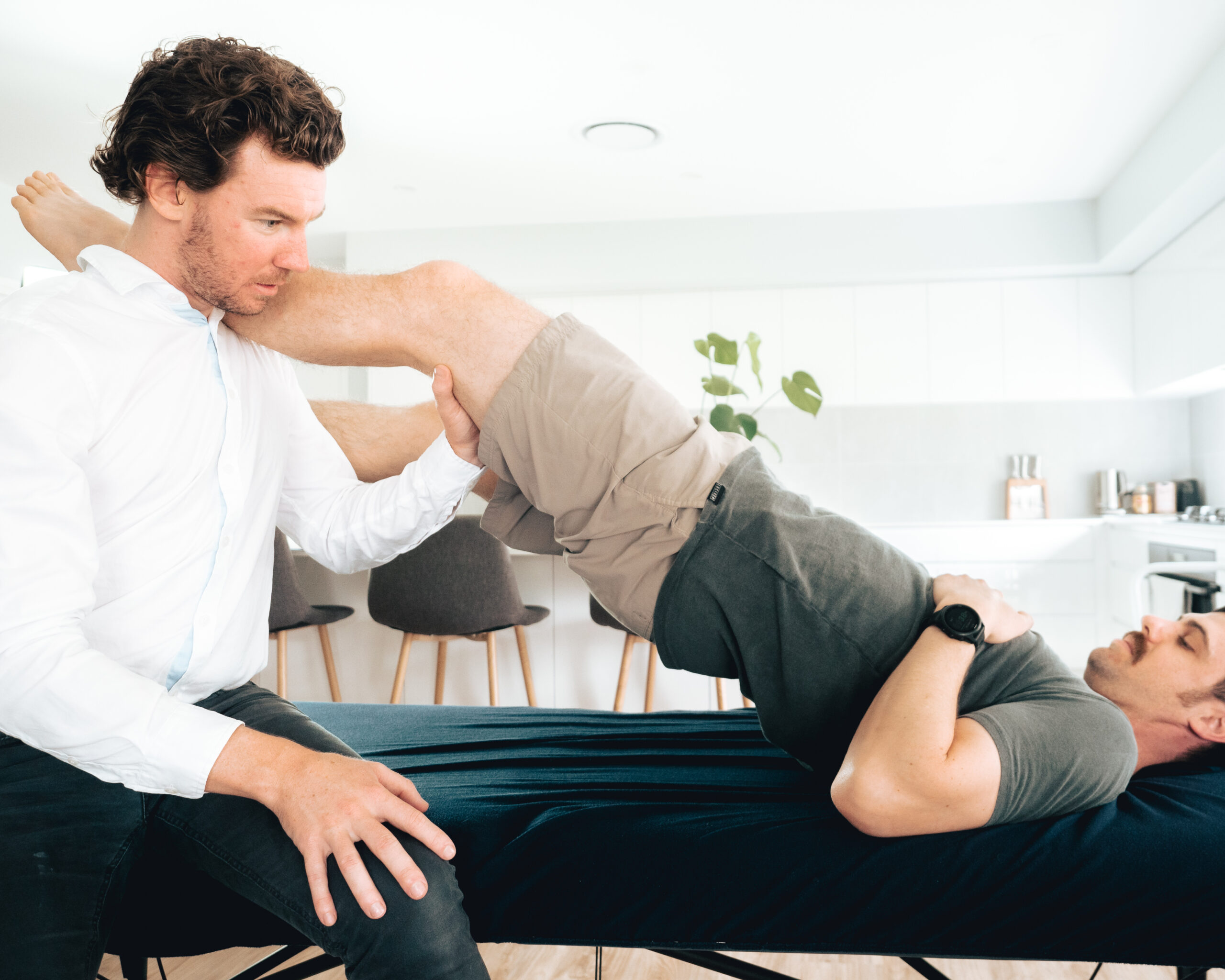
Physiotherapist assessing a client's hip and groin on a treatment table

Adductor Injury Prevention Program

Prevention is always better than a cure, so what can you do to prevent groin pain or groin strains in the first place? Strengthening your adductors is 100% the best bang for your buck method for reducing your risk. In most cases of long-standing groin pain, they have weak adductors. If you’ve suffered a groin strain, you don’t want any residual weakness sticking around, so keeping a background strengthening program going is your best avenue.

Outside of the obvious answer, there are a few other avenues you can look at. Keeping your hip flexors and abdominals strong would be another good tip. This helps to stabilise the pelvis and provides a strong base for you to operate from as an athlete. When looking at the core, though, we need to do a bit more than just planks and side planks. We need to develop the capacity for the core to work as a powerhouse and develop the capacity for the obliques to rotate the trunk. Using exercises such as medicine ball throws to the side is a great way to develop this capacity.

The last tip would be load management. Performing what your body is prepared for and not deciding to go racing out of the blocks on the highway to get an injury is often the best avenue. Slowly working your way up to what you need to perform is the best avenue, it’s not the end of the road that dictates your injury risk, it’s the road there that gets people into trouble. The 10% rule is a little overstated, particularly in the early days of returning from injury or coming back from an injury, you can progress a bit quicker than that early on. But once you have a decent amount of training load, the 10% rule is quite good. Most importantly though, listen to your body, and not just physically, sometimes increases in stress, poor sleep, and mood irritability, can all be signs you are overtraining.
Physiotherapist assessing a client's hip and knee on a treatment table

Groin Pain FAQs

A mild adductor strain usually settles within 1 to 3 weeks and a moderate strain within 4 to 8 weeks. Groin pain that has built up gradually over a long period often takes 3 months or more with a structured strengthening program.

Not with a fresh strain. With longer-standing groin pain, some players can keep playing with modified training while they do their rehab, as long as pain stays controlled during and after sessions. We decide this together based on how your groin responds.

A groin strain is an injury to the adductor muscles on the inside of the thigh, usually from a single moment such as kicking or changing direction. Osteitis pubis is irritation of the pubic bone and the joint at the front of the pelvis from repeated load. It comes on gradually, the pain is more central, and it usually takes several months to settle.

Each consultation is 45 minutes and costs $110, for both your first appointment and follow-ups. Dry needling, taping and exercise bands are included at no extra cost. If you need a longer course of rehab, my 3, 6 and 12 week rehabilitation programs work out cheaper than paying per session.

Yes. You can claim a rebate from your health fund for every session. PRP Physio is not a preferred provider for any fund, so your rebate may be slightly smaller than at a preferred provider. Your fund can confirm the exact amount using item code 500 for your first consultation and 505 for follow-ups.

Yes, if your groin was injured at work. Your GP starts the claim and gives you a WorkCover certificate, which acts as your referral. Once your claim is accepted, I bill WorkCover directly, so there are no out-of-pocket costs for you. WorkCover covers your first five sessions, and I speak with your case manager if you need more.

Mobile Physio: Get in Touch

I'm ready to book online now

For those who are ready to book an appointment right now, let's get started on your journey back to sport!

Just hit the button below and it will take you straight to an online booking platform. You will just have to enter a few details and it will all be booked in for you!

I'd rather have a conversation first

Some injuries are complex, should you see a GP first, should you go get a scan, is a physio even the right person to see? Sometimes a 10 minute conversation can be enough to answer some of these questions.

Just submit a contact form on the link below and I'll give you a call ASAP and we can chat through a few things to get you moving in the right direction!
© 2026 PRP Physio. All rights reserved.