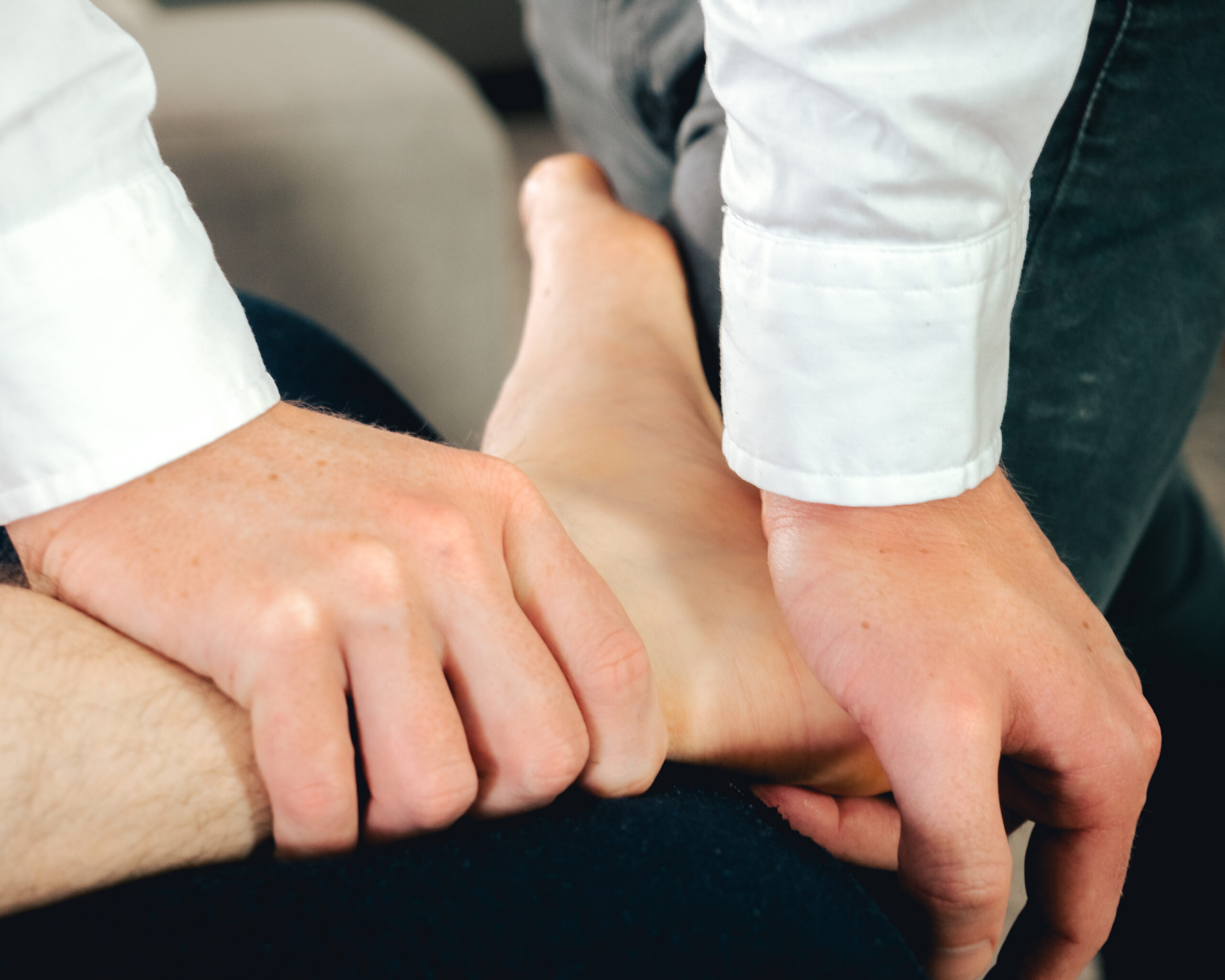
Your Questions About Joint Mobilisations
Is joint mobilisation the same as cracking my back?
Not quite. Joint mobilisations are gentle, controlled movements of a joint, often rhythmic and within a comfortable range, and they do not usually involve a crack or pop. Manipulation, which is what most people mean by cracking, is a quick, small thrust that often produces a popping sound. Both aim to ease pain and improve movement. I mostly use mobilisations, as they are gentle and well tolerated, and I will always explain what I am doing and check you are comfortable.
Does joint mobilisation hurt?
It should not be painful. You may feel some pressure, stretch or mild discomfort, particularly over a stiff or sensitive joint, but it should feel tolerable and usually eases as the treatment goes on. Many people find it relieves their pain and stiffness during the session. I adjust the pressure and range based on your feedback, so let me know at any time if something feels too much. Some mild soreness for a day afterwards can be normal.
How long do the effects last?
The effects of joint mobilisation are usually short-term, lasting from a few hours to a few days. That is why I use them as a way to open a window where pain is lower and movement is easier, then follow straight away with exercises to build on that change. Over time, as your strength and movement improve, the changes become longer lasting. Mobilisation on its own, without exercise, is unlikely to provide lasting results for most problems.
Who shouldn't have joint mobilisation?
Joint mobilisation is safe for most people, but it is not suitable in some situations. These include recent fractures, significant osteoporosis, some inflammatory conditions during a flare, joint infections, cancer in the area, and certain blood vessel or nerve conditions. I screen for these during your assessment and adjust my treatment accordingly. If mobilisation is not suitable, there are plenty of other ways to help, including different hands-on techniques and exercise.